Desi Debase Signs with San Jacinto College


At a signing party Friday afternoon, Lady Cats’ basketball star Desi Debase announced she would be playing college basketball at San Jacinto College in Houston. Desi said she should be completely recovered from a torn ACL in her left knee in time for the start of the season. She expects to wear a brace when season starts next October.
Debase had first chosen Oklahoma as her college basketball destination. She said she expects to play point guard for an up-tempo team. She said she like the food in Houston and the girls on the team. She will be playing behind a starting point guard.
Lady Cats Coach Jeff Chapman said Desi was the best guard he had ever coached during his long career in Oklahoma and Texas.
Her new coach, Brenita Jackson, attended the signing party. Jackson said her team looks for good, tough point guards that are competitors. She thinks she has found that in Debase. Jackson is pleased with Debase as a leader, her ability to score points, and as an active defender.
Wildcats Face Whitehouse in Bi-district Thursday
Eagle Stadium
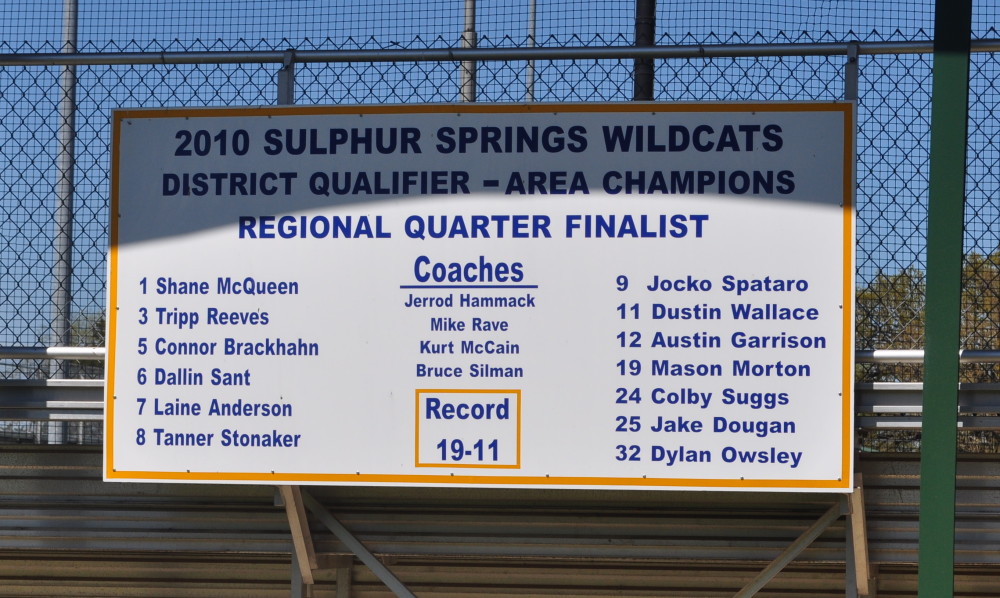
After a disappointing home loss to Pine Tree Thursday, the Wildcats’ baseball team bounced back with an 8-2 home win over Marshall Friday and a 6-1 win at Longview Saturday. The Wildcats, 10-4 in district, finished second and will play Whitehouse in bi-district. Game one is Thursday at 7 p.m. at home. Game 2 is at Whitehouse Friday at 7 p.m. Game three, if needed, will be at home Saturday at noon.
Three Band Members Chosen to be Drum Majors
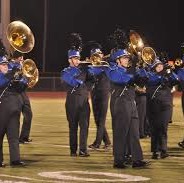

For what may be for the first time ever, the Wildcats Marching Band will have not one, not two, but three drum majors next year. Tryouts were held last week.
McCauley said 10 band members tried out for drum major for next year. He commended all 10 for their amazing try-out. The three chosen are Emily Johnson, a junior next year, Carlos Williams, a senior next year, and Gillem Boyar, a senior next year. Williams will also serve as a tuba player in the band. The three will alternate in leading during the half-time and competitive season next fall. McCauley said the strength of Williams ability with the tuba will be needed during specific performances.
City’s Most Famous Pedestrian Injured in Accident


Sulphur Springs most famous pedestrian, a man known to most as Kojak, was injured in an vehicle pedestrian accident in the turn lane on Gilmer Street outside Brookshire’s in Sulphur Springs at 9:13 p.m. Sunday. The 56-year old Kojak, who real name is Dennis Lewis, was listed in stable condition at Plano Medical Hospital Monday morning.
He was taken by helicopter to the Plano hospital shortly after the accident. According to his family, Kojak has two broken ribs, a possible broken knee and lots of bruises. He suffered no head injuries and is said to be responsive and alert.
The Sulphur Springs Police Department continues to investigate the accident. Kojak can be seen almost daily walking the streets of the city all over town. His nickname is believed to have come from some members of the police department many years ago.
Cumby Man Found Dead in Mobile Home Fire


A 75-year old Cumby man was found dead in a mobile home fire. The incident occurred in the 200 block of Mill Street, shortly after 11 a.m. Sunday. The deceased has been identified as 75-year old Richard Pickens.
The man was a smoker and was also on oxygen. Some neighbors reported hearing a loud explosion before they saw fire break out. Several Hopkins County fire units responded. County Fire Marshal Mike Mathews is investigating the cause of the fire. Cumby Police Chief Scotty Sewell is investigating the death.
Justice of the Peace Brad Cummings pronounced the man dead and ordered an autopsy.
Preliminary autopsy results place the cause of death as: Smoke Inhalation and Thermal Burns.
KSST Opinion Poll

 Bluebell is coming back… Hopefully! Let us know how you feel.
You can find this opinion poll here, at the bottom of our Home page.
Analysis: For Legislation, May is the End of the Line
by Ross Ramsey, The Texas Tribune – May 4, 2015
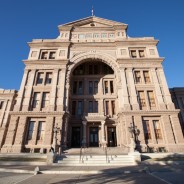
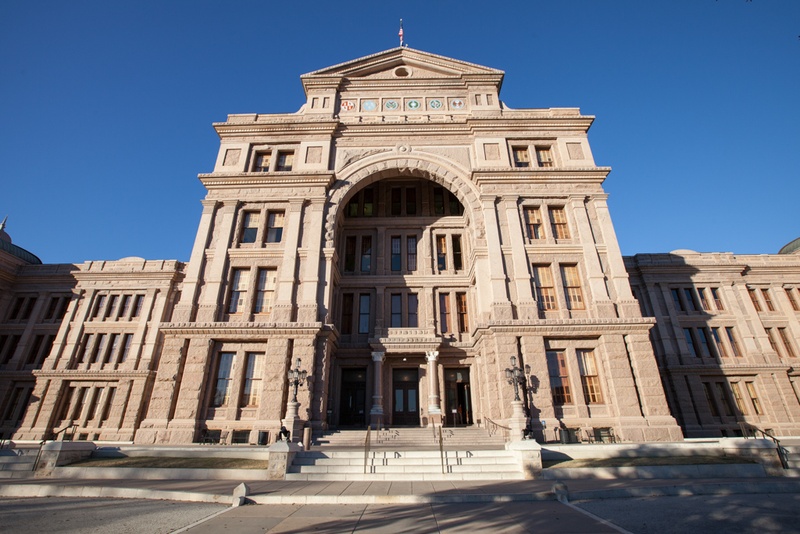 Only four weeks remain in the state’s regular legislative session, but there is just one week left before the real deadlines start.
Most of the legislation now on the assembly line will be dead in a month.
This is not a process that suddenly lurches to a stop; it dies gradually, as procedural deadlines choke off the flow of legislation.
Take the first entry on the House’s May calendar of deadlines: Monday, May 11, is the last day that House committees can “report” bills and constitutional amendments that started in the House. They can still consider Senate bills and resolutions, but any legislation filed by House members that’s still in committee after that date is dead.
Another deadline at the end of that week applies to House bills under consideration by the full House; after Friday, the House can’t pass House bills unless they are only of local interest or have drawn no dissent. At that point, they’ll be homing in on Senate bills, both in committees and in the full House. The deadlines for Senate bills come more than a week later.
Until then — and this is the reason to talk about this right now — they’ll be cranking out legislation of their own, trying to beat their internal deadlines on their own bills.
Chances for legislation are getting worse and worse. It is true that nothing is really dead as long as the Legislature is still in town. If it’s important enough to the right people, they can almost always find a way to put something back on track.
Lawmakers will move heaven and earth and many of their dearest rules to pass a state budget if they need to. They won’t do that to tweak a craft beer regulation.
But a second axiom is ultimately more reliable: The legislative process is designed not to pass bills but to kill them. Most legislation fails somewhere before the finish line.
As of the end of the last day of April, lawmakers had filed 6,466 bills and joint resolutions (proposed constitutional amendments). And 1,000 bills had been approved in their chamber of origin. A grand total of 28 had been approved by both the House and Senate, and some of those were approved in different versions that still need to be reconciled.
That’s not a final picture, or a particularly unusual one: Lots will happen in this final month.
Lots will not happen, too. During the 2013 legislative session, lawmakers passed 24 percent of the 5,868 bills they filed, and they passed 10 of the 193 joint resolutions they proposed. That’s 5 percent.
On May 31, the last Sunday of the session, the House won’t be allowed to do anything but vote on the conference committee reports that result when senators and House members work out their different versions of bills. The week before that will be a steady drumbeat of deadlines on Senate bills.
The arithmetic — how many bills got filed and how many passed — doesn’t record all of the results. Some bills die because their twins are approved; the Senate bill goes and the House version doesn’t, or vice versa.
During the next month, legislators will be scouring the landscape for “vehicles” — for live bills that have similar subject matter to dead bills those lawmakers want to revive.
Last week, the Texas Senate debated an ethics bill, and by the time they were done, they had added 10 amendments. Examine those and you’ll find several other pieces of legislation that got tacked onto Senate Bill 19 just because it was moving and other things were not.
It’s possible to put too many passengers in the vehicle. The House might have ruined the chances for legislation focused on the Department of State Health Services. After several amendments restricting abortion were added, the bill’s author sent it back to committee for repairs. It’s possible it won’t be back before the session ends.
If that’s the case, it won’t be alone. Three-quarters of this proposed legislation won’t exist in June.

REMINISCENT: A Shaggy Dog story

Editor’s note: This column is a part of a series from local writers. The series is curated by Herald Democrat columnist Jerry Lincecum.
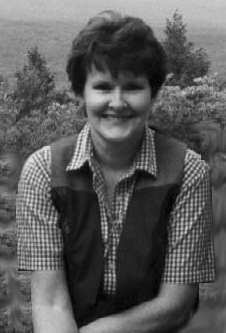 I grew up in Brinker, Texas, U.S.A., the Hub of the Universe, east of Sulphur Springs in Hopkins County, a community that had more characters per square mile than any other place in the world. Practical jokes abounded, and my dad’s stories of his growing up in Brinker kept us in tears of laughter. It was only after I was grown that I realized he was probably chief among the characters when he was at his prime. This is the story of one of his best pranks.
His target was a store owner, will call him Smith. The scheme was set in motion by accident. Someone dumped out a beautiful but very pregnant border collie dog at Smith’s store. He grumbled for several days about having to feed her and about the “town” people who dump animals out in the country. When he decided he was going to have to shoot her before she had the puppies, my dad said he would take her. He said he needed a good cow dog; in reality, he had a soft heart where animals were concerned. So, much to my delight, he brought Shep home with her belly dragging the ground. In only a few days we heard strange noises coming from under my bedroom.
With great difficulty Daddy managed to get his 6-foot-2-inch frame under the house, and I brought him a big bucket. Soon he handed it back to me filled with fat and fluffy puppies. I was ecstatic. Soon he yelled, “Where is the bucket?” Before long, we had 13 puppies and all were fat and fluffy except one. As my grandmother delicately put it, Shep had room at the table for only 12, so I fed the runt with a bottle and he thrived and did well. When the puppies were about six weeks old, I began to notice Daddy with a gleam in his eye, and he began to laugh at odd moments. A scheme was afoot, but he did not let us kids in on his devious plans.
Daddy took $25 to his uncle, Dewey, who did not live in Brinker and gave him his instructions. A few days later Dewey went to Smith’s store and asked if my dad might be there. When Smith said he hadn’t seen him that day, Dewey gave Smith $25 to give to Daddy. He said that Daddy said he could have the pick of the litter for $25, and since no one was at our house he would just pick out his puppy and go home. The next day when Daddy went to Smith’s store, Smith gave him the $25 and an inquisitive look. Daddy just thanked him and put the money in his pocket with no explanation.
This happened 12 more times with slight variations. The same $25 went to 13 different friends and relatives, who all left it with Smith to be delivered to Daddy. By the time the last puppy had been sold, Smith figured he had lost 13 times $25 or $325 (which was worth about 10 times as much then in the 1950s as it is now) by giving away the dog that laid the golden puppies. He stayed mad at Daddy until he found out it was a prank; then all was forgiven. It was all right to tease him, but you had better not get to his pocketbook!
We thought we would never get rid of the puppies. It is easy to find 13 people willing to be your partner in crime, but hard to find that many willing to take a puppy. We finally gave away a dozen of them, and I got to keep the runt as my very own.
Jo Ann Cross of Wolfe City is a retired high school math teacher and the winner of several prizes in the Telling Our Stories contests. She has published a collection of short stories entitled “Memories, Musings, and Mischief.”
– See more at: http://heralddemocrat.com/opinion/local-commentary/reminiscent-shaggy-dog-story#sthash.v9c9LPmz.dpuf