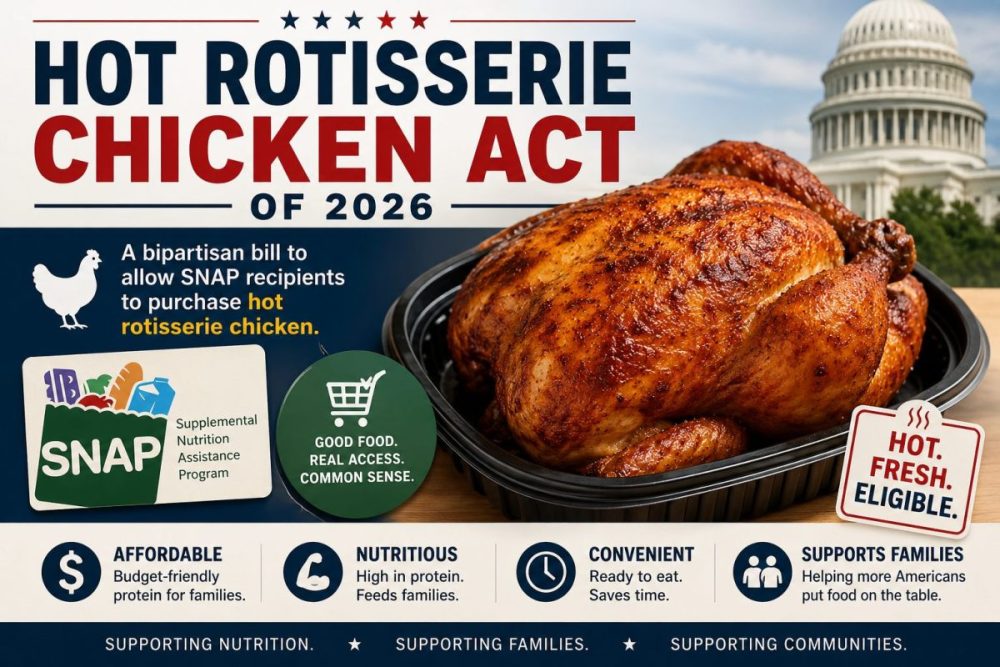
Hot Rotisserie Chicken Act of 2026 – What Side Are You On?
May 11, 2026 –Washington, D.C. — May 2026 — A newly introduced bipartisan bill known as the Hot Rotisserie Chicken Act of 2026 is drawing attention in Congress and online for its unusually specific focus: allowing Supplemental Nutrition Assistance Program (SNAP) recipients to purchase hot, prepared rotisserie chicken using benefits.
The legislation would carve out a narrow exception to existing SNAP rules, which generally prohibit the purchase of hot prepared foods. Under current regulations, items like freshly cooked deli chicken are ineligible because they are considered “ready-to-eat restaurant-style meals.” Retailers often cool such products before sale to comply with the program.
A Targeted Exception
Supporters of the bill argue that the restriction is outdated and unnecessarily restrictive, especially given the affordability and nutritional value of rotisserie chicken.
“This is a practical, common-sense adjustment,” one sponsor said during the bill’s introduction. “Rotisserie chicken is one of the most affordable complete meals available in grocery stores, and SNAP should reflect real-world food access.”
The proposal does not expand SNAP eligibility or broadly loosen restrictions on hot foods. Instead, it is narrowly tailored to apply only to rotisserie chickens sold in grocery stores.
Why It’s Being Debated
Food policy experts note that the SNAP program has long prohibited hot prepared foods to prevent misuse of benefits at restaurants. However, critics of the current rule say it creates inconsistencies in modern grocery shopping, where prepared meals are increasingly common.
Opponents of the bill question whether creating exceptions could open the door to broader changes in SNAP purchasing rules. Some budget-focused lawmakers also argue that even small policy shifts require careful oversight.
Public Reaction
The bill has gained traction on social media, where its name alone has sparked humor and debate. Still, the underlying issue—how food assistance programs align with modern eating habits—has drawn more serious discussion from policy analysts.
Advocates for low-income families say the change could improve access to convenient, protein-rich meals for people without reliable cooking facilities or time for food preparation.
Next Steps
The bill is currently under committee review as part of broader agricultural and nutrition policy discussions. It is expected to be considered alongside other provisions in the upcoming Farm Bill negotiations.
While its unusual name has made it a viral talking point, lawmakers say the core issue reflects a larger question: how federal food assistance should adapt to today’s grocery and food service landscape.