A KSST Intern’s Trip To Australia Part 3

We continued our trip by traveling to Canberra, Australia’s Capital, and also where my aunt works. While we were there we saw the Anzac War Memorial. This combined memorial/museum was huge, and extremely informative. We went on the tour and kept thinking “Wow! How can there be more to see here?” But there was! We spent half the day there and still didn’t cover it all. The museum is probably one of the best WWI and WWII museums we’ve seen. It not only explained how Australians were involved in the wars but also continued up to present day. They honored soldiers from all different countries from all different wars.  They had airplanes that had been used, and a Japanese submarine that was pieced together after being hit with a depth charge in Sydney Harbour. A documentary showing the war through the eyes of soldiers that was created by Peter Jackson and played every 30 minutes. It was fascinating to watch the progression of the war as the soldiers grew older. As it showed the soldiers’ faces, it was obvious from their smiles and joking mannerisms that they were young, but as the war progressed, they grew somber and more serious with their eyes showing wisdom beyond their years. I would definitely recommend going here. There was even a “discovery zone” where you could dress up, use a lamp to see what frostbite would look like on your hand, and much more. They had something for everyone. They had something for everyone to enjoy. My favorite thing was that they sold fake red poppies.
 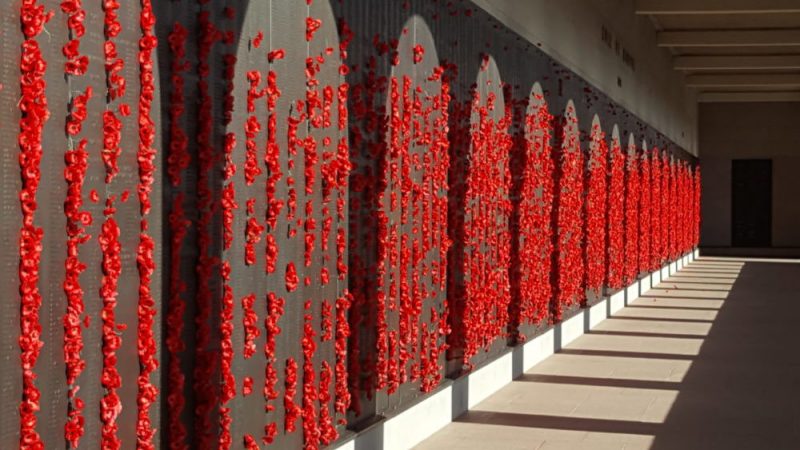 Poppies are a remembrance flower and people would purchase them and could either keep them or place them somewhere around the museum, helping to remember those who lost their lives. It was extremely powerful to see theses fields of poppies and then realize they are on a memorial with names of servicemen and servicewomen.
From Canberra we took a 2 hour flight to Brisbane, which is the southern part of Queensland. It was (thankfully) a lot warmer. (A lot meaning it was in the 70’s compared to the 40’s).  Brisbane is different from Sydney in many ways. It has less people, and is more spread out. It would be similar to comparing Dallas to Fort Worth.
On one excursion, we drove four hours to a city called Bundaberg to catch a Great Barrier Reef Tour. It was amazing! We visited Lady Musgrave Island which is the second farthest Southern island in the Great Barrier Reef. 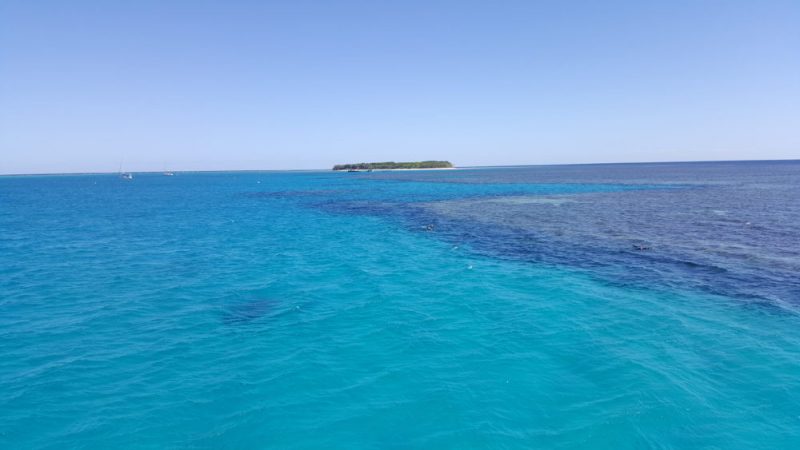 Named after Governor Musgrave’s wife, the island houses over 7 types of coral. There are two different types of sea turtles that live in the lagoon, Green and Loggerhead and we were fortunate to see both. Lady Musgrave Island houses 70% of the world’s Pisonia tree population. In the summer they produce sticky seed clusters. These clusters stick to the birds on the island, and eventually, when the bird can no longer un-stick them and cannot fly, they fall to the island floor and die. The white capped Noddy Terns are the most common birds on the island. The Noddy Terns are most famous for their nests which at first glance look thrown together.
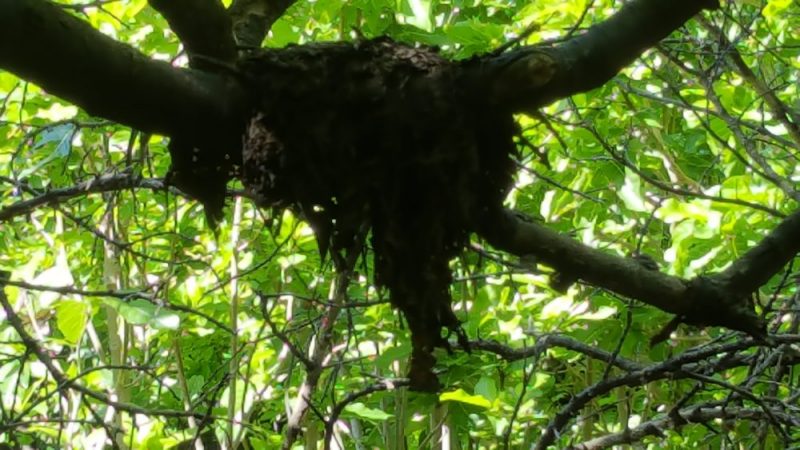 But the nests are actually created with a lot of attention and love. The male Noddy Tern will get a leaf for the female, who either accepts it or rejects it. It is estimated that she picks 1 out of every 10 leafs brought to her, and it takes 100 leafs to build the nest, so that is about 1,000 leafs picked up by the male Noddy Tern. Talk about dedication!
Australia Zoo-
 Originally, I thought this zoo would be like every other zoo, and assumed it would be extremely “touristy”. But it wasn’t. It was obvious the zookeepers cared about the animals’ welfare and happiness. Every single zookeeper we interacted was knowledgeable and wanted to share information about each animal. They had a Kangaroo enclosure where you could feed and pet the Kangaroos
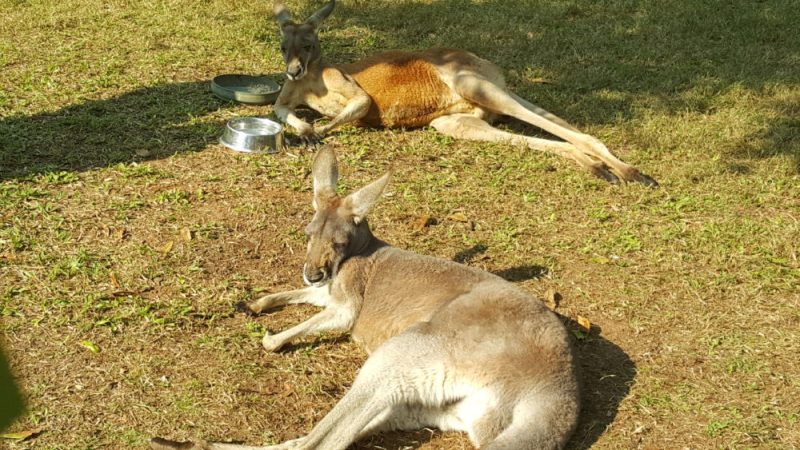 -and an outdoor area where the koalas were napping. The Dingoes were extremely happy and playful. There were three of them that chased each other around their enclosure-through their man made river, and up on the rocks. The otters were also very playful. They had 2 older otters, but you would never guess they were older from the way they sped through the water playing with their toys. I thought it was funny that the otter named Rosie was mischievous and liked to cause trouble while the other one, Mayhem was extremely sweet-natured and calm. The Crocodiles were huge-I was surprised that the Keepers were in the cages with food as they talked about them. They gave tips on what to do if you find yourself around Crocodiles. First, stay at least 4-5ft back from the water, and make sure you have a buddy. The Australia Zoo was very large. They have big enclosures for each animal. They have many different species, including indigenous animals, and plants, as well as animals that you would normally see at a zoo, like tigers and giraffes.
Koala Wildlife Sanctuary- 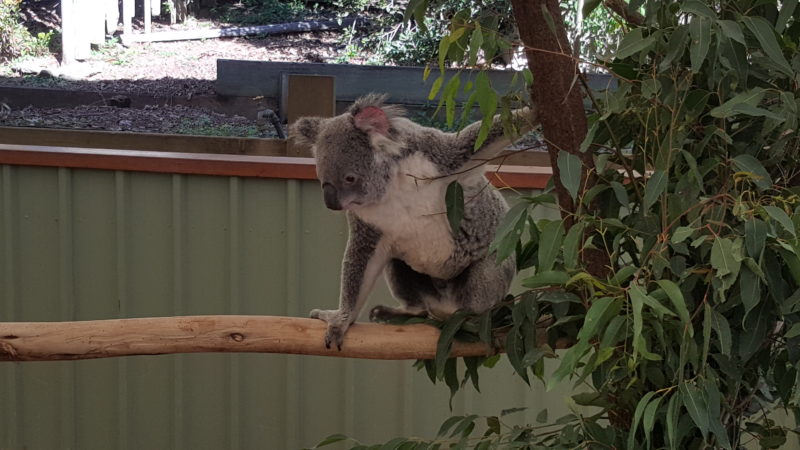 Instead of the usual stereotypical zoo, this was more of a “Retirement Home” for most of the animals. They had a bunch of koalas
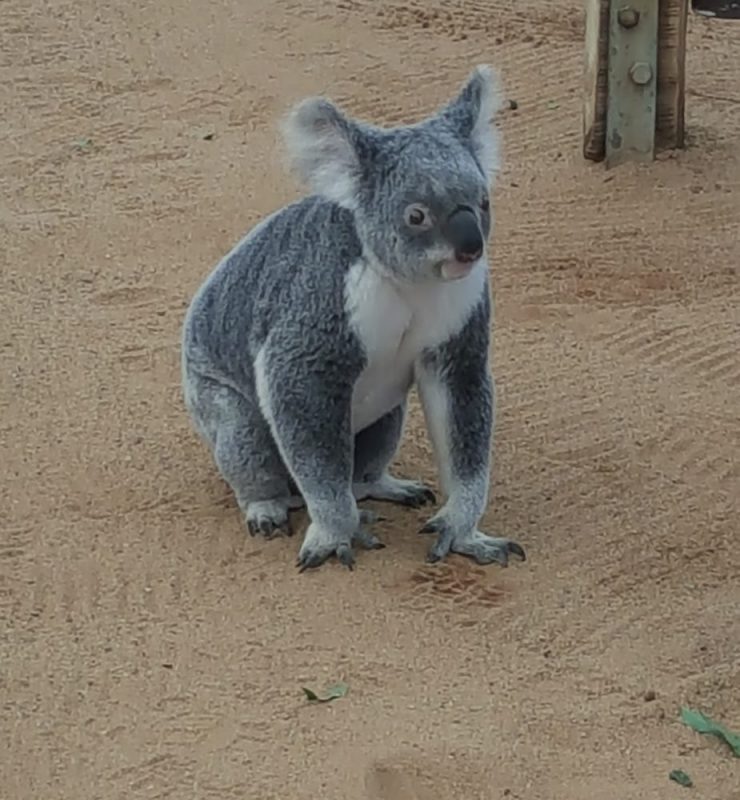 -both old and young, but also other animals like Dingoes and Tasmanian Devils. Something interesting I learned about Tasmanian Devils was that they are scavengers (meaning they eat dead animals) and their jaws are so strong they can eat bone. So when they eat an animal, they eat literally everything. Absolutely nothing goes to waste. Pretty crazy right? They also had two platypuses.
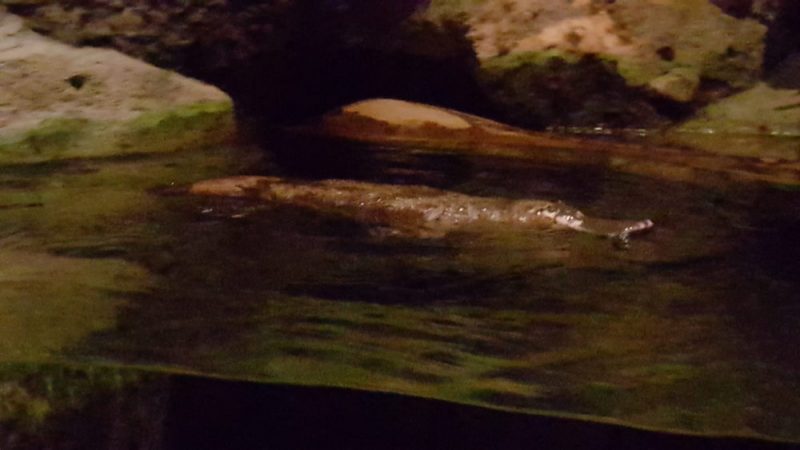 I was really excited about seeing the platypuses because I wasn’t originally expecting to see them on the trip. The Australia Zoo didn’t even have them! The zookeeper said that contrary to popular belief, the platypus is not endangered. However, platypuses like to live in deep streams away from people so they aren’t spotted that often. The sanctuary also had sheepdog and sheep shearing shows which were very entertaining. We all enjoyed watching the dogs round up the sheep in the pasture, and it was amazing how the farmer kept most of the wool intact when he sheared the sheep!
If you though the Anzac Museum, Great Barrier Reef and Zoos were awesome, but stay tuned for part 4 about more amazing things in Brisbane and an inside look at what Australian Rule Football is all about.
If you missed the first two articles click here for part 1 or part 2.
Registration For Fall Semester Underway at PJC-Sulphur Springs Campus


A LITTLE HELPER Shawn Sears of Emory was a recent visitor at the PJC-Sulphur Springs Center campus to register for fall semester classes. He had as a helper his 19-month old daughter, Hayden. PJC-Sulphur Springs campus Advisor Carey Gable, left, also assisted in the registration process. For information about registration call 903-885-1232 or go by the campus at 1137 East Loop 301 in Sulphur Springs.
Wildcats Team Tennis Now 1-1 on the Season

The Wildcats’ team tennis squad lost a squeaker, 9-8 to Sherman Thursday afternoon at the Wildcats Tennis Complex. The Bearcats won last year, 17-2. The Wildcats are now 1-1 for the season. Two matches were not played by agreement of the two coaches. Wildcats Coach Tony Martinez said the heat affected both teams. Sherman was playing its’ second match of the day. Coach Martinez said the thirsty players went through 8 gallons of water.
For the second straight match, Coach Martinez was impressed by the play of freshman Jonah Kirkpatrick. He also mentioned Blaine Flemens. Also for a second straight match, he girls doubles team of Karolina Espinoza and Jaspyn Johnson won their doubles match.
The Wildcats will be playing two matches next Tuesday. They will face Jacksonville next Tuesday morning in Tyler and then will play John Tyler in the afternoon.

Wildcats L-E Scrimmage Moved to Prim Stadium; Defense Ready for Contact

Good news for Wildcats’ football fans. The lone scrimmage for the Wildcats against Liberty-Eylau scheduled for Friday, August 19, has been moved from Texarkana to Sulphur Springs. Wildcats Football Coach Greg Owens announced the change Thursday afternoon. He said the Leopards are getting new turf on their field and it won’t be ready in time for the scrimmage. The August 19 scrimmage will now be at Gerald Prim Stadium. Coach Owens is expected to announce the official start time and details of the scrimmage later but he indicated it would probably start next Friday at around 9.a.m. or 10 a.m. This scrimmage will be the only one for the Wildcats before they start the regular season. They lost a week of August practice and one scrimmage due to having spring football in May.
Wildcats Defense
Wildcats Defensive Coordinator Triston Abron had one thought on his mind as the fourth Wildcat football practice was wrapping up Thursday night. Friday is the first day the Wildcats can put on pads and pads mean contact. A scrimmage is planned for 7 p.m. Friday. Coach Abron called Friday’s practice the first game of the year as he added that the Wildcats would be able to pop one another. Concerning where the Wildcats’ defense is right now, Coach Abron said the emphasis now is on polishing the scheme.
He said pretty much everything the Wildcats would be doing this year is already in. Coach Abron said the kids have done a good job learning it and now they have the chance to get really good at it. He has several players in new positions this year still he said the defense has the ability to be pretty good. Coach Abron called them athletic.
He said team leaders on defense are emerging. He named senior inside linebacker Easton Silman, who played mostly offense last year. Coach Abron called junior cornerback Tiesan Goodson an emotional leader for the defense. He said he expected big things from junior cornerback Terrell Turman. Coach Abron said he has been impressed by sophomore D. Q. Pitts. He also mentioned Tyreese Williams, Dee Dugan, Jaxon Reneau, Mason Cleveland and Daniel Moreno. Coach Abron also likes Lawrence Worth on defense but Wildcats offense coaches also like the junior.

Student Code of Conduct Handbook Reflects Discipline Changes

The Student Code of Conduct Handbook for Sulphur Springs ISD has been updated to reflect both specific SSISD administrative procedures and practices with new legal requirements defined in the Texas Education Code.
Changes to the handbook include changes in the notification requirements to parents regarding violations that may result in placement in alternative classroom situations and/or expulsion. There are various levels of discipline for the student. Discipline can be ISS or in school suspension. In School Suspension removes the student from the regular classroom and places the student in a special classroom on the same campus. OSS or out of school suspension removes the student from the educational environment for a period of three days as the student is considered sent home for that period of time. DAEP or Disciplinary Alternative Education Program is house on the Austin Campus. DAEP is the maximum discipline that allows the student to remain in an educational environment in the district. It is rare that expulsion will mean the student cannot return to the educational environment. Normally, a student that is expelled is then placed in DAEP, according to Josh Williams, Assistant Superintendent. Williams stated that the district wants to educate all children. However, a felony with moral turpitude is usually expulsion with no recourse.
One additional factor that must be considered when assigning suspension or placement or expulsion requires the district to consider whether the action is mandatory or discretionary. Williams said one has to examine the intent of the student. If the student intended to do what they did, if they know what they were doing at the time of the act, then that student would be place in an alternative educational environment. If the student is special education or a 504 student, one who has physical or mental limitations that affects their actions, and the action was caused by the disability, then the student will not be penalized. If the disabled students behavior was caused by the school’s failure to implement the student’s behavior plan then the student will not be penalized.
One major change in the student handbook calls for a change in transportation policy for students placed in DAEP. In recent years, a student in DAEP could be transported by school bus to the Austin campus. Now students in DAEP will not be provided transportation unless that student has a disability that has a related transportation service in the student’s IEP. The decision to not transport the DAEP student is a local district decision as allowed by the Texas Education Code.

Senior Summer Olympics Games!




Tira News By Jan Vaughn
Tira News. By Jan Vaughn
The staff members at North Hopkins returned to work on Tuesday. Everyone was treated to a delicious barbecue lunch, with all the trimmings and lots of desserts at the Peerless Baptist Church. Teachers were also able to pick up “goody bags” of school supplies to for their classrooms. Several of the staff members won door prizes, which were donated by local vendors. We would like to express our appreciation to all the members who helped make the event possible.
New teachers arrived on Monday and spent the day in training. They, and several guests, enjoyed a wonderful meal, catered by Andy and Mary Lou Wright. Some of the guests, including former superintendents, Tommy Long and Donna George, and former principals, Vaden Richey, David Penn, and Jim Westbrook, shared about the history and special memories of North Hopkins School.
Yvonne Weir shares that she and her family went to Elise’s birthday party last Saturday. The party had a luau theme. Elise is the daughter of Mike and Dacy (Weir) Campbell. She adds, “Got to see Dustin and Natalie, Destri and Eben, and lots of children running around.”
Mary Rawson enjoyed a visit from her son and daughter-in-law, Danny and Judy Rawson, of Denton, recently.
Kim Beck reports, “Jackson Dailey married his best friend, Courtney Fleming, in a scorching hot, beautiful ceremony in San Antonio and they are off for a week in Daytona, Florida for the honeymoon. They will come back and Courtney will start Law School at St. Mary’s and Jackson will start his Masters plan at UT San Antonio. August has been crazy!”
Applications are still being accepted for a place on the ballot for Tira City Council. The deadline to apply is August 22nd. For more information, please contact Jan Vaughn, Tira City Secretary, at 903-438-6688.
Floyd Payton will be honored with a reception, following the Tira City Council meeting on Tuesday, September 6th. Floyd resigned just before the last quarterly meeting, due to health issues. Make plans to come by and express your appreciation to Floyd for his years of service as Mayor of Tira and for all he has done for our community.
Tiffany Vaughn, and Kenden and Jaidyn Joslin went to The Villages Resort, on Lake Palestine, near Tyler, last week. Jacob, Collin, and Jakota Peugh joined them on Thursday. They enjoyed the water park, playing volleyball, and other amenities, at the resort.
Grace and Linda Vaughn came for a visit on Sunday and had lunch with us.
I always need and appreciate input from my friends to help keep me informed of news in our community. If you have any news pertaining to Tira residents, past or present, please contact me, Jan Vaughn, at 903-945-2190 or 903-438-6688 or [email protected].
Como Man Assaults Paralyzed Ex-wife

 Kenneth Wayne Shaw, 53, of Como, was arrested Thursday evening after a Hopkins County deputy spoke with two individuals at a residence on CR 2320 near Como. Shaw is in Hopkins County Jail charged with Injury Child/Elderly/Disable with Intent Bodily Injury (Felony 3) and is being held on a $30,000 bond.
According to the two individuals, Shaw assaulted his disabled ex-wife who is now his girlfriend. The ex-wife was sitting in a wheelchair with visible injuries on both arms and the officer observed blood on her shirt, according to the deputy’s report. The ex-wife stated that Shaw grabbed her by the arms and “…slung…” her. She also stated that he pushed her wheelchair up against the hallway wall. The ex-wife said she is paralyzed completely on her right side after two strokes. She is also diabetic.
Shaw denied hurting her saying he was helping her out of the bath tub. However, he had blood on the back of his shirt.
Agri-Life: Say Yes to FCS!


National Survey Says…
No, this is not a printed copy of Family Feud, but I will be giving some interesting facts from some reliable, research-based sources. First of all, I want to give you a brief quiz.
FCS represents:
1) Fluid Control System
2) Family & Consumer Sciences
3) Fat Cow Syndrome
What courses are taught under the FCS umbrella:
1) Accounting and related courses
2) Agricultural animal nutrition and related courses
3) Food safety, nutrition, child development, life skills and related courses
What careers are available through FCS:
1) Fashion design & merchandising
2) Education
3) Dietitian
4) All of the above plus more
Let’s see how well you answered the questions….FCS stands for Family & Consumer Sciences. Family and consumer sciences classes provide students the opportunity to explore and prepare for a variety of careers, including culinary, education, early childhood, fashion design and merchandising, tourism and hospitality, consumer studies, and many human services-related careers. Students learn a number of essential skills, such as promoting nutrition and wellness; becoming responsible citizens and leaders; managing resources and finances; balancing personal and work lives; and thinking critically and creatively to address problems.
Results of the National Association of Colleges and Employers’ Job Outlook 2014 survey show that the skills taught in family and consumer sciences (home economics) secondary classes are among those most valued by employers. According to the Job Outlook 2014 survey, participants rated “ability to work in a team structure,” “ability to make decisions and solve problems,” “ability to plan, organize, and prioritize work,” and “ability to verbally communicate with persons inside and outside the organization” as the most important candidate skills/qualities. These skills, highly valued by employers, are among the essential life and career skills taught in family and consumer sciences.
Data from another national survey, which was published in the Journal of Family & Consumer Sciences, demonstrate the reach that family and consumer sciences classes have nationwide. Carol Werhan, PhD, Family and Consumer Sciences Associate Professor at Pittsburg State University, Kansas, found that all states offer family and consumer sciences secondary (6th – 12th grade) courses and nearly one-fifth (more than 3 million) of all U.S. secondary students had taken a family and consumer sciences course during an academic year. The ratio of male to female students at the high school level was 35% to 65%, respectively.
With a high percentage of dual-career families, more adults living alone, and a significant rise in the number of single fathers, the findings on gender ratios in family and consumer sciences classes reflect the increased need for both males and females to learn essential life skills. “Now that more people are aware of and experiencing health, personal finance, and employment challenges in this country, they are recognizing the positive impact that family and consumer sciences classes have had and could have on the next generation,” said Carolyn W. Jackson, American Association of Family & Consumer Sciences executive director. “It’s not too late to make it a priority to teach all of our students the essential skills they need to be successful in work and life.”
Family and consumer sciences draws from broad and diverse disciplines to develop and provide content and programs that help individuals become more effective critical thinkers and problem solvers. Through discovery and delivery of research-based knowledge, family and consumer scientists help individuals and families develop essential skills to successfully live and work in a complex world. These professionals are uniquely qualified to address many critical issues affecting individuals and families, such as maintaining a healthy lifestyle, wisely managing personal and family finances, and creating supportive relationships with family members, friends, and co-workers. They are located nationwide in a variety of practice settings, including secondary schools, universities, government agencies, and businesses.
So why do we need FCS education?
- 1) Based upon the body mass index for children ages 10-17, 4.8 million children are classified as overweight and 5.1 as obese.
- 2) Fifty-three of every 1000 births are to unmarried women ages 15-44, with 47% ages 15-17. 3)
- 3) Seventeen of every 100 children live in households where food is insecure.
- 4) Eighty-five of every 100 workers in 2010 consisted of working parents, who require quality child care.
- 5)The early child care field needs to fill 400,000 to 500,000 positions by 2018.
- 6) Half of the fastest growing programs are related to Early Childhood and Culinary Arts, which are associated with higher than average employment growth.
- 7) Research proves that hands-on engaging education prevents high school drop outs.
My friend and colleague, Debbie Stribling, and I, have a passion for promoting Family & Consumer Sciences among our young people. As a matter of fact, you will be seeing more on “Say Yes to FCS!” in the coming weeks and months. For now, we are encouraging our young people to be involved in the 4-H program FCS-related projects and FCS classes taught through our schools. We are excited to announce May 4, 2017, as National Family & Consumer Sciences Day, and will have a “signing” day for those who plan to enter collegiate studies. Watch for more to come!
Closing Thought
“Recipe for success: Study while others are sleeping; work while others are loafing; prepare while others are playing; and dream while others are wishing” – William Ward
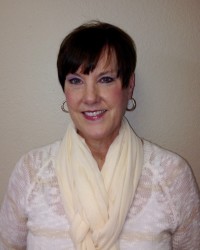
Johanna Hicks
Texas A&M AgriLife Extension
Family & Consumer Sciences
1200-B W. Houston
P.O.Box 518
Sulphur springs, TX 75483
903-885-3443 – phone
903-439-4909 – Fax
[email protected]