Grapes in the Garden by Mario Villarino

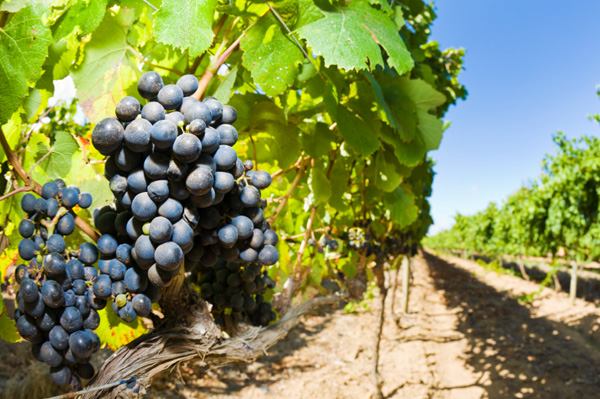
Gardens and crops require properly planning to become successful. A recent interest in Hopkins County in grapes has created interest in grapes in our county. Grapes are grown throughout central, south, and east Texas almost entirely for home use. There is considerable interest in the possibility of growing grapes for wine and table use. According to Texas A&M AgriLife horticulturists, the major limiting factors are Pierce’s Disease and fungus diseases associated with the high rainfall and humid conditions in this area of the state during grape fruiting season. Early settlers in this region attempted to grow Vitis vinifera grapes of Europe; however, they could not establish a commercial industry because of these and other limiting factors. Numerous private vineyards have been attempted over the years and most especially after the increased national interest in wine grapes in the 1970’s and 1980’s. Unfortunately, all of the varieties not resistant to Pierce’s Disease died prematurely. Pierce’s Disease entered a large number of Central Texas vineyards in 1996. The long range impact of the problem could prohibit the use of all but PD resistant varieties in the future. The planting of classic wine varieties should be put on hold until the extent and severity of PD is fully understood. Fortunately, modern grape breeders in the South have developed varieties which are resistant to PD and the opportunity for growing grapes in this area of the state is greater than ever before. Potential or new grape growers need to understand that grape culture requires a great deal of knowledge, labor, and money. The rewards are good, but the effort required will be far greater than that of other agricultural or gardening challenges. There are numerous cultural practices which must be accomplished , overlooking one practice can bring disaster to the vine or vineyard. It is during the late winter, that grape rootstock is commonly available to our gardeners. It is important to consider basic vineyard principles to follow before purchasing grapes.
Vineyard Location
The microclimate, soil, and accessibility of the vineyard are critical. A raised elevation with good air movement will help reduce fungus diseases and increase surface water drainage. The soil needs to be well-drained. A vine simply will not develop new water and nutrient absorbing roots if the soil is not well-drained. Therefore, commercial vineyards must be limited to high sandy ridges. Garden grapes will need to be planted on raised beds to prevent water accumulating in the root zone. Drainage ditches will also be needed in some locations to move the excess rainwater out of the vineyard during periods of high rainfall.Vineyard accessibility is equally important as microclimate and soil. The vineyard must be checked almost daily and if it is too far to drive, the absence of the owner will result in numerous complications in the management program. The vineyard location should have a good supply of clean irrigation water. Electricity, roads, fences, and other factors can be very important. Knowing the expectations of the planted vines are critical if a commercial vineyard is expected.
Develop a Vineyard Plan Before Starting
The basic considerations for establishing a vineyard need to include market, wine or table, varieties, rootstock, site preparation, trellis construction, irrigation, planting, weed control, vine training system, and irrigation rates. The plan needs to consider learning how to grow grapes, allotting money for establishment and development, scheduling both hand and mechanical labor, a marketing plan, selection of equipment equal to the vineyards needs, pest management, varmint prevention, and other personal needs. All of these factors need to be well thought out and recorded prior to selecting the vineyard site.
Vineyard Size and Economic Risk
Since there are limited commercial grape production areas in Texas, all new vineyards need to be very small to test the economic feasibility of their production. The market may or may not accept new varieties. The risk of fruit diseases or low production could also limit the potential for profits; consequently, all plantings should be very small. It is recommended that the initial planting be only 120 vines or one quarter of an acre. This number of vines allows the owner ample opportunity to learn how to grow grapes without a major economic investment at a very serious risk. A common problem is to plant more grapes than one can properly manage. As a result, one management practice cannot be completed before another is seriously needed and the results are confusion, frustration and poor vine growth.
Varieties
There are numerous wine and tablegrape varieties which have produced well in the dry climate of Central, North, and West Texas; however, they are not resistant to Pierce’s Disease. These varieties can be grown as garden grapes with the understanding that they can die at any moment. Vine death can be in one year or fifteen, it is strictly a matter of chance. Planting resistant varieties is the only control for Pierce’s Disease. There are no cultural practices, sprays, or rootstocks which will reduce the probability of the disease.
The new and old Pierce’s Disease resistant varieties can grow and produce for a long period of time without the risk of vine death. These varieties are described as follows:
‘Blanc duBois’ is a new white wine grape developed by Dr. John Mortensen of the University of Florida. It is a vigorous vine which seldom requires a rootstock. The clusters are medium-sized weighing 4 to 8 ounces with 45 to 55 round berries and it ripens in late June or July in South and East Texas. The vines can bear up to 5 tons per acre with cane, cordon, or curtain pruning. It is resistant to Pierce’s Disease and Downy Mildew, but susceptible to Black Rot and Anthracnose and will require regular fungicide protection during warm humid conditions. The roots are resistant to nematodes but not well adapted to poorly drained, high pH soils.
‘Orlando Seedless’ is a new white tablegrape developed by Dr. John Mortensen of the University of Florida which is very vigorous and produces long, thin clusters of small, round, light green berries. It is the first seedless tablegrape which is resistant to Pierce’s Disease. Fruit size will be a major problem which will require cluster thinning and cluster pruning to correct. Girdling and gibberellic acid may also be needed to bring berries to a commercially acceptable size. The flavor of the berries is excellent; however, the skin does not crunch as with some Vinifera tablegrape varieties. The vines can bear up to 6 tons per acre; however, the most optimum pruning system has not been determined. The cordon pruning system has not proven to be the best, so the cane system is recommended. In addition to being resistant to Pierce’s Disease, it is resistant to Downy Mildew and Powdery Mildew, but susceptible to Black Rot and Anthracnose and will require fungicide sprays.
‘Le Noir’ or’Black Spanish’ is a red wine, juice, and jelly variety which has produced very high yields in South Texas since 1889. The wine is very tannic and acidic which is used by Texas and Mexico wineries to make outstanding port wines. The cluster is large and compact with small, black, seeded berries. The juice is very different in that it is very red rather than clear in color. The vine can be cordon pruned on deep, fertile soil; however, on shallow sands or heavy clays it should be short-cane pruned. It is resistant to Pierce’s Disease, but highly susceptible to Black Rot and Downy Mildew. Leaf pruning and frequent fungicide sprays will be essential in preventing fungus diseases. The vine is only moderately vigorous and can occasionally show yellow leaves or iron chlorosis on high pH soils which are poorly drained. The fruit ripens in late July or early August.
‘Champanel’ is a red jelly variety developed by the legendary T.V. Munson of Denison, TX. It is extremely well adapted to South and East Texas. The cluster is small with large, black, seeded berries which are very acidic until fully ripe. The vine is extremely vigorous and grows well in a wide range of soils; however, it can have serious iron chlorosis problems on some poorly-drained, high pH soils. The vine responds best to cordon or curtain pruning. It is resistant to Pierce’s Disease, Black Rot, Downy Mildew, Anthracnose, and Powdery Mildew; therefore, it will not require fungicide sprays. It is also resistant to all insects except the Grape Leaffolder. ‘Champanel’ is an outstanding garden grape because of its ease of culture and natural resistance to insect and disease pests. It also makes the best arbor variety for the same reasons.
‘Favorite’ is a seedling of’Black Spanish’ which was selected at Brenham, TX. It is very similar to its parent, but has higher quality fruit. Unfortunately, it is not as easy to purchase. ‘Favorite’ is managed the same as’Black Spanish’
‘Roucaneuf’ is a French x American hybrid variety from Southern France which is resistant to Pierce’s Disease. It is only moderately vigorous and should be planted close in the row and cane pruned. The clusters are small, but long, and produce small, pink berries. It is used for white wine or can be eaten fresh as a tablegrape.
Other Pierce’s Disease resistant varieties include Mid South, Miss Blue, Miss Blanc, Daytona, Suwannee, Conquistador, Lake Emerald, Stover, Norris, and Herbemont. All of these can be grown on sandy, acidic soil.
Rootstocks
A rootstock should not be used unless a major disease problem exists. ‘Champanel’ and ‘Dog Ridge’ can be used for Cotton Root Rot control and also to improve low vine vigor on clay soils. If a very deep sandy soil is used, SO4 can be used for nematode control. All three of these rootstocks will control the Phylloxera root insect. Garden grapes are almost always grown on their own roots.
Vine Spacing
It is important to coordinate the vine spacing with vine vigor. Deep, fertile, well-drained soil will produce very vigorous vines which need a wide spacing of 12- foot rows with vines planted 8 feet apart in the row. Shallow or poorly-drained, clay soils will not produce as much vigor and the vines can be planted on 10-foot rows with vines 4 feet in the rows. Experience and knowledge of the variety, rootstock, and site will be essential in determining the exact vine spacing and pruning system. Garden grapes can be spaced closer than normal if intensive shoot placement can be practiced. Vines can be placed 4 to 6 feet apart for arbor training and pruning.
Planting
Grape vines should be ordered well in advance of the planting season so quality vines and requested varieties can be purchased. Have the vines shipped as soon as they are dug at the nursery. Heel the roots into the soil in a shady location until planting in late February. Never allow the roots to dry out. Immediately prior to planting trim the roots to only 1 or 2 inches and cut the top back to only 2 buds on the strongest cane. Remove all other canes. Carry the vines to the vineyard site in a bucket of water. Dig a small hole with a hand-held post digger and pack the same soil back into the hole. Plant the vine next to a stake. Water the vine with two or three gallons of water immediately after planting. As the new buds begin to grow, watch out for cut worm and grasshopper damage. Do not allow weeds to develop and keep the young vine watered once a week or more if it dries out.
| Trellis Construction The permanent trellis should be constructed prior to planting. It consists of a farm fence T-post at each vine. Wires are set at 18, 42, 52, and 66 inches from the ground if a 7-foot post is used for cane and cordon pruned vines. Single curtain vines will need wires at 18 and 66 inches from the ground. If a shorter fence post must be used, lower each wire so that the upper wires are still the same distance apart as they were with the 7-foot post. End posts need to be over 8 feet long, over 4 inches wide , and pressure treated to prevent decay. Old railroad ties and landscape timbers do not make good end posts because they rot prematurely. All perennial weeds need to be killed down the row immediately after construction of the trellis with a contact herbicide. The drip irrigation system needs to be attached to the trellis and made operative prior to planting. |
|
| Grape Arbors Garden grapes can also be trained onto an arbor as an excellent landscape plant. Do not use net wire on the top of the arbor because it will make pruning impossible. |
Vine Training
The objective the first year of the vine’s life is to develop a strong root system; hence, no training is performed. It is very important, although, to tie the developing shoots onto the stake to keep them off the ground and allow weed control up to the vine. A farm fence post makes the most optimum stake. The second year, just prior to bud break, the vine is pruned back to only two buds on the strongest cane. All other canes and buds are removed. This combination of root development for one full year and heavy pruning forces very rapid and strong growth the second year. As a result, training is very easy. Weak, slow-growing vines are impossible to train. When all of the shoots are over 18 inches long, select the strongest and very carefully tie it to the stake. Do not remove other shoots until the strongest shoot is successfully tied. These shoots break off very easily.
Pruning Systems
Grapes can be trained and pruned to a number of systems. The four discussed here are Bilateral Cordon, Cane, Short Cane, and Single Curtain. Stated in the most simple of terms, grapes are pruned by removing 95% of the canes in late winter just before bud break. If too much wood is removed, the vine will be excessively vigorous. On the other hand, if too little wood is removed, the vine will overbear. It is better to remove too much wood than not enough, because overbearing will weaken the vine as well as produce lower quality fruit. Tablegrapes should always be over-pruned to increase the fruit size.
As a general rule, the vines are pruned to only two buds of second year’s growth, eight to twelve buds prior to the third year’s growth, and twenty to thirty buds prior to the fourth year’s growth. These buds can be on canes for cane pruned vines or two bud spurs on the cordon pruned vines. Each bud will produce a shoot with two to three clusters of grapes.
| Bilateral Cordon This is the most common system used in Texas and California. A horizontal trunk is trained onto the 42-inch wire left and right of the stake. Seven spurs with two buds are selected on each side during the second and third growing seasons. This system is for moderate to vigorous vines. If the shoots are weak and less than 3/8 inch in diameter, switch to the cane system, which requires fewer buds. If the shoots are extremely vigorous and too long, switch to the single curtain, which require more buds. |
|
| Cane The cane system is gaining popularity throughout the commercial wine and tablegrape industry because of the flexibility in pruning level. To cane prune, remove all of the one-year-old canes except one on each side of the stake. Select the two canes which are approximately 3/8 to 1/2 inch in diameter and 4 to 6 feet long. Arch the two canes over the wire that is 52 inches from the ground. There should be 6 to 12 buds on each cane. The end of the cane should always be at least 3/8 inch in diameter. Also, leave two very short one-bud spurs on the trunk as renewal spurs. They will produce next year’s production canes. |
|
| Short Cane Low vigor vines of less than 12 buds should be short cane pruned. Select the two strongest canes on the vine and prune back to only 1 to 6 buds each. Remove all other canes. It is very important to prune large clustered varieties to the short cane system. |
|
| Single Curtain Extremely vigorous vines should be trained to the single curtain system. This is a horizontal trunk or cordon at the top of the wire, going left and right from the stake. Spurs are selected each winter 6 inches apart with 1 to 6 buds each, depending on the vigor level. If last year’s growth was weak, leave fewer buds, if it was overly vigorous, leave more buds. |
Pruning Theory
In growing grapes, for home or commercial, it is important to maintain a healthy balance between vine growth and fruit production. This will result in strong vines and top quality fruit. Shoot and cane size is the best index for determining how vines are performing. At harvest, the canes should be 3/8 to 1/2 inch in diameter to be optimum. Each shoot should have 15 to 22 mature leaves at harvest. If the shoots are not of this optimum size, vine vigor can be controlled by increasing or decreasing the number of buds left on the vine after pruning.
To increase the vigor of weak vines, leave fewer buds at pruning. To decrease the vigor of rapidly growing monster vines, leave more buds at pruning. The balance between vigor and fruiting can be measured two ways, by cane pruning or by pruning wood weight.
The cane count system is very simple; count the number of canes which are 3/8 to 1/2 inch in diameter at pruning time. Reduce the number 10% and this is the number of buds to leave on the vine after pruning. For example, if a vine has 20 mature canes over 3/8 inch in diameter, subtract 2 and this indicates 18 buds should be left on the vine after pruning, nine on the left and nine on the right. The buds can be on cane, cordon, or curtain pruned vines.
The wood weight system is conducted by weighing the pruning wood. The wood should weigh .5 to .7 pounds for each foot of vineyard row, regardless of the pruning system or vine spacing used.
Irrigation
South and East Texas receive a great deal of rainfall; however, the early summer can be very dry. Grapes require one inch of water per acre per week. Shallow or heavy clay soil will need supplemental irrigation when rains do not occur. Vines should not be allowed to go more than three weeks without water. When a drought occurs, apply 28 gallons of water per vine per week until a rainfall. This volume should be reduced 50% for young vines.
Drip irrigation is essential for commercial production of grapes. Attach a 1/2-inch plastic irrigation line to the 18-inch irrigation wire. Place one emitter at each vine, 12 to 18 inches from the trunk.
Garden grapes should not be sprinkler irrigated with city water because it can burn the foliage. Do not irrigate vines after the month of August because it can stimulate late season growth and freeze injury.
Fertilizer
Grapes are usually vigorous and require no fertilizer. Weak growing vines on well-drained soil may respond to a very low rate of nitrogen fertilizer. Never fertilize grapes after June because it can stimulate late-season growth and freeze injury. Never use phosphorous fertilizer because it can tie up zinc and iron in the soil.
Grapes growing on heavy, poorly-drained, clay soil frequently have yellow or white leaves. This problem is called iron chlorosis. It is corrected by improving drainage and by applying 1/8 ounce of Fe 138 Iron Chelate to each vine in one gallon of water as soon as the yellow color occurs.
Weed Control
Grapes cannot grow in weeds. Weed control is the most important cultural practice in the production of grapes. If left uncontrolled, weeds simply kill the vines by using all of the soil water and nutrients.
The ideal system is to keep the vineyard middles mowed close, just like a lawn. Kill the weeds under the vines down the row with a contact herbicide. The weeds on one acre or less can be easily controlled with a three-gallon backpack sprayer.
Insect Control
There are a number of insects with can attack grape vines. However, the vines should not be sprayed until damage is obvious and the insect is seen. Phylloxera is a small root insect which has the potential of completely killing all vines in an area or region. Since it has not been identified in Texas, no precautions are taken for its control. There are a number of rootstocks which are resistant to Phylloxera should it become a problem.
Disease Control
High temperature and humidity are ideal conditions for fungus disease development. Black Rot, Downy Mildew, Bunch Rot, and Anthracnose can occur when conditions are optimum. They can be prevented by spraying the clusters with fungicides. Removing the leaves which cover the clusters in early May will help prevent fungus diseases by increasing air circulation and better fungicide contact with the clusters.
Pierce’s Disease is a bacteria-like pathogen which is moved to the grape vine from grass host plants by a small leafhopper. The only control is resistant varieties. It occurs only in the warm, humid area of Texas south of the 800 hour chilling below 45 degree line. It is identified by irregular margin leaf burn followed by general vine decline. It usually takes two to four years for the vine to die after infection.
Cotton Root Rot can be a very serious problem on poorly-drained, high pH soils. It can be prevented by proper site selection or resistant rootstocks, such as Champanel and Dog Ridge. It is identified by rapid vine death in July right before or during harvest.
Increasing Tablegrape Fruit Size
Tablegrapes can be enlarged by heavy pruning, cluster thinning, berry thinning, girdling, and gibberellic acid sprays to thin berries from the cluster and sprays to enlarge the fruit size.
The easiest way to increase fruit size is to prune heavy and allow only one cluster per shoot. Remove the other clusters immediately after fruit set or when the berries are BB size. In addition to this the number of berries in a cluster can be reduced by sniping some of the berries when they are BB size. If the cluster has a long tail, simply cut the tail off or if the cluster has a shoulder, simply cut the shoulder off. Large mature tablegrape vines should not produce more than 20 clusters, smaller vines should produce less.
Harvest
Grapes ripen very early in South and East Texas, from late June for tablegrapes to early August for Black Spanish. Varieties not recommended for the area frequently produce clusters with uneven ripening fruit. Birds and other animals can be a serious problem at harvest time. Netting is the only sure way to prevent fruit loss.
Tablegrapes are harvested when they taste good or when the sugar level is above 16%. Wine grapes are harvested before the juice pH reaches 3.4. Grapes are a wonderful addition to the garden but care must be provided and a proper site, care and appropriate variety must be selected to accomplish your goals. For more information on this or any other agricultural topic contact the Hopkins County Extension Office at 903-885-3443.
Coming Up!
Pesticide Private Applicator Training: Feb 14, 2018
For those Hopkins County residents seeking pesticide private applicator license (new licenses only), the Hopkins County Extension Office will offer the Texas Department of Agriculture (TDA) mandatory training Feb 14, 2018 starting at 10:00 AM. A private pesticide applicator is someone who uses or supervises the use of restricted-use or state-limited-use pesticides or regulated herbicides to produce an agricultural commodity on:
- Personally owned property;
- Rented property;
- Property owned by his or her employer;
- Property under his or her general control; or
- The property of another person if applied without compensation, other than the trading of personal services between producers of agricultural commodities.
An agricultural commodity is a plant or animal grown for sale, lease, barter, feed or human consumption and animals raised for farm or ranch work. No license is required to apply general-use pesticides to produce agricultural commodities. In Texas, several agricultural products including 2-4D based products are considered restricted products and require private applicators license to purchase. The TDA training cost is $30 lunch and refreshments included. Interested applicants must RSVP by calling the Hopkins County Extension Office at 903-885-3443 and purchase training materials ($40) available at the Extension Office. For more information on this or any other agricultural related topic please contact me at 903-885-3443 or email me a [email protected].

Mario Villarino DVM, Ph.D.
Hopkins County Extension Agent for Ag and NR
1200B Houston Street
Sulphur Springs, Texas 75482
903-885-3443

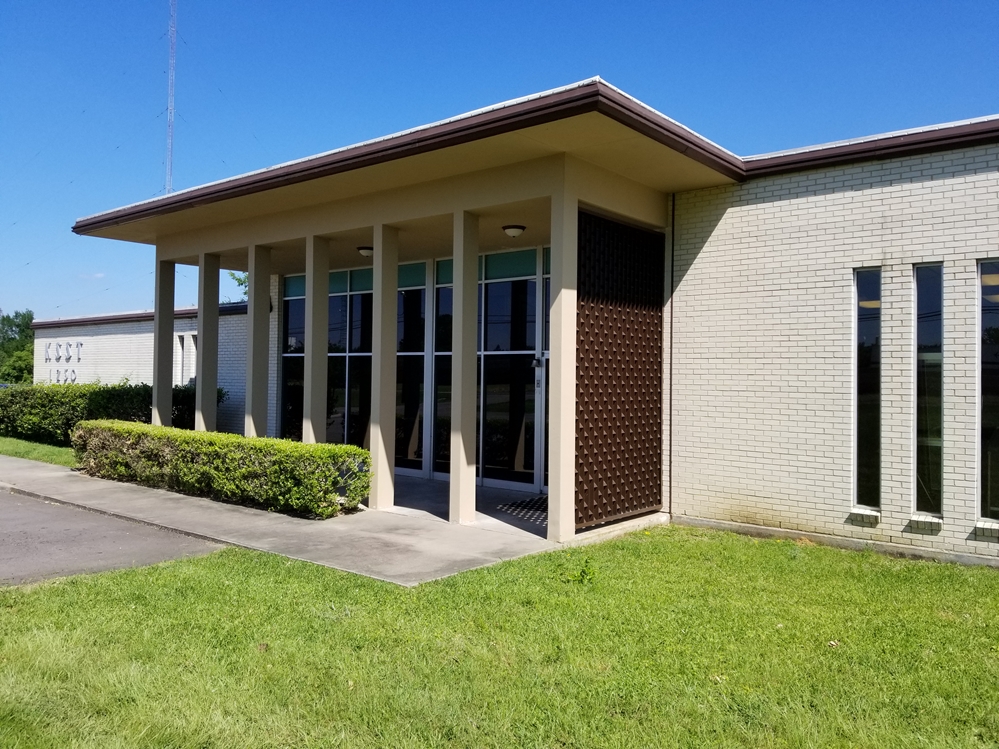
SSHS Soccer Coaches Reflect on Wins Against Marshall

Wildcats Soccer 2, Marshall 0 (Overtime)
The Marshall Mavericks’ soccer team frustrated the Wildcats for a longtime Wednesday evening in Marshall. The Mavericks packed in their defense and appeared to be playing to earn a tie and get into penalty kicks. Fortunately for the Wildcats, they finally broke through and scored a pair of goals in overtime. In the first half of overtime, Johnathan Alvarez got a nice pass from Angel Tavera and was able to put the ball into the net. In the second half of overtime, D.J. Abron made a crossing pass that was blocked by Marshall. It went right to Enrique Arellano who scored. Wildcats Soccer Coach Nicky Wiggins said the Wildcats controlled possession against Marshall but had a hard time scoring despite out shooting the Mavericks, 22-2. Coach Wiggins said the longer the Wildcats went without a goal, the more frustrated they became. He said the goals produced a lot of relief. Winning in overtime gives the Wildcats a full three points just like a regulation time win. The Wildcats are now 1-1 in district play and 8-7 for the season. The Wildcats play Texas High at Gerald Prim Stadium Friday night.
Joel Bailey on Lady Cats Win Over Marshall
Lady Cats Soccer Coach Joel Bailey has a team with the potential to score lots of goals. The Lady Cats dominated Marshall Wednesday evening at The Prim winning 5-0. Coach Bailey said both Mileena Zirretta and Gracie Boyer are leading the Lady Cats in scoring and he added they were among the district’s top goal scorers early in district play. Coach Bailey said when Zirretta has six or seven shots, the Lady Cats always win. Zirretta scored two goals Wednesday against Marshall and made a beautiful crossing pass assist to Boyer who just had to tap the ball into an open net. In his gentlemanly manner, Coach Bailey corrected KSST’s reported goal scoring in Wednesday’s game. On the first Lady Cats goal scored less than four minutes into the first half, KSST credited the goal to Erika Lara after a Jo McMillan corner kick. Coach Bailey said McMillan’s shot tested the Lady Mavericks and he said the ball just crossed the goal line before Lara tapped the ball into the net to make sure. McMillan scored a second goal on a set piece free kick from 25 yards out. Coach Bailey said the kick just rose right over the keeper and dropped into the net. The Lady Cats are 2-0 in district play with two shutouts. They are 10-2-3 for the season. The Lady Cats play at Texas High Friday night. The Lady Cats are coached by former Lady Cats Coach Jesus DeLeon. Coach Deleon scouted the Lady Cats Wednesday night at Prim Stadium watching from the Bill Bradford Press Box.

soccer ball net
Game Day: Scrimmage Action for Wildcat Baseball, Lady Cat Softball
 There is scrimmage action on this Thursday (February 8) game day. The Wildcats’ baseball team is scrimmaging at Sherman. The Wildcats’ JV Royal team begins the scrimmage at Sherman at 4:30 p.m. The varsity scrimmage is expected to get underway at around 6:30 p.m. This first baseball scrimmage was originally scheduled for Monday but was postponed due to very cold weather.
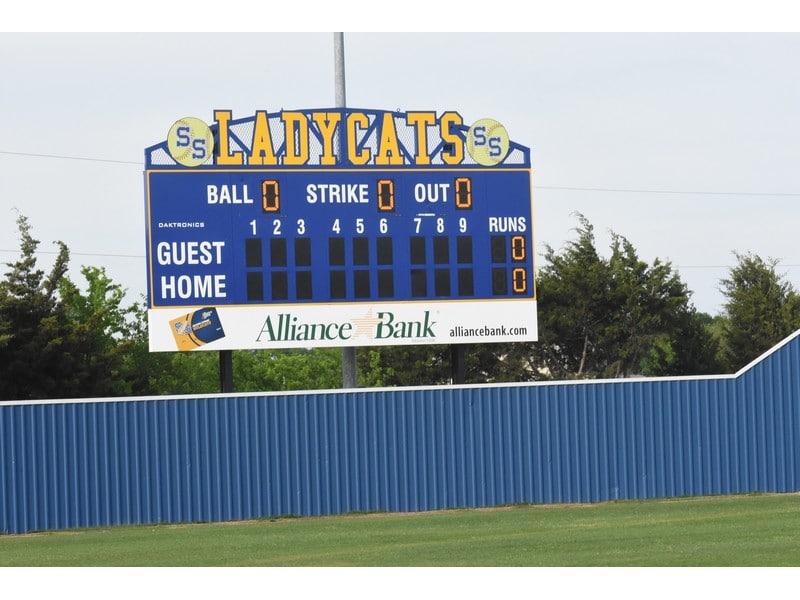
The Lady Cats’ softball team will be scrimmaging at home at Lady Cat Park on this Thursday (February 8) game day. The scrimmage begins at 4 p.m. as the Lady Cats will take on Lindale and Wylie East. This scrimmage was originally scheduled for Tuesday but it was rained out. This is the third scrimmage for the Lady Cats.
Harrington Sentenced in Plea Bargain Agreement

 Tony Jay Harrington, 29, will serve the next four years in prison following the revocation of two felony probations in a plea agreement in Eighth Judicial District Court Thursday.
Harrington was placed on probation November 18, 2015 for a January 27, 2015 conviction of delivery of less than a gram of methamphetamine in a drug free zone charge and for an April 8, 2015 conviction of possession of less than a gram of meth in a drug free zone. He had been sentenced to five years in each case. He will now serve all five years day-for-day but the two sentences will run concurrently and he has been given jail credit for one year that he has already served.
Empower Texans Heavy Investing in Texas Senate District 2 Incumbent Hall and House District 2 Candidate Slaton

Two ultra conservatives seeking to serve Hopkins County and the Texas Senate and House District 2 are among the recipients of the largest campaign contributions made by Empower Texans. The political PACT, Empower Texans, describes itself as “a non-profit service” organization. Through multiple media formats, we educate and inspire Texans to exercise effective citizenship. Using research, reporting, and advocacy, we empower taxpayers to advocate for good governance and hold their elected officials accountable.” However, Empower Texans is working as a PACT.
Empower Texans is acting as a PACT, a political action group made up in 2017 of 190 individuals out of the projected 28 million plus residents of Texas in 2018. Yet, much of their over $2-million in contributions came from limited sources. Giving to Empower Texans in 2017 included: Tim Dunn, $1,065,000.00; Farris Wilks, $725,000.00; David Middleton, $200,000.00 ; Kyle Stallings, $100,000.00; Holloway Frost $50,000.00; David Pendery, $50,000.00. Other contributions were $1,000 or less. Not only has Empower Texans contributed to the local campaigns but contributing members have also given individually to the local candidates.
State Senate District 2 incumbent Republican Bob Hall will receive $150,000 from Empower Texans, the largest amount give to one candidate in the most recent report period. State Representative District 2 challenger Bryan Slaton will receive the fifth largest amount at $50,000. In the last report period, Empower Texas is handing out just over $1-million. In fact, Hall has not only received a large contribution from Empower Texans but as individuals, Tim Dunn has contributed 150,000 and Farris Wilks has contributed $125,000 to Hall’s campaign. Other members of Empower Texans have also made contributions to Slaton’s campaign. Some people believe that with these contributions, both representatives will be indebted to Empower Texans and a few of the members of the organization. The contributions of Empower Texans and the individuals in the organization make up a substantial body of financial support for the two.
Empower Texans seem to have an agenda against public education. Recent letters to every teacher the state have invited those teachers to be whistleblowers against their administrations. Both Hall and Slaton are strong in their announced support of a voucher system and Hall has expressed his disregard for Pre-K and Kindergarten by his votes in the Texas Senate. Superintendents in west Texas schools said in October of last year, “Groups like Empower Texans are not empowering the state due to the organizations support of a voucher system and “is attacking public schools in that way.”
Slaton, who has spent much of his life in Christian youth ministry, says he will “stand up to Government abuse, constant overstepping and the overall burden it places on taxpayers.”

Sulphur Springs Area Retired School Personnel Plan Meeting on February 13

Please join us for our next meeting on Tuesday, February 13! All retired school personnel living in Hopkins and Rains Counties are invited and encouraged to attend.
This meeting will include a program by Menzie Chase, who works as part of a certified therapy-dog team with her trained basset hound, Joker.
The meeting location is The Oaks Bed & Breakfast, 516 Oak Ave. Sulphur Springs, TX
Time: 10:00 a.m.
The meeting will also include information regarding upcoming elections and issues, health insurance, and opportunities to volunteer, if you wish.
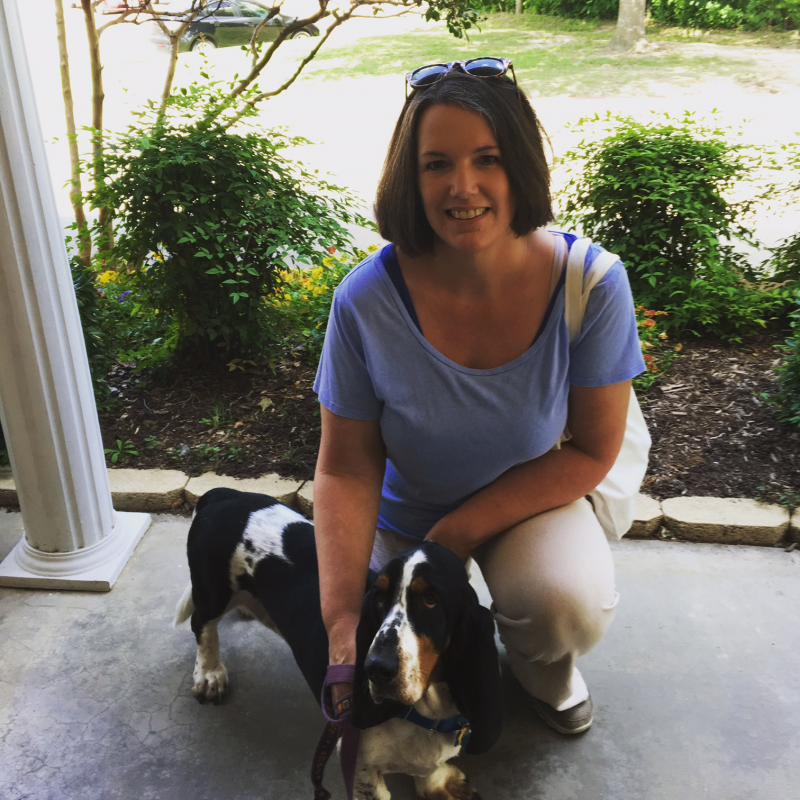
Menzie Chase with ‘Joker’
Chamber Connection February 8, 2018

The time to buy tickets is now!
It’s time for the 92nd Annual Chamber of Commerce Banquet! “Extra! Extra! Read all about it!” dinner and community awards set in the roaring 1920’s will be held at the Hopkins County Civic Center on Thursday, February 15th at 6:30 p.m. Awards including Citizen of the Year, Woman of the Year, Caregiver of the Year, Community Pride Award, Agriculturist of the Year, Large Business of the Year, Small Business of the Year, and Educator of the Year will be presented to deserving citizens of Hopkins County. So please join us for a beautiful escape to the 1920’s in Hopkins County. Period dress is welcomed but not required. We look forward to seeing you there! Individual tickets are $30 and available at the Chamber of Commerce. Whole tables that seat 10 people are available for $500 and include visible labeling of your business and preferential seating. To make reservations, call the Chamber at (903) 885-6515 and talk to Vickie, Cathey, or Lezley. You are also welcomed to stop by at 300 Connally Street and make your reservations in person!
Southern Roots is hosting their ribbon cutting celebration
Southern Roots is hosting their ribbon cutting celebration on Friday, February 9th at noon. Southern Roots is located at 1217 S. Broadway, Suite Q, in Sulphur Springs. Please make plans to come by, enjoy snacks and fellowship, and welcome this new business to Hopkins County!
Twogether in Texas Marriage Education Workshop is scheduled for Saturday, February 10th
The next Twogether in Texas Marriage Education Workshop is scheduled for Saturday, February 10, at the Texas A&M AgriLife Extension Office, 1200-B W. Houston Street, Sulphur Springs, from 8:30 a.m. to 3:30 p.m. This free workshop will cover marriage expectations, communication, conflict resolution, money management, and goals & dreams. Lunch and refreshments will be provided. Engaged couples who attend the workshop will be given a certificate to save $60 upon applying for a marriage license. Contact the Extension Office at 903-885-3443 to enroll.
Shannon Oaks Church hosts “Under the Oaks”
Shannon Oaks Church is hosting a fundraiser event called “Under the Oaks”. There will be dinner, live entertainment, a silent and live auction, as well as a ‘country store’ with baked goods and crafts. Dinner and childcare will also be provided for children under 11. The event will be on Saturday, February 17th starting at 4:30 p.m. Tickets are $10 for adults (11 & up) and $5 for children (under 11). Tickets are on sale at Shannon Oaks Church, 1113 Shannon Rd E. in Sulphur Springs or at www.shannonoakschurch.com.
Ribbon cuttings:
Chiropractic Associates and The Rub Club hosted their ribbon cutting and Grand Opening
Chiropractic Associates and The Rub Club hosted their ribbon cutting on Thursday, February 1st at noon. They are located at 207 Jefferson Street East in Sulphur Springs. The Chiropractic Associates and The Rub Club offer daily chiropractic, massage, and wellness needs. Make appointments by calling their office at (903) 919-5066.
Lady Cats Score 5 in Victory Over Marshall
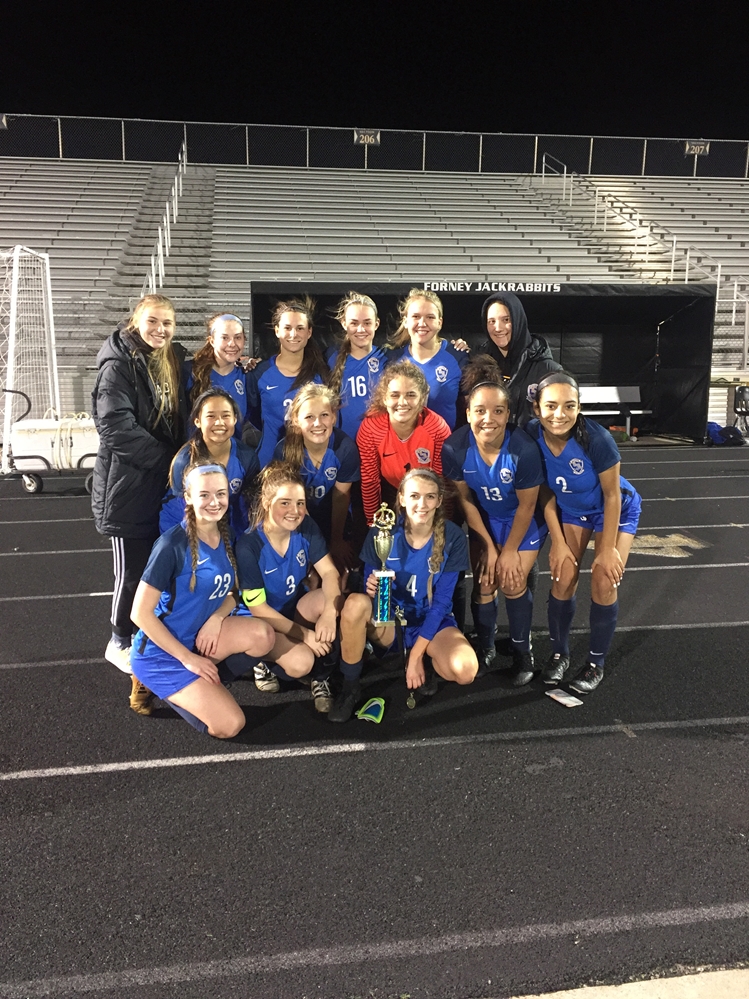
The Lady Cats’ soccer team improved to 2-0 in district play with a 5-0 victory over Marshall Wednesday evening at Gerald Prim Stadium. The Lady Cats scored three first half goals and added two more in the second half.
Mileena Zirretta scored a goal in each half and also had an assist on a goal by Gracie Boyer. Erika Lara and Jo McMillan also scored for the Lady Cats.
The Lady Cats now have two shutouts in two district games. The Lady Cats season record is 10-2-3. The Lady Cats play at Texas High Friday night. The Lady Tigers are coached by former Lady Cats coach Jesus DeLeon.
Pink ImpACT Scholarship Provides Opportunity for Future Breast Cancer Survivors

Through a generous gift from the Pink ImpACT Breast Cancer Advocates, future survivors of the disease or their dependents will have the opportunity to receive a scholarship to attend Paris Junior College.

Pink ImpACT Executive Director Sherry Thompson (at left) and PJC President Dr. Pam Anglin (right) sign the endowment agreement as Pink ImpACT Board Chair Woodye Mercer looks on.
“This endowed scholarship is a gift to the college that will benefit students for many years and make a difference in someone’s life each year,” said PJC President Dr. Pam Anglin. “We are so appreciative of Sherry Thompson’s dedication to helping breast cancer survivors and their dependents attend college.”
Helping others is what Sherry Thompson, from Pottsboro, Texas had in mind when she created the Pink ImpACT Breast Cancer Advocates in 2014. As a breast cancer survivor herself, now seven years cancer free, she fully understands the plight of those suffering with the disease and their families.
Her efforts are a direct response to her own battle with breast cancer. When diagnosed, her children were in high school. Her four-year battle made Thompson realize just how it could have affected her and her children.
“The worst thing would have been if my kids would not have been able to start college because of my illness,” she said. “I want to grow this endowment to help survivors and their children as we go forth.”
Throughout her treatments, then-divorced Thompson had her own financial battles in finding resources to see her children received a college education.
“Thanks to the help of scholarships, we made it happen!” Her daughter was attending Texas A&M University and graduated in 2014 and her son is working in a family construction business.
In attempts to afford other survivors the same blessing and opportunity, she has created an endowed scholarship fund and hopes others who are survivors to donate to this fund at PJC. Each gift is tax deductible.
“I was very blessed with the love and support of family and friends during my journey with breast cancer,” said Thompson, “so I wanted to pay it forward.”
In addition to Thompson’s efforts to assist with education, she is also a certified mentor for survivors.
Going forward Pink ImpACT, a faith-based organization headquartered in Grayson County, invites others who have suffered breast cancer or have been touched by this disease – or any cancer for that fact – to consider making a charitable donation to PJC to add to the corpus of the endowment.
Woodye Mercer, a 17-year breast cancer survivor and Pink ImpACT board chairman, said, “Many women who have undergone breast cancer treatments are unable to take part some events, such as a 5K run. But the opportunity to casually stroll through such a place of natural beauty as Hagerman and observe wildlife, birdwatching, a butterfly garden and much more while raising resources to help others is a wonderful mix.”
Thompson has already put the Lamar County Relay for Life on her calendar and plans to take part in the event.
While Pink ImpACT is based in Grayson County, Thompson has strong Lamar County ties. She is married to Todd Thompson, son of Jo Ann (Thompson) Parkman.
Thompson is anxious to have the opportunity to share her story with organizations and service clubs in Lamar County and can be reached at 903-821-8837 or by email: [email protected].
Should you wish to donate to the new PJC fund, please mail your gifts to: Derald Bulls, Director-Institutional Advancement, Paris Junior College, 2400 Clarksville Street, Paris, TX 75460-6258, or call (903)782-0276 to make a gift by credit card or for more information.