Miller Grove News 8-19-2016

As summer begins to subside and we prepare to start another school year, it is time for me to dust of the old laptop computer and start writing Miller Grove News for yet another year. It seems like just yesterday I started writing this column but looking back it has nearly been a decade ago. Things in “The Grove” have changed over time and the world has changed quite a bit too. As we look to the upcoming months we wonder how the November elections will turn out or if there will be other riots break out across our nation, or if any of our other freedoms will be stripped from America’s people. One thing I have come to realize in my short 33 years of life is that no matter the changes or what lies ahead we can rest assured that there is no place like Miller Grove and it will always be home to me.
Thankfully, we have received good, slow rains this week and temperatures have been very nice for August. I know this will help resurrect some of the gardens in the area that have been fading in the summer heat. My peas and okra are still producing though. And there are a couple of pumpkins that are beginning to turn orange beneath the long, leafy green vines of the plant.
Congratulations to Colten and Ally Baylus that recently purchased Mrs. Kim Irby’s house on FM 1567. They moved in a few weeks ago and are getting ready to welcome their son, Brysen, into the world in September. Mrs. Irby has moved to Fort Worth, near one of her brothers.
Speaking of people moving, Leon and Inge Heijligers have moved into their new house in time for Inge to start the new school year. She’s so close to the school now, living on FM 1567, she can probably walk to work in the mornings.
I have two other congratulatory wishes that are due to a newly wed couple and an engaged couple in our community. Patrick Covington and Kelsey Steele were wed at First Presbyterian Church in Sulphur Springs on July 23, at 6 pm. They were both graduates of Miller Grove ISD and I’m very proud of both of them. They have worked hard up to this point and have decided to make Miller Grove their home.
Jeremy Blackstead and Brytany Briggs have gotten engaged and will be getting married in October. Jeremy is a MG graduate and is currently employed at Hooten’s in Emory. Jeremy has always been a top-notch welder and it is no surprise that Hooten’s hired him since they have such a large business.
Last weekend my cousin, Nathan Petty, and I went to Carthage to a Clint Black concert. He was being inducted into the Texas County Music Hall of Fame. There were several entertainers there. The Master of Ceremonies was Neal McCoy. Also performing were Barbara Fairchild, Dallas Wayne, and Billy Dean. After the concert we saw Gay Seiber and Diane (Russell) Hart as we were about to leave. Well, leave it to me to see someone I know 2 hours away from home!
Thursday night’s Meet the Teacher night seemed to be a big success this year. With enrollment soaring about 300 for the upcoming school year, it is no wonder there were so many parents and students there that night. I saw several folks I knew and was also proud to meet our new 3-5 grade science teacher, Mrs. Davis, who is new to the campus this year. The PTO served BBQ sandwiches, chips, and tea throughout the night.
While I’m on the subject of PTO, let me tell you about the newest fundraiser they have planned. A lot of work and preparation has went into organizing Miller Grove’s first Glow Run/5 K Run (or Walk whichever you choose). The run will be held Saturday, Oct. 8, at 7 pm near Kid’s Kingdom in Sulphur Springs. Teams will have an entry fee of $30 with all proceeds going toward MG PTO for the benefit of the school and our students. For more information contact Stacie Wilbur or go to the Miller Grove PTO Facebook page.
This summer things began to change around the Miller Grove School campus. Back on July 21, the concrete was poured for the new elementary addition. Since then the contractors have seen that the steel frame of the building and room have been installed. At the last school board meeting (Aug. 15) the school board picked out the brick to skin the outside of the building with. Slowly, the building is coming together but I know we will all take great pride in having new and expanded facilities for our elementary students.
The concrete for the school wasn’t the only concrete poured in our community that day. Just down the road in County Line they were having a parking lot poured for the church. If you haven’t went by to check it out, please do. It is one amazing building. I know many hours of planning has went into the building and I know everyone involved is proud of the new church.
Friday, Aug. 12, Ryan Dougan and my cousin Hunter Darrow graduated from Northwest Lineman School in Denton. They are now fully fledged linemen! Congratulations to both of them!
Doug Lewis of Miller Grove Volunteer Fire Department contact me recently and said that they are still in need of a few good men and women to volunteer their services to help the department. He said they are now down to about 5 available responders – and folks, that’s not many. Anyone willing to serve is welcome to check out the facility and visit the department on meeting nights (2nd and 4thThursday of the month at 7 pm). Also feel free to contact the station if you have any inquiries about what can be done to help. The phone number is 903-382-3505.
Doug also mentioned that they are thinking about starting a Junior Fire Fighter program. The age frame would be about 16-18 years of age. This would be great for anyone who is in high school and thinking about pursuing a career as a fire fighter.
Miller Grove school will officially start up on Monday, Aug. 22 and the FFA will host it’s annual FFA Hamburger Supper on Thursday, Aug. 25. Remember to come out and help them welcome in the new year that night.
As you travel the highways and byways don’t forget that all roads lead back home and back to Miller Grove. Please send me any newsworthy information. My email address is [email protected].


Wildcats vs Liberty-Eylau Scrimmage Planned for 9 a.m. Friday at Prim Stadium Unless…
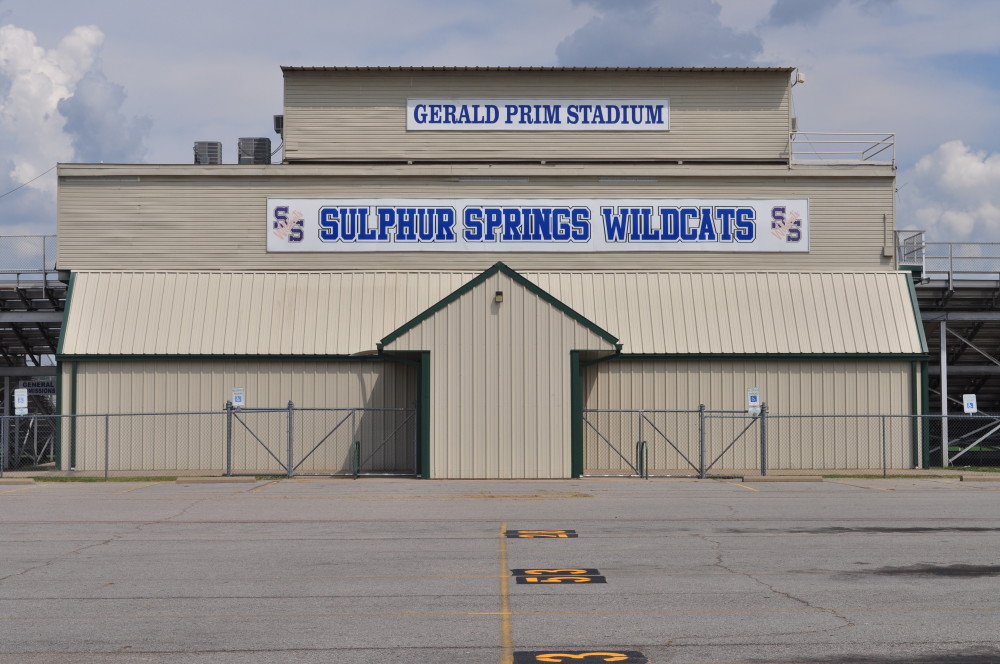
Wildcats Offensive Coordinator Matt Young will be watching for a couple of things especially during Friday morning’s 9 a.m. scrimmage against Liberty-Eylau. It’s planned right now for Gerald Prim Stadium unless we get a lot of bad weather according to Wildcats Head Football Greg Owens. Coach Young says he’ll be checking to see if the offensive line is physical. He says that’s been a goal since weight lifting sessions last January. That should allow the Wildcats to be able to run the football. Coach Young says he’s also interested in how his receivers catch the ball under pressure from Liberty-Eylau’s defensive backs. Coach Young says he wants to see mental errors disappear.
Wildcats Defensive Coodinator Triston Abron will be watching to see how well his defense executes the defensive scheme. He says the days of shut down defense are gone. Coach Abron says his approach is too make an offense work very hard to get their scores. He wants his defense to create havoc, limit an offense from scoring, get off the field after third down plays and collect turnovers. Coach Abron feels this year’s defense may be one of the most athletic the Wildcats have had for several seasons.
Liberty-Eylau played in the Class 4A State semifinal game last year and both coordinators agree they will provide a stern test for the Wildcats Friday. Both coordinators are also happy to be playing someone else for a change.
Another Rainout for Wildcats Team Tennis

The Wildcats’ team tennis squad were rained out again Thursday afternoon. They were scheduled to play at Terrell beginning at 4 p.m. Thursday. The teams will try again next Thursday at Terrell at 4 p.m. The Wildcats also lost two matches Tuesday due to rain. They were scheduled to play John Tyler and Jacksonville in Tyler. Those two matches will not be rescheduled.
The Wildcats also lost a match at Whitehouse when the home team apparently overbooked the date.
The Wildcats are 1-1 so far this season with a non-district win at Mt. Pleasant and a home loss by only one point to Sherman.

Morning Chapel Missionary Baptist Church 148th Anniversary

 The congregation of Morning Chapel Missionary Baptist Church at 204 Fuller Street in Sulphur Springs is joyfully planning the church’ 148th Anniversary and Homecoming weekend, set for Saturday August 20 and Sunday August 21, 2016. All members, families and friends are invited to the annual Homecoming Picnic on Saturday starting at 10 a.m. The men of the church will prepare the meats for the meal, and the volunteer “culinary crew” will prepare side dishes and desserts. Anyone who wishes may also bring a covered dish or items for the meal. On Sunday, there will be two church services with music. The 10am service will have speaker Dr. F.L. Combs, a descendant of Morning Chapel church pioneers. For the 3pm service, the speaker will be former pastor D.L. Weekly. The public is urged to attend.
Deacon Wilbert Roland remembers when he joined the church 70 years ago, when he was a 13-year-old youth. His 9 brothers and 4 sisters were all raised in the Morning Chapel Church. He was baptized in a pond which was located near what is now the Senior’s Center, close to the corner of Oak Avenue and MLK Jr. Drive. This pond, located near two small mom-and-pop grocery stores, and the nearby Waits pool were often used for baptisms in the early days. Likewise, Mr. Roland and his wife raised their children within the Morning Chapel family, and some of the men of his family serve as trustees today.
Trustee Lewis Hawkins was also raised attending Morning Chapel while growing up in Sulphur Springs. Though he admits that adult life took him away for a while, he returned to his church-going roots and today, he receives blessings and satisfaction from serving various needs of his church family. He recalls when a fire claimed the original church building many years ago. The entire community and people from around the world drew together, pooled their resources, and rebuilt the church. Persons from as far away as Africa to neighboring citizens and business people offered money, services and labor for the shared undertaking.
Morning Chapel is a missionary church, sponsoring several congregations in the nation of Mozambique. For the past 19 years, Reverend H.B. Nash Sr. has been pastor of Morning Chapel Missionary Baptist Church, a church with a heart for youth and for families.
Congressman Ratcliffe In Sulphur Springs Wednesday

Congressman John Ratcliffe was in Sulphur Springs Wednesday afternoon to visit with constituents and hear their opinions and direct his work accordingly.
 Ratcliffe stated that across the district he is hearing dissatisfaction with the current direction of the nation. Concerns regarding the Presidential election and the choice of candidates that are available at this time and local everyday life such as healthcare and jobs are on the mind of many.
After Labor Day when congress reconvenes, Ratcliffe will focus on issues of immigration and national security based on the happenings in the world. He stated vetting immigrants must be a priority for the nation based on the fact that the primary role of the federal government is to provide for the common defense. He said Americans need to focus again on the Constitutional rights of citizens and less on items that are not Constitutional in origin such as Obamacare.
Chamber Connection- August 18th

Chamber Connection-August 18th
The tickets are going fast, but they are still available!!! The Chamber of Commerce is hosting An Evening of Speed Networking! Because networking is just a fancy word for making friends! Our event will be held on Tuesday, August 30th, from 6 p.m. to 8 p.m. at Cedar Canyon in Sulphur Springs. This is the perfect opportunity for local business owners to network with other business owners in a non-pressured environment, meet new people, promote and describe their businesses, and enjoy delicious food and beverages provided by Lyndsay’s Plates + Provisions. Many door prizes will be given away throughout the evening. There are limited spaces available, so tickets will be sold on a first come first serve basis. Tickets are $25, so call the Chamber of Commerce at (903)885-6515 to reserve your ticket right away! It’s going to be fantastic!
The deadline is quickly approaching to submit your entries into the first annual Hopkins County Chamber of Commerce Photography Contest! Let me review the basics. Anyone of any age can enter as we have a children’s category. The picture must be newer than January 1, 2014, and must have been taken in Hopkins County. The contest will be open from August 1st to August 31st. There are seven categories you may enter: Natural World, Travel, People, The Hopkins County Experience, Altered Images, Mobile, and Children’s Category. Only digital images are accepted (no prints). To submit your photograph, email the picture to [email protected] Rules and releases are available on the Chamber of Commerce website. I cannot wait to see your beautiful photos!
Let’s talk about something I know you have been waiting for… It’s STEW time! The Chamber of Commerce sent out letters to sponsors and cooks this week inviting them to the 47th Annual Stew Cook-off. These letters contained all the information you will need to sign up to sponsor or cook stew. If you have moved and did not receive your letter, please call the Chamber at (903)885-6515 to update your address and get your letter. If you are interested in cooking stew or sponsoring stew for the first time, please call the Chamber to request information. We need more cooks and more sponsors, so don’t hesitate!
In regards to stew pots, sometimes individuals are not using their stew pots any longer and would like to sell them. If this describes you, please let the Chamber know. We have people calling all the time wanting to purchase used stew pots, so we can pass your information along to the appropriate contact.
Finally, the Chamber allows a non-profit organization to sell drinks at the Stew Cook-off. There are several rules and regulations to follow, but if you are interested in placing your organization’s name in the hat, please call the Chamber. You will be asked to come in and sign an understanding agreement in regards to rules and expectations. Deadline for volunteers is August 26th. Once we have all of our volunteers in place, we will literally pick one out of a hat and award drink sales to that organization.
Just a reminder… effective August 1st we have new business hours. The Chamber of Commerce is open Monday through Friday 9 a.m. to 5 p.m. We are closed on Mondays from 12 p.m. to 1:30 p.m. as well.
Ribbon Cutting Celebration for Beauty Grace Boutique was held on Wednesday, August 17th at noon
The Beauty Grace Boutique hosted a ribbon cutting on Wednesday, August 17th at noon. The new boutique is located at 101 Bill Bradford Road Suite 21, and specializes in women’s fashion and accessories. The owner, Ana Velasco, has spent time selling her merchandise at Canton, and she is thrilled to be opening a shop right here in Sulphur Springs! Her opening day for customers is Monday, August 15th, and her hours will be 10 a.m. to 6 p.m. Please go by… her boutique is beautiful!
The Hopkins County Fall Festival presents Emerald City Band on Friday, August 19th
Change of VENUE!!!!! The Emerald City Band will be performing on Friday, August 19th, at The Hopkins County Civic Center. Admission is free of charge, but you will still need to bring your lawn chairs. For VIP ticket information, contact a Fall Festival Board member or by calling (903)243-1925.
SSCC/Mitchell Family Fitness will host a Fun Run on Saturday, August 20th at 8 a.m.
The SSCC/Mitchell Fitness Fun Run will benefit the CanHelp Pack the Bus campaign. Registration begins at 7:30 a.m. at the Sulphur Springs Country Club Fitness Center. For more information, contact Matt Mitchell at (903)348-5265.
You’re invited to a Back to School Bash by Cricket Wireless on Saturday, August 20th from 10 a.m. to 2 p.m.
Cricket Wireless is hosting a Back to School Bash on Celebration Plaza on Saturday, August 20th, from 10 a.m. to 2 p.m. Cricket Wireless will have free food and drinks, free school supplies, free haircuts, giveaways, popcorn, music, and a dunk tank. Cricket Wireless wants you to come out and finish Summer 2016 with a bang!
Reilly Springs Jamboree hosts Don Woods on August 20th at 7 p.m.
Reilly Springs Jamboree, a Hopkins County Original Music Venue since 1956, presents Don Woods on Saturday, August 20th, at 7 p.m. Tickets are $10 each. For more information, visit ReillySpringsJamboree.com. The Reilly Springs Community Center is located at 109 County Road 1439 in Sulphur Springs.
Hopkins County will welcome home Del Frances on Monday, August 22nd at 5:15 p.m.
Del Frances, our local veteran who cycled all the way to Washington D.C. will arrive home on Monday, August 22nd. Del started his bike “Ride for Recognition” here in Sulphur Springs at noon on June 3rd, 2016, and arrived at noon on the East steps of the Capitol Building in Washington D.C. 74 days later. We will be welcoming him home at Muddy Jakes at 5:15 p.m. Please plan to come out to Muddy Jakes to congratulate him and visit about the progress and success his “Ride for Recognition” has made.
The Venue at Two Nineteen will host its Ribbon Cutting Celebration Wednesday, August 24th at noon
Please make plans to attend the ribbon cutting celebration for The Venue at Two Nineteen on Main Street at noon. We have all watched this building with anticipation wondering how beautiful this venue would become. Well, now is the time to see for yourself. Put the ribbon cutting on your calendar, and we’ll see you at noon!
Senior Citizens Center will host the Senior Summer Olympic Games on Thursday, August 25th
The Sulphur Springs Senior Summer Olympics Games hosted by the Senior Citizens Center will be held on Thursday, August 25th at the First Baptist Church ROC facility. The 1K Race will begin at 9:30 and the Olympic Games will begin at 10:00 a.m. Contact Karon Weatherman at (903)885-1661 or go by the Senior Citizens Center to Pre-register for the events.
Fireside BBQ will host their ribbon cutting celebration on Thursday, August 25th at 10:30 a.m.
Fireside BBQ & Catering will host their ribbon cutting celebration on Thursday, August 25th at 10:30 a.m. They are located in Birthright at 9457 Tx Hwy 19. Glen Norfleet, the owner of Fireside BBQ, explained their location is north of the Water Plant but South of Joe Bob’s on the west side of Hwy 19. Can’t wait to see everyone there!
First United Methodist Church will host Divorce Care every Wednesday at 6 p.m.
Divorce Care continues every Wednesday from 6 p.m. to 8 p.m. through September 13th in the administration building at First United Methodist Church. All who are dealing with separation or divorce are invited to attend.
Lone Star Quilt Guild currently selling raffle tickets for the 17th Annual Quilt Show
The Lone Star Quilt Guild is currently selling raffle tickets for the 2016 Raffle Quilt called Autumn Stars. Autumn Stars was designed by Joy Gregory, made by guild members, and quilted by Debra Hager. Tickets are 1 for $1 or 6 for $5. The 17th Annual Quilt Show will be held September 16th and 17th at The ROC, First Baptist Church Outreach Center at 115 Putman Street in Sulphur Springs. We have tickets available here at the Chamber of Commerce, or you may purchase tickets from Quilt Guild members.
The Lights of Life Style Show is scheduled for Thursday, September 15th at 6:30 p.m.
The HC Health Care Foundation is hosting its annual Lights of Life Style Show on Thursday, September 15th at 6:30 p.m. at the First United Methodist Church. Entry fee is a $25 donation and there will be door prizes and a raffle. Dinner and Fashions will be provided by Lou Nells. For ticket information contact the Foundation office at (903)438-4799 or Lou Nell’s at (903)885-0664.
Workforce Solutions will host its annual LEAP Conference on September 23rd from 9 a.m. to 12 noon
Workforce Solutions of Northeast Texas is hosting its annual LEAP (Learning Endorsements and Professions) Youth Expo on Friday, September 23rd. This event is very much like a job fair except that it is geared to educate eighth graders and help guide them as they make their endorsement selections heading into high school. Workforce Solutions is seeking a wide variety of companies and businesses to attend the LEAP Youth Expo to describe your business and expose eighth graders to all career avenues after graduation. Since students now choose their high school endorsements while in eighth grade, the Expo is perfect for them. Please consider attending this Expo and taking visuals and information to give away. They will be so thankful to have you there! Please call Bart Spivy at (903)794-9490 ext. 513 with any questions.
New members to the Chamber of Commerce:
Welcome to Careerify, a company specializing in online platforms and education. Careerify is designed to help students find internships in a business they have an interest in pursuing.
Don’t forget the Fall Festival’s presentation of the Emerald City Band Friday night at 8 p.m.. The concert is free, so bring your lawn chairs and head to the Civic Center! Then, Saturday morning at 8:30 a.m., Texas A&M AgriLife Extension, 1200 B W. Houston Street in Sulphur Springs, will offer a Free Marriage Education Workshop for married, engaged, and seriously dating couples. Yoga on the Square will be offered from 9 a.m. to 10:00 a.m. The Bookworm Box will host a book signing featuring Ryan T. Petty at 2 p.m. The Celebration Market will be held on Celebration Plaza from 6-10 p.m. and Michael Booth and Amanda Pruitt will provide your entertainment starting at 6 p.m.
Ribbon Cuttings:
Ribbon Cutting Celebration for Beauty Grace Boutique was held on Wednesday, August 17th at noon
The Beauty Grace Boutique hosted a ribbon cutting on Wednesday, August 17th at noon. The new boutique is located at 101 Bill Bradford Road Suite 21, and specializes in women’s fashion and accessories. The owner, Ana Velasco, is thrilled to be opening a shop right here in Sulphur Springs. Her opening day for customers is Monday, August 15th, and her hours will be 10 a.m. to 6 p.m.
Team Registration Opens for Annual Hopkins County Stew Contest

Registration is underway for the 47th Annual World Champion Hopkins County Stew Contest. The contest is set for Saturday, October 22nd. Returning stew cooks have the option of keeping their 2015 site which will be reserved until Friday, September 16th. On Monday, September 19, all unclaimed stew sites will be open to new cooks or to returning cooks who would like a new site location. After September 19th, all sites will be assigned on a first come, first serve basis.
A cooking team is composed of up to two cooks and two helpers. Each cooking team will need a $175 sponsor. From the $175 entry fee, $125 will be returned to the cooking team to purchase ingredients. Contestants are encouraged to participate in the campsite and costume contest.
A reception for the cooks is Tuesday, October 11 at 6 p.m. at the Southwest Dairy Museum. At that time they will receive the ingredient check, two complimentary stew bowls, and contest rules and information.
Contact the Hopkins County Chamber of Commerce to register.
Fish Die-Off In Ponds

During this time of the year, the temperature changes create a challenge to fish populations living in ponds in our county. As a general rule, small ponds intensively managed for catfish are the most susceptible to die-off problems. Other common scenarios for summer die-off problems are ponds with large quantities of aquatic vegetation, ponds that are heavily or frequently fed with commercial fish diets, ponds that were stocked heavily or excessively and biomass now exceeds carrying capacity, or ponds that experience phytoplankton die-offs caused by a multitude of different reasons. How do you determine the cause of a fish die-off? In most cases, asking the right questions will lead you to the cause or causes. A recent publication from Texas A&M AgriLife Extension Wildlife Specialists enlists useful information needed to determine the cause of fish die off:
1) When did the fish start dying and for how long have they been dying? The reason for this question is to determine if there is acute (very rapid) or chronic (slow and prolonged) mortality. The rate of fish mortality helps provide clues as to the cause. Oxygen depletions are typically acute mortality events in which the fish die quickly, within a few to several hours, and then the mortality ends. Chronic mortality spanning several days or even weeks is typically associated with disease or parasite issues where portions of the fish population die over prolonged periods. Exposure to lethal concentrations of pesticides or herbicides can cause either acute or chronic mortality, dependent upon the dose of the chemical the fish were exposed to, although mortality tends to be more acute as toxic pesticides tend to dilute and degrade quickly in the aquatic environment by simple dilution, oxidation, microbial deterioration, or UV exposure.
2) How many fish have died and what size are they? Phone calls to the extension office often relates to a ‘fish kill’ in a pond, and after a lengthy discussion, discover that it was a single or a few large fish or perhaps 3-15 small fish. A few dead fish does not equate to a fish kill. Fish kills result when a major chemical or environmental event has occurred in a pond, that results in mass mortalities (10% or more of theentire fish population) of a single or multiple species.
- Large fish. – It is disheartening to lose a 5-10 pound largemouth bass or a 8-15 pound channel catfish, but believe it or not, some large fish do simply die of natural causes or old age in small impoundments. Larger fish tend to experience mortality during or immediately after the extremely stressful and body depleting spawning season. This means during the spring for largemouth bass and the late spring to mid-summer for channel catfish, it is not unusual to see a dead large fish or two every couple of days during or immediately after the spawning season. Large fish that are past their prime are also more vulnerable during the hot summer months, when their large body size and deteriorating body make them more vulnerable to low dissolved oxygen that may not be low enough to cause mortality in other fish in the pond.
- Small fish. – Small quantities (3-12 or more) of dead small fish, such as largemouth bass fry or fingerlings, small bluegill, redear sunfish, or other baitfish, often trigger pond owners to call about fish kills. Be sure to ask about environmental conditions prior to the discovery of dead fish, such as prolonged cloud cover and/or heavy rains, rapid or prolonged severe temperature changes, and shallow habitat cover (areas of heavy aquatic vegetation). Small fish are more susceptible to localized, rapidly changing environmental conditions than larger fish. The reason for this is that they less mobile spatially in the pond environment and more restricted to shallow shoreline habitat. Their small size does not allow them to quickly navigate large distances, and their small size typically restricts them to shallow or heavy cover environs, or else they become food for predatory species. Localized mortality of small fish tends to occur due to temperature or pH shock after a heavy rain event, rapid temperature changes in the shallows, or localized oxygen depletions, especially in areas of heavy aquatic vegetation. Heavy rains can cause large amounts of runoff that differs in pH and other chemical properties or temperature. The effects of these chemical changes are greatest in shallow shoreline environments where small fish cannot seek the deep or open water environments available to large fish. Rapid air temperature changes such as sudden and prolonged cold fronts or extreme heat spells also effect shoreline environments as shallow water is the is subject to the most extreme temperature change due to the interface between surface area and water depth. Small fish cannot escape to the more stable deep water environs that larger fish can. Small fish are also often associated with heavy cover for protection, and the foremost cover in ponds is aquatic vegetation. Oxygen concentrations are not always uniform in a pond, and areas of heavy aquatic vegetation can produce localized oxygen depletions at night in heavily vegetated areas of a pond. Small fish require less total oxygen than large fish, but they are much more sensitive to oxygen depletions which can result in localized mortalities.
3) How many different species are dying? What you are trying to determine with this question is that if more than one species of fish is dying, you probably are faced with a water quality problem (i.e., oxygen, ammonia, nitrites). If only one species of several species present are dying, it may be a disease/parasite problem, but not always because different species may have different tolerance levels for water quality parameters. If only one species of fish is in the pond and a die-off is occurring, you need more information.
4) Have any pesticides or herbicides been used recently that were introduced into the pond? This could include pasture insecticides washing into ponds or even cattle that were treated with an insecticide standing in the pond to escape the summer heat. Determine if any herbicides, aquatic or terrestrial, have been recently (within 4 days) applied within 250 feet
of the pond or has there been any herbicides applied between 250 and 500 feet of the pond prior to (within 7 days) a rain event. Many terrestrial herbicide formulations are toxic to aquatic life including fish. Even non-toxic or low toxicity herbicides washing into a pond maylead to untimely vegetation die-offs. If herbicide is suspected in a fish die-off, be sure to inquire about aquatic vegetation die-offs as well to determine if oxygen depletion from plant decomposition is the culprit.
5) How big is the pond? The pond owner usually thinks the pond is 2x to 3x larger than it really is! Walk them through the process of estimating surface area in acres by dividing square footage by 43,560. Many pond owners find it difficult to estimate area in acreage or square footage, but satellite imagery, on-line tools, and GIS programs, such as Google Earth™, can be used to easily and accurately determine the square footage of a pond remotely by either the owner or Extension agent using the distance, mapping, or area tools. Remember, excessive depth does not make up for lack of surface area when it comes to fish production! Excessive water depth itself can periodically be the cause of fish die-offs in the spring or fall due to rapid destratification or turnover events leading to mixing of low dissolved oxygen waters. However, these turnover events require specific weather conditions, such as heavy cold rain or major cold front, in order to occur.
6) How many pounds of fish are present? Once you know the surface acreage, try to determine the pounds of fish present by asking: (1)for an estimate of fish stocked (minus those caught out) and (2) the average weight of the fish present. Be sure to ask if the owner notices or has caught any small fish and the number of those small fish in order to include an estimation of fish weight for offspring if the pond is more than a few years past stocking. This will help you estimate the total poundage of fish present.
STOP RIGHT HERE — if the total estimated pounds of fish exceed 1,000 pounds per surface acre (that’s only 100 pounds in a 0.10 acre pond), you are probably dealing with oxygen depletion. This accounts for about 85% of all fish die-offs in Texas farm ponds!!!
7) Was there a water color change? A color change associated with oxygen depletion is common. Typically ponds can go from a light green or clear color to a brown or coffee color signifying the loss of phytoplankton and a corresponding drop in oxygen. This is often occurs when persistent cloud cover prevents direct sunlight from reaching the pond.
8) Was there an aquatic herbicide or algaecide applied to the pond within the last 2 weeks? Did a fish die-off occur 5 days or more after applying herbicide to aquatic vegetation? If so, don’t blame the herbicide, the culprit is likely the decaying vegetation. Determine what percentage of the pond was treated, with which herbicide, and what was/is the temperature of the water. A pond can contain 8-14 tons of aquatic vegetation per surface acre in water 4-6 feet deep. Decaying vegetation causes oxygen depletion, and therefore it is recommended that no more than 20-25% of a pond be treated with herbicide at a time to avoid low dissolved oxygen. Temperature is critical in this matter as the warmer the water, the less oxygen it holds. A pond owner will be able to treat more area or volume of the pond in the spring than in the summer, and aquatic vegetation should not be treated with
herbicide if the water temperature is above 90ºF. Also, “fragile” plants such as planktonic algae, filamentous algae, and submerged macrophytes will decompose much more quickly (and thus be more likely to cause oxygen debt) compared to emergent plants such as lily pads or cattails.
Oxygen Depletions
When the fish standing crop (total pounds of fish) exceeds the 1,000 lbs/acre carrying capacity during the hot months, the stage is set for a die-off. Why the summer months? Because again, warm water cannot hold as much oxygen as cool water, yet the fish need more because their metabolism (and therefore their oxygen requirements) increases as water temperature increases. A farm pond that could easily carry 2,000 to 3,000 pounds of fish per surface acre through the winter months won’t stand a chance once the dog days of summer arrive. Remember, oxygen is usually lowest right at daylight, so that’s a good time to check and see if fish are piping (gulping air and water at the surface) or swimming at or near the surface. In many cases, the larger fish will be the first to exhibit signs of oxygen stress. Now that the “hammer is cocked”, additional events that could “pull the trigger” and further contribute to oxygen depletion include:
1) A couple of hot, still, cloudy days in succession that reduce photosynthesis and therefore oxygen production;
2) Aquatic herbicide treatments in hot weather that kill too much vegetation in too short a period of time resulting in an oxygen debt; or
3) Overfeeding/overfertilization resulting in nutrient decomposition or phytoplankton die-off.
So, how do you correct for low oxygen?
1) Reduce the fish load present to well below 1,000 lbs of fish/acre;
2) Emergency aerate by backing a boat on a trailer into the pond and running the motor in a fixed position to circulate the water and increase oxygen;
3) Add fresh well water, but aerate it well before it enters the pond;
4) Circulate water with a pump, but set the intake near the pond surface (pumping water off the pond bottom and spraying it back over the surface only compounds the problem!), and spray the outflow out over the water surface; or
5) Add aeration or destratification systems to the pond before an oxygen depletion occurs.
Other Common Water Quality Problems
Golden algae are microscopic flagellated alga about the same size as red blood cells (10 microns). Under favorable conditions, the algae are capable of producing toxins referred to as prymnesins
with multiple effects including toxicity to fish. If the algal population is undergoing a substantial or rapid population increase, referred to as a “bloom”, the toxin may lead to fish kills. Golden algae’s impacts on fish populations are most likely to occur in waters that contain a high salinity or mineral content with a neutral (7) or higher pH. Most fish kills attributable to golden algae blooms have occurred during the winter and spring months when water temperatures are below 55°F. It is important for landowners to be able to differentiate between a fish kill caused by oxygen depletion, which is responsible for the vast majority of fish die-offs in Texas private waters. The best clue is the seasonality factor. If a fish kill is occurring during the hot months of May through September when the water temperature is above 70ºF, it is not likely to be related to the presence of golden alga. Conversely, fish kills due to low dissolved oxygen rarely occur in the cool months when golden alga blooms are most likely to kill fish.
Early detection of a golden algae bloom is essential to preventing a fish kill. Visible signs include water with a distinctive golden-yellow to rust color. However, this may not be evident during the early stages of a bloom. Early detection may only be possible through regular water sampling during the typical outbreak season when the temperature, pH and salinity levels are in the range conducive to supporting a bloom (water temperature below 55°F, pH greater than 7.0, and salinity 2 ppt or greater). Foam on the water surface may accompany the bloom when the water is agitated or subject to wave action. Dying fish may attempt to jump out of the water, swim slowly and sometimes congregate near the shore or sources of freshwater, such as inlets or near springs. If the bloom progresses and results in a fish kill, dead fish may have extremely red and/or bloody gills and fins and scales covered in mucous.
Upon observing visible signs of a golden algae bloom, water samples should be immediately sent to an organization or agency that has the capability of confirming its presence. Copper-based algaecides are effective at controlling golden algae blooms. Either the use of a chelated copper compound or copper sulfate should help reduce golden algae populations. A complete list of algaecides and their labels can be found at http://aquaplant.tamu.edu/management-options/golden-alga/. Potassium permanganate can be added to the pond to damage golden algae cells and to help limit toxicity by oxidation of prymnesins. If possible, the addition of supplemental aeration for a few days following the treatment will help maintain oxygen levels as organic matter in the pond is oxidized. In certain cases (e.g., where the cell count is already high), potassium permanganate applications may be recommended prior to the use of a copper-based algaecide.
Ammonia is a chemical compound used as a fertilizer, excreted by fish as part of protein
metabolism, and is a byproduct of normal decomposition in a pond environment. Ammonia can build to concentrations toxic to fish and is most problematic in ponds with heavy loads of fish (near or over 1,000 lbs/acre), ponds that are over fertilized, or when fish are feed heavily, especially to excess. Heavy fertilization, including the use of chicken litter, in the watershed followed by run-off rains washing into the ponds can cause toxic levels of ammonia. Ammonia becomes more toxic as pH and temperature increase. A water test is required to determine if ammonia is present. The only cure is to add fresh water, aerate heavily to increase bacterial nitrification, remove stagnant, ‘dead’ water from the bottom and reduce the load of fish present.
Nitrites are converted from ammonia by Nitrosomonas spp bacteria. Nitrites can cause brown blood disease, so called because the fish affected have chocolate colored blood. If nitrite poisoning is suspected, cut open an affected fish and observe the blood color—instead of the normal bright red color, the blood appears dark or brownish. Nitrites bind to the blood’s hemoglobin and form methemaglobin, which is ineffective at removing oxygen from the water – resulting in the fish’s inability to breathe. The fish exhibit the same signs as when an oxygen depletion occur by swimming lethargically at the surface—but this may be observed even during mid-day when oxygen production should have improved. Ponds suffering from nitrite poisoning are usually heavily fed catfish ponds, and nitrites usually don’t show up until late summer or early fall. Heavy pasture fertilization with run-off into a pond can also cause elevated levels of nitrites. Nitrites can be “neutralized” by adding un-iodized stock salt. The amount to add varies with the level of nitrites, but 200 ppm of chlorides is effective at mitigating the effects of nitrites in all but the most heavily stocked and fed commercial catfish ponds. Typically 200 pounds per surface acre is sufficient to adequately increase the chloride concentrations in most ponds and negate the impacts of nitrites. A simple recommendation of “add salt to the pond,” without the benefit of a water (chloride and nitrite) test tends to give pond owners a false sense of security.
Diseases/Parasites
So, what if it’s not a water quality problem killing my fish? Well, then your pond owner is in the vast minority. Even many disease problems are triggered by stress brought on by poor water quality. Diseases and parasites normally only affect one species, even if there are many species present. Common signs of parasites and diseases are not always realized until fish are inspected closely, and most often observations must be made of fresh dead (within an hour or two) or infected and dying fish. Parasites will begin to flee a carcass within fifteen minutes and bacteria will begin to die on the host within hours of death, so speed is of the essence. Additionally, gills are often inspected for parasites, color, mucus production, clubbing, and inflammation, but the gills will turn from bright red to light pink to grey in a few hours in warm water, rendering them useless for disease or parasite diagnosis. Indications of disease or parasite issues include prolonged or chronic mortality over several days to weeks, death of only one or two species, lesions, ulcers, hemorrhaging of the fins, belly, or around the gills, bulging ‘pop’ eyes, distended or fluid filled abdomen, cottony growth, dull patches or ‘saddleback’, deteriorating or missing fins, distended scales with localized scale loss and areas of skin that look like they have been ‘rubbed with sandpaper’. Proper identification is a must, but typically the most common disease and parasite issues are:
1) Protozoans – The protozoa Ichthyopthirius multifiliis causes a disease commonly known as white spot disease or ich. Ich is one of the most common and persistent diseases. The protozoan produces white nodules on the body, fins, and gills that look like white grains up to 1 mm in diameter. Each white spot is an encysted parasite. Ich is very damaging to the gills and skin. In heavily infected fish it can cause a rapid loss of condition, considerable distress and death. Infected fish have small white spots on the skin and gills and produce excess mucus, due to irritation. Damage caused to the gill tissue of infected fish reduces respiratory efficiency.
2) Bacteria – Bacterial infections occur most frequently during periods of transition (summer to fall or winter to spring) when water temperatures are changing or any time fish may be subject to stress (high temperatures, low water, low dissolved oxygen). Fish may display lesions, ulcers, hemorrhaging of the fins, belly, or around the gills, bulging ‘pop’ eyes, distended or fluid filled abdomen, cottony growth, dull patches or ‘saddleback’, deteriorating or missing fins, or distended scales with localized scale loss. Consult a specialist for verification and control options.
- Motile Aeromonas Septicemia (MAS) – This is the most common bacterial disease of freshwater fish and is cause by several members of the genus Aeromonas. Signs of MAS range from sudden death to skin lesions. Skin lesions include variously sized areas of hemorrhaging and necrosis at the base of the fins. These lesions may progress to reddish to gray ulcerations with necrotic areas of tissue.
- Enteric Septicemia of Catfish (ESC) – This is the most important bacterial disease of catfish and occurs most frequently in catfish only ponds or ponds with large quantities of channel catfish. ESC is caused by the bacterium Edwardsiella ictaluri, and is normally a seasonal disease, with outbreaks occurring when water temperatures are in the range of 75-83ºF. Very high mortality is common and in some cases, very few clinical signs are observed. Symptoms include corkscrew spiral swimming, abdominal distention, ‘pop-eye’, or pale gills. Small white or red pin-head sized hemorrhages appear on the skin and a small hole can form in the top of the head.
- Edwardsiellosis (EPD) – This disease is caused by Edwardsiella tarda and is less common than ESC, but infects a wider variety of fish including channel catfish, bluegill, and largemouth bass. Small lesions are initially observed on the flanks and caudal peduncle of channel catfish. Unlike with ESC, catfish affected with this disease will continue to eat even if they are severely affected.
- Columnaris Disease – Columnaris, is a common bacterial disease that affects the skin or gills of freshwater fish and is caused byFlexibacter columnare. This bacterium is usually pathogenic at temperatures greater than 59F, although it can cause heavy infections in channel catfish during cold winter months. Mortality and severity of the disease increase at higher water temperatures. Common symptoms include erosions and necrosis of the skin and gills. It is often visible as a whitish ‘dull looking patch’ that may have a red peripheral zone on the head or back (saddleback) and/or the fins (fin rot).
3) Viruses – Viruses can occur at any time of year under any conditions, but major outbreaks tend to occur during crowding, poor water quality, and stress. Most common viruses cause severe mortality, seemingly without cause, and can strike quickly. Often times there are no visible or discernable symptoms. Viruses are not typically a problem in balanced ponds in which the fish population is below the natural carrying capacity.
- Largemouth Bass Virus (LMBV) – Largemouth bass virus is a naturally occurring virus that is carried by other fish species, but has produced disease in only largemouth bass. LMBV is often found in bass that show no signs of disease suggesting some fish might be infected but do not become ill. LMBV caused die-offs tend to occur from June through September, and warm water temperatures might be a factor. Most bass infected with LMBV will appear completely normal. In those cases where the virus has triggered disease, however, dying fish will be near the surface and have trouble swimming and remaining upright because LMBV appears to attack the swim bladder. LMBV may not be a major problem in ponds, but is suspected to be the cause of many largemouth bass die-offs that are blamed on oxygen depletions due to the similarity in symptoms.
- Channel catfish virus (CCVD)- Channel catfish virus disease was first recognized as a disease problem during the early days of commercial catfish farming with high mortalities reported in channel catfish fingerlings and fry. Today the virus is present in all catfish growing regions of the United States. The disease is strongly influenced by environmental stressors. CCVD occurs in fry and fingerlings less than a year old and less than 6 inches long. It is only a problem in ponds where there is catfish reproduction and when stocking channel catfish fingerlings or fry into new ponds.
4) Parasites – Parasites, both internal and external, are always present in pond populations of fish. However, they are more of a curiosity to fishermen who find them on fish they catch rather than a common cause of fish kills. When parasites multiply within a fish population to the point where they cause mortalities, then there is another problem already present in the pond that has allowed parasites to reach critical numbers. The factors that allow parasites to increase to critical numbers often include poor water quality (too many nutrients entering the pond), periodic low dissolved oxygen concentrations that stress the fish and weaken the immune systems, or a previous or ongoing disease issue that weakens the immune system or creates openings (lesions, external hemorrhages, scale loss, gill damage) that allow the parasites to better colonize the fish.
- ‘Grubs’ (nematodes) – Once fishing season arrives, anglers catch a few fish and during cleaning (normally filleting) notice white, yellow or black “worms” encysted in the skin or flesh and are often found at the base of the fins. These ‘grubs’ are actually various nematodes, and have an interesting yet complex life cycle involving fish, snails and wading birds, but seldom kill fish by themselves. Breaking the cycle can be difficult, although some pond owners achieve success by controlling aquatic plants (food for snails), or stocking redear sunfish to control the snails.
- Contracaecum – This roundworm looks like a watch spring and is often found attached to the membranes outside various internal organs. It’s more of a curiosity to anglers cleaning fish than anything else.
- ‘Flukes’ (trematodes) – There are two families of trematodes: gill flukes and skin flukes. Fish infected with flukes often “flash” or rub against hard objects, yet no visible parasites are seen due to their small size. Gill flukes (Dactylogyrus) or body flukes (Gyrodactylus) are among the likely suspects when flashing is observed. Other, more advanced symptoms of flukes are clamped fins, inactivity, and rocking motions. Gill Flukes live as external parasites attached to the gills with hooks, and are less than a millimeter long. Gill flukes can become numerous and open the gills to bacterial infections leading to death. Part of the fishes’ response to gill flukes is to secrete additional mucus. In bad infestations mucus can be seen trailing off the gills. If flukes become numerous, they can damage the gill lamellae, making them swell or even fuse together. Body flukes attach to the skin of the fish with hooks, burrowing under the scales. Body flukes can increase quickly and a fish can infect another through casual contact, or the free swimming larvae can find a new host. Bacterial infections commonly follow bad infestations.
- Protozoans – Trichodina spp. are a group of protozoan parasites of fish. Trichodina have a prominent “tooth-like” internal cytoskeleton ring. While small numbers of Trichodina on a fish generally do not cause much of a health problem, large numbers can cause serious damage and ultimately, death. Unlike many parasites, Trichodina can cause significant mortality. Small fish are especially susceptible, and mortality can occur quickly if undiagnosed. Trichodina are often the cause of die-offs of small bluegill in the spring when temperatures begin to warm. Trichodina cause irritation by feeding on the cells covering the surface of the gills and skin. This can result in excessive growth of the epithelial cells, clubbing of the gill filaments and even fusion of the gill filaments. This reduces the ability of the fish to breathe and excrete ammonia.
You can also refer pond owners to the TVMDL at the TAMU-Vet School by calling 1-888-646-5623. They no longer offer fish disease services to pond owners but they can provide a list of alternate aquatic disease laboratories. As always, you can also contact one of the Extension Fisheries Specialists for advice.
 Mario Villarino DVM, Ph.D. |
What Comes Next?-A Sulphur Springs Recycling Update


We’ve gotten a lot of interest in recycling in the community. If a recycling facility is to be established locally, there are several steps that must be taken.
The first step in establishing a recycling facility will be for the community to designate a Recycling Coordinator. Someone will need to perform tasks such as setting up informational meetings and calling for the city council to pass a motion for recycling.
The next step will be deciding the type of recycling center that would best fit Sulphur Springs. Does the public want one main bin that everyone has to drive to so that they can drop off their recyclables? Or do citizens want to have curbside pick up that is collected in the same manner as the garbage collection? The cheaper option would be the one main bin, but the more convenient option is the curb-side service.
How will residents pay for these options? If there is enough support to encourage Sulphur Springs to have a recycling facility then the city council will propose an ordinance or plan to increase taxes or establish a fee. While no one wants a tax increase, recycling centers have been shown to bring jobs to communities and have other benefits. The city can be encouraged to apply for a grant to help fund a recycling center.
There is a group called the State of Texas Alliance for Recycling (STAR), who are actively trying to “increase recycling rates to the highest level afforded by balanced economic and environmental sustainability principles, for the benefit of the State and the people of Texas.” They provide workshops, seminars, and many volunteer opportunities to increase recycling awareness in Texas. If Sulphur Springs created a partnership with them, they could provide even more information about the benefits of recycling. In their most recent report the Texas Recycling Data Initiative “12,678 Texas jobs” were created through recycling programs.
The Texas Commission on Environmental Equality (TCEQ) is planning on conducting a study to reveal “Current and potential economic impacts of recycling, including state and local revenue that may be considered lost because recyclable materials are not recycled.” The TECQ will publish their results in their annual report, “Municipal Solid Waste in Texas: A Year in Review, 2016 Data Summary and Analysis.” The study is a requirement after House Bill 2763- which was written to discuss the economic impacts of recycling. TCEQ also offers a wide variety of grants to local governments interested in taking care of the environment.