CHRISTUS Mother Frances Hospital-Sulphur Springs Honors Extraordinary Nurses with Daisy Award

August 3, 2017 – Nurses at CHRISTUS Mother Frances Hospital – Sulphur Springs (CMFH-SS) are being honored with The DAISY Award for Extraordinary Nurses. The award is part of the DAISY Foundation’s program to recognize the super-human efforts nurses perform every day.
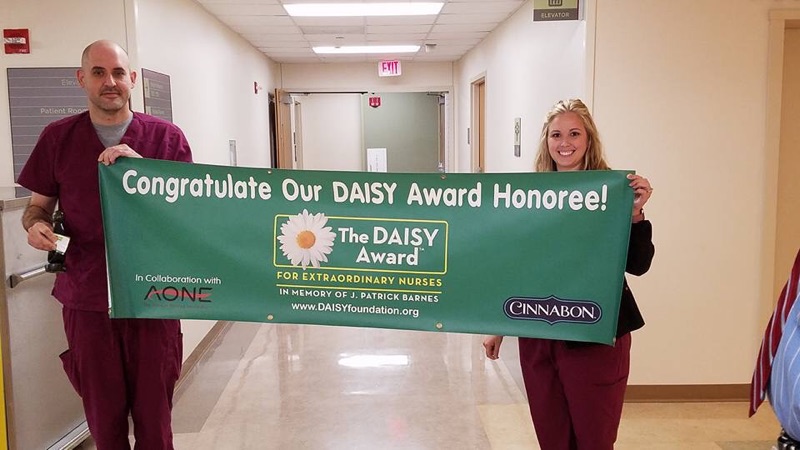 The first award recipient is Ryan Jones, RN on the Medical/Surgical Floor for his attentiveness to patient needs and always creating a soothing and safe environment.
The not-for-profit DAISY Foundation is based in Glen Ellen, CA, and was established by family members in memory of J. Patrick Barnes. Patrick died at the age of 33 in late 1999 from complications of Idiopathic Thrombocytopenic Purpura (ITP), a little known but not uncommon auto-immune disease. The care Patrick and his family received from nurses while he was ill inspired this unique means of thanking nurses for making a profound difference in the lives of their patients and patient families.
Nurses may be nominated by patients, families, and colleagues and they are chosen by a committee of nurses at CMFH-SS to receive The DAISY Award. Recipients are chosen twice a year and presentations are given in front of the nurse’s colleagues, physicians, patients, and visitors. Each Honoree receives a certificate commending her or him for being an “Extraordinary Nurse.” The certificate reads: “In deep appreciation of all you do, who you are, and the incredibly meaningful difference you make in the lives of so many people.” The Honoree will also be given a beautiful and meaningful sculpture called A Healer’s Touch, hand-carved by artists of the Shona Tribe in Africa.
Said Bonnie Barnes, FAAN, President and Co-Founder of The DAISY Foundation, “When Patrick was critically ill, our family experienced first-hand the remarkable skill and care nurses provide patients every day and night. Yet these unsung heroes are seldom recognized for the super-human work they do. The kind of work the nurses at CMFH-SS are called on to do every day epitomizes the purpose of The DAISY Award.”
Said Chief Nursing Officer Anitha Sanderson, “We are proud to be among the healthcare organizations participating in the DAISY Award program. Nurses are heroes every day. It’s important that our nurses know their work is highly valued, and The DAISY Foundation provides a way for us to do that.”
 For a complete listing of healthcare organizations currently running the program, please go to http://DAISYfoundation.or
This is one initiative of The DAISY Foundation in service to the nursing profession. Additionally, DAISY offers J. Patrick Barnes Grants for Nursing Research and Evidence-Based Practice Projects, The DAISY Faculty Award to honor inspiring faculty members in schools and colleges of nursing, and The DAISY in Training Award for nursing students. More information is available at http://DAISYfoundation.org.
For 68 years, CHRISTUS Mother Frances Hospital – Sulphur Springs has made a vow to lead the charge to create healthy lives for the people and communities of the Sulphur Springs area and across Northeast Texas by extending the healing ministry of Jesus Christ. Our nurses keep that promise every day by providing the compassionate, sophisticated, award-winning care you have come to expect. Our journey is just beginning, and we invite you to join us. Follow CHRISTUS as We Follow CHRISTUS.
Something’s Fishy…or Not By Johanna Hicks

Something’s Fishy…or Not
You have probably heard that the recommendation for fish consumption is two times a week. Sometimes, that is easier said than done. Some people are afraid of cooking seafood because of the food safety aspect. Texas A&M AgriLife Extension can help you so you can confidently cook seafood safely with these tips!
1) Avoid cross-contamination. Handle raw and cooked seafood products separately. Thoroughly clean and rinse your work space between each step. This includes, cleaning knives, cutting boards, and containers used during preparation. Plexiglas or plastic cutting boards are preferred over wooden cutting boards that cannot be sanitized properly. Keep raw and cooked seafood from coming in contact with each other.
2) Cook fish and seafood thoroughly. Fish is cooked when it turns opaque and reaches an internal temperature of 145 degrees Fahrenheit. Follow processor’s directions when preparing frozen, packaged seafood products.
Extension’s “Dinner Tonight” has a multitude of fish and seafood recipes. The featured ingredient of the week is salmon. When selecting salmon, look for bright, firm, orange-pink flesh in fresh salmon. Salmon is high in protein and Vitamin D, and is a great source of Omega-3 fatty acids. Omega 3’s from food have been studied thoroughly and are found to hold numerous benefits, including eye and heart health, and they may improve brain, joint, and bone health, among other benefits.
One of the staple items that you will find in my pantry is canned salmon. Salmon patties are easy to make and very economical. Try this recipe for a tasty main dish.
Ingredients:
– One (14.75 ounce) can reduced-sodium salmon, drained and flaked
– 1 teaspoon lemon juice
– 1/2 cup Panko breadcrumbs
– 1 Tablespoon Worcestershire sauce
– 1/4 cup egg substitute (or use one raw egg)
– 1 small onion, chopped
– 1/4 cup shredded, reduced-fat cheddar cheese
– 1 Tablespoon dried parsley
– 1 teaspoon garlic powder
– 1/4 teaspoon black pepper
– 1 Tablespoon shredded or grated Parmesan cheese, for coating
Directions:
1) Combine salmon, lemon juice, bread crumbs, Worcestershire sauce, egg, onion, cheddar cheese, parsley, garlic powder, and black pepper; mix well.
2) Shape into four large patties.
3) Dust lightly with parmesan cheese.
4) Chill for 20 minutes.
5) Lightly coat baking sheet with cooking spray.
6) Bake at 375° for 20 minutes, 10 minutes on each side of the patty.
Nutrition information:
Calories 220, Calories from Fat 70, Total Fat 8g, Saturated Fat 2.5g, Cholesterol 60mg, Sodium 240mg, Total Carbohydrate 12g, Dietary Fiber 1g, Sugars 2g, Protein 25g
If you want an idea for a very quick, simple recipe, try Apple Tuna Salad, using a 12-ounce can of tuna (canned in water), and add one small chopped apple, ¼ cup fat-free or low-fat vanilla yogurt, and 1 teaspoon each of honey and mustard. Combine ingredients and serve on whole wheat bread or crackers. This recipe makes about 3 servings.
For more recipes using fish and seafood, go to Extension’s Dinner Tonight website, at http://Dinnertonight.tamu.edu. You will also see options to watch recipe demonstration videos and sign up for weekly e-mail blasts.
Save $60 on a Marriage License
August slipped up on me and I need to get busy on marketing some upcoming programs! Twogether in Texas Marriage Education Workshop will take place on Saturday, July 26, at the Extension Office, 1200 W. Houston Street (next door to the Southwest Dairy Museum). We will start at 8:30 a.m. and end at approximately 3:30 p.m. The workshop is free and lunch will be provided. However, I DO need couples to call to reserve seats so I can make adequate preparations – 903-885-3443.
Engaged couples will be given a certificate to save $60 upon applying for a marriage license. The State of Texas has determined that couples who start off on a strong footing have stronger marriages, and that is the purpose of this workshop! Married couples are also welcome to attend.
Topics covered will be marriage expectations, communication, conflict resolution, money management, and goals & dreams. Water, coffee, and refreshments will also be provided, but please call!
Cooking Well with Diabetes
The revised curriculum is finally here! If you or someone you know would like to learn more about preparing healthy, diabetic-friendly meals, this series is for you! The four-lesson series is scheduled for Tuesdays and Thursdays, September 12, 14, 19, and 21, at the Extension Office. A fee of $25, payable at the first session, will cover materials, recipe demonstrations and sampling, door prizes, and great information for preparing delicious, nutritious, healthy meals. Please call 903-885-3443 to sign up.
Closing Thought
I’m blessed by the number of people who told me they missed my column last week. I was on a much-needed family vacation, but I’m back in town now. Thanks for your kind comments!

Johanna Hicks
Texas A&M AgriLife Extension
Family & Consumer Sciences
1200-B W. Houston
P.O.Box 518
Sulphur springs, TX 75483
903-885-3443 – phone
903-439-4909 – Fax
[email protected]
Evaluating Weed Control: Sprayer Calibration By Mario Villarino
Evaluating weed control: sprayer calibration
Weed control relies in proper weed identification, proper method of control, herbicide selection (if applicable), time of application and proper delivery of the herbicide. Must of the weed control is more successful when weeds are small, but weeds are harder to identify when immature. Also, high temperatures and older weeds require more herbicide to accomplish the goal. At this time of the year, must of our producers have completed must of the spring herbicide application and are evaluating their success or failure and often the equipment (quality, current usage, etc) become a question specially if the weeds are not controlled. In herbicide- based weed control methods, sprayer calibration is important. According to Texas A&M AgriLife Extension, if you apply too much herbicide, costs can become excessive; you may be in violation of the label; and you might cause environmental damage. If you apply too little herbicide, the weeds may not be controlled adequately. Many sprayer calibration methods are available and can be used successfully. The Weed Busters procedure is relatively fast and simple and can be used for most spray systems. To properly calibrate your sprayer, follow the four simple steps below.
1) Determine Speed: If your tractor speedometer is accurate, you can skip this step.
The speedometers of most “standard equipment” all-terrain vehicles (ATVs) are inaccurate at low speeds. If the spray vehicle is equipped with a tachometer, you can use it to set and hold an accurate speed. If not, you may need to buy an after-market speedometer. To determine the correct number of miles per hour (mph), set two stakes 88 feet apart on terrain similar to application site. Hold the throttle at a defined rpm (revolutions per minute) and gear, and record in seconds the amount of time it takes to drive 88 feet. Repeat this procedure at least once, then calculate the average number of seconds to travel 88 feet. To calculate mph, divide by 60 the number of seconds required to drive the course. Be sure to record the speed, rpm and gear for later reference.
Example: It takes 12 seconds to drive 88 feet. 60 ÷ 12 = 5 mph
2) Determine the Sprayer Swath Width: For boom sprayers, simply multiply the number
of nozzles by the distance in inches between each nozzle and divide by 12.
Example: You have nine nozzles spaced 20 inches apart. (9 x 20) ÷ 12 = 15 feet effective swath width. For boomless sprayers, operate the nozzle at the desired pressure on a dry surface. Measure the width of the spray swath. Then subtract 10 percent to calculate
the effective swath width. Example: The boomless nozzle has a swath width of
20 feet.
Example: 20 feet – (20 feet x 0.10) = 18 feet of effective swath width
3) Calculate the Amount of Time to Spray 1 Acre:
Using the swath width and speed as determined above, calculate the amount of time needed with the following formula:
43,560 ÷ swath width (feet) = minutes/acre / (mph x 88)
Example: Sprayer will travel at 3 mph and deliver a 15 ft swath.
43,560 ÷ 15-foot swath = 11 minutes to spray 1 acre / (3 mph x 88) gallons per acre the sprayer
4) Determine the Number of Gallons/Acre
If the spray tank is marked in gallons, fill it with water to a specific level and record that number (such as 20 gallons). Operate the sprayer at a set pressure (20 to 30 pounds per square inch, or psi) for the number of minutes you calculated it takes to spray 1 acre. Record the volume of water remaining (such as 5 gallons). The difference between the starting number of gallons
and the remaining number of gallons is the number of gallons per acre the sprayer delivered (such as: 20 gallons to start – 5 gallons remaining = 15 gallons per
acre delivered). The sprayer is now calibrated. If the spray tank is not marked and you are using a spray boom, use the procedure above in terms of setting pressure and time, but capture the spray from one nozzle. To determine the number of gallons per acre, measure the amount of the spray collected and then multiply that amount by the number of nozzles on the
spray boom. Repeat this procedure on several nozzles and average
the results. The sprayer is now calibrated.
Example: 1.5 gallons collected from one nozzle on a
nine-nozzle spray boom. 1.5 gallons x 9 nozzles = 13.5 gallons per acre
If the spray tank is not marked and you are using a boomless nozzle, you will have to shroud the nozzle with a plastic bag or similar product to direct the spray into a collection container. The total volume of liquid collected over the amount of time to spray 1 acre is equal to the number of gallons per acre that the sprayer is delivering. The sprayer is now calibrated. For any of the above spray systems, if you wish to increase the number of gallons per acre (gpa), you can either decrease speed of travel or increase the pressure and recalibrate. The reverse is true if you wish to decrease the gallons per acre. For more information on this or any other agricultural topic please contact the Hopkins County Extension Office at 903-885-3443 or email me at [email protected].

Mario Villarino DVM, Ph.D.
Hopkins County Extension Agent for Ag and NR
1200B Houston Street
Sulphur Springs, Texas 75482
903-885-3443


Wildcats Marching Band Features 45 Freshman Members
After some special camps for percussion and color guard members, the entire Wildcats Marching Band gathered together on Monday to begin summer band. Wednesday afternoon Band Director Charles McCauley said the band kids are doing great and he added they have had a great first three days of summer band. He said the band members have great attitudes and are working hard.
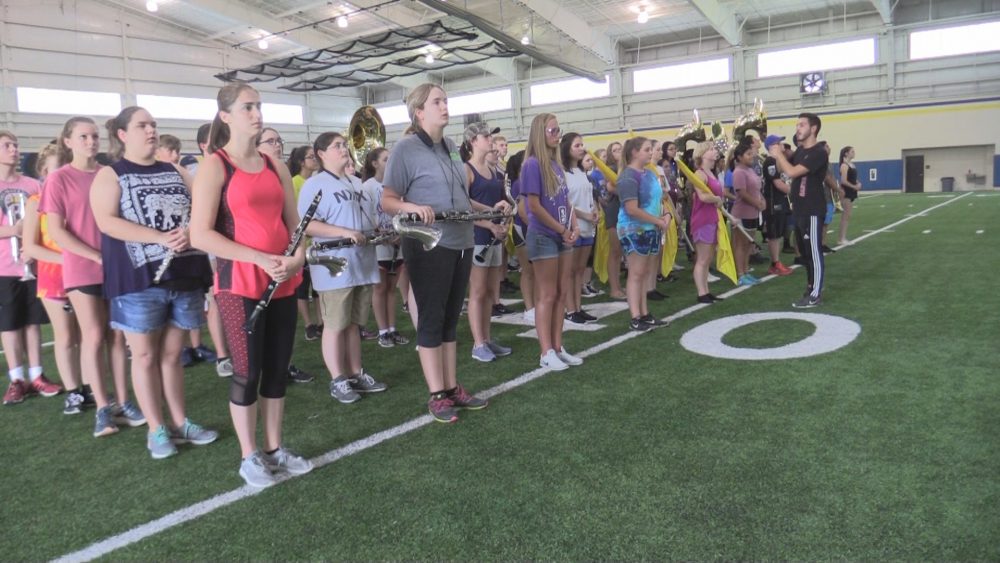 This year’s Wildcats Marching Band features a large freshman class. With 45 freshman, McCauley said the freshmen make up more than a third of the band. He said the freshmen are learning quickly. McCauley said he enjoyed watching the light bulbs going on for them as they learn things. He said he is working to keep them from feeling overwhelmed.
McCauley said one of the goals of summer band is for all band members to learn to do everything the same way. He said there is only one way to stand, to hold an instrument or to march. McCauley said there are also about thirty pieces of music to learn including the national anthem, numbers to play in the stands and this year’s show songs. He said he hoped the band would learn to march and play the first song of the show by the end of summer band.  McCauley said if the band does that, they would be in good shape. The first days of summer band have featured the constant repetition of fundamentals.
The Edge Ends for SSHS Athletes

The Edge conditioning program, which ran for a total of six weeks, ended for this summer Thursday morning. Wildcats Football Coach Greg Owens was busy pouring over attendance figures for The Edge Thursday morning. He said The Edge was good and the kids did great.
Coach Owens admitted it was a weird and longer than usual summer that made it necessary to put a two-week hiatus into The Edge’s schedule between week four and week five. He said he didn’t like the break in The Edge. Coach Owens said the UIL is considering changing their summer rules to provide some flexibility. He said his preference would be to spread out The Edge by making each week only Tuesday through Thursday. Coach Owens said that would give athletes longer weekends during The Edge.
He said the real proof of the pudding for The Edge would be if athletes show up in good shape for the first day of football practice on August 14. Coach Owens said it would be up to players to try to stay in shape on their own with almost two weeks now before the beginning of football practice. He said some athletes became faster and stronger due to their hard work at The Edge this summer.

All 1379 Season Tickets For Wildcat Football Sold

Wildcats’ football season tickets for this season have all been sold as of early Thursday morning (August 3) making it the earliest sell out ever and only the third sell out in history. Season Ticket Week Coordinator Lynette King said the last of the 1379 season tickets was purchased at 8:45 a.m. Thursday.
Season tickets were also sold out in 2009 after the 2008 state championship and in 2010. The first person in line Thursday morning arrived outside the high school at 2:30 a.m. Doors did not open until 8:15 a.m. Ms. King said only 29 season tickets remained for sale Thursday morning. There were a few together in twos and one with three together but Ms. King said most of those left were single seats. She said all this week it was apparent that everyone was excited about the new Prim Stadium, the new season and the chair back seats available to season ticket holders.
The season ticket team will be at the SSHS Media Center Thursday until 5:30 p.m. and again Friday from 8:15 a.m. until noon. Ms. King said they will be putting people’s name on a list if they are interested in season tickets. She said they will be called if some tickets are returned for some reason.

Update: Law Enforcement Settles Standoff Peacefully; Will Provide Assistance in Follow-up
 A stand-off involving Sulphur Springs Police, Hopkins County Deputies and an elderly man with a weapon began on South Locust Street Thursday afternoon and concluded a short time later. The one elderly male in a residence was armed and according to a friend that got out of the house was only threatening himself. Police Chief Jay Sanders told KSST News that the event ended peacefully with local law enforcement assuring the man of assistance with specific issues that triggered the event.
The man’s friend had been told to evacuate the residence if he didn’t want to be involved in a stand-off with police, according to law enforcement sources. The friend called 911. The officers were seeking a peaceful end to the engagement.

Four Arrested Wednesday on Various Warrants

August 3, 2017 – Four individuals were arrested on various warrants Wednesday.
 Jimmy De Odell, 59, of Pickton is back in jail after a Hopkins County Deputy served an arrest warrant for Stalking. The incident occurred July 31, 2017. He is being held on a $30,000 bond. In July of this year, he was arrested and charged possession of Methamphetamine when he knowingly pulled a trailer which held another individual causing the individual to fall from the trailer.
 Cody Blaine Gregg, 30, of Como was arrested on FM 1567E for a July 25, 2017 Aggravated Assault with a Deadly Weapon warrant. Gregg was indicted in August for injury to a child with intent of bodily harm after a one (1) year old child in his custody tested positive for methamphetamine on June 28. After a lengthy investigation by CPS, the case was forwarded to SCU. A felony warrant was issued for Gregg and for the mother of the child who had checked herself into a drug rehabilitation program in Dallas.
 Amanda Lanell Shank, 29, of Como was arrested at and transported from the Lockhart Correctional Facility, Lockhart, Texas to Hopkins County Jail. She was arrested for Theft of Property more than $500 but less than $1,500.
Hopkins County Investigators Corley Weatherford and Wade Sheets arrested Haven Lynn Tennison, 18 of Sulphur Springs for Forgery, a state jail felony. The charge is for an event on July 15, 2017 at an address on N. Hillcrest. Sulphur Springs Police transported Tennison to Hopkins County Jail at the request of the investigators.
“Mark Twain” to Appear at Cumby Student Fundraiser on Friday Aug. 4

L.V. Davis was born at Rt. 1, Cumby, and in his later years has settled in a spot not far from where he started out. His acclaimed career as a performer and as an author was influenced by his formal education at Boles Home of Quinlan, Texas. Today, Mr. Davis retains a soft spot in his heart for students who grab opportunities to excel, and for coaches and teachers who place excellence as an option for their pupils. The public is invited to attend his fundraising performance at Cumby ISD Gym on Friday August 4 at 7pm. The $15 admission per person will help establish two Cumby scholarship funds, the “Lee Gifford Prize” for Robotics, and another yet-unnamed award for English, Speech and Writing Excellence. 100% of the proceeds will go into establishing the scholarship funds at Cumby ISD.
In a KSST Morning Show interview, we learned that L.V. Davis was one of 9 children born into a cotton-farming family, and when his mother passed away leaving a houseful of children including two toddlers, his father had to make a hard decision. He decided to place the school-age children at Boles Home and Mr. Davis states that “that is the best thing he ever did for me”. Especially during high school, L.V. benefited from opportunities to travel and perform in annual Boles Home Fundraising Tours across the nation. He and his classmates performed at two World’s Fairs; Seattle in 1962 and New York in 1964 and sang for President John F. Kennedy in 1962. Outside of classroom studies during the school term, these summer tours provided the students a practical education and gave them a mind for business as well. He graduated with a class of 8 students in 1965, went on to college and soon afterward developed a character patterned after author Mark Twain’s famous lecture tours. For over 50 years, he performed across the country and today enjoys sharing his talent for benefits and worthy causes in the local area. Incidentally, he credits Boles Home for producing a quantity of students who have become professors and teachers, medical doctors, authors, successful leaders and others who have bettered the world.
L.V. and Sandra Davis live on a small farm at Cumby and love to travel when they can get away.