DWI Arrests Over Weekend

 Two Sulphur Springs men were arrested for second offense Driving While Intoxicated incidents in separate cases over the weekend.
One man was taken into custody after being involved in a two vehicle crash at Broadway and McCann in Sulphur Springs just after 1 a.m. Sunday. He reportedly exhibited signs of intoxication. Later during a blood draw, two sheriff’s deputies were needed to hold him down. 38-year old Jonathan Frank Bishop of Sulphur Springs was charged with DWI, second offense before Justice of the Peace B.J. Teer, who set bond for Bishop at $2,000. Photo not available.
In the second case, the Sulphur Springs Police Department was contacted about a possible intoxicated driver just after 11 p.m. Saturday. A vehicle was located and a traffic stop was made. A police report indicates an officer detected a strong odor of alcohol on the man. After a sobriety test and a blood draw, the man was arrested. 41-year old Elmer Amos Par-Perez was charged with second offense DWI before JP B.J. Teer, who set bond for Par-Perez at $2,000.

PAR-PEREZ, ELMER



Fall Gardening By Mario Villarino
 As temperatures start to cool off, our gardening spirit rejuvenates and the idea of going outside starts to become appealing for many. So you want to grow garden fresh vegetables this fall? Where do you start? Simply looking at seed packets in catalogs or local nurseries will not get the job done. One must garden smartly if economical production and utilization are expected. According to Texas A&M Agrilife Extension Services once the decision to have a fall garden has been reached, a gardener must take action–drastic action.
One must pull out some of those plants that have been nurtured from “babies” in the spring to monsters now. This takes courage and faith! It is recommended that all plants, weeds included, be removed except okra, cherry tomatoes and pole beans if the foliage is healthy. Large-fruited tomatoes may have some small ones still hanging on, but unless you have at least 20-25 good-sized fruit, pull them out–make green tomato relish or chow-chow. If you recall, the largest, best tomatoes you had this spring were the first ones produced. The tomato plant has gotten old, diseased, and damaged by insects; it will never produce an abundance again. Besides, it is too large to be manageable as far as insect and disease populations are concerned. Pull the old plants up and discard them. Give them to the garbage man.
Don’t try to compost insect and disease-ridden plants–spider mites don’t compost! Then, determine where to put the garden. If you are an “ole timer,” you may need to think in terms of garden relocation. The major consideration for garden placement is sunlight. All vegetables require some sunlight; the most popular vegetables require full sun. “Full” sun means at least 8 hours of intense, direct exposure. If such exposure is not received by crops such as tomatoes, peppers and squash (vegetables that contain seed), the plants grow spindly, they have weak stems, drop blooms and are generally nonproductive. Shade in the afternoon (after 3 p.m.) is wonderful; shade in the morning is acceptable. There are vegetables which produce passably in the shade.
Generally, those crops such as greens, broccoli, cauliflower, root crops (carrots, turnips) which do not produce a fruit with seed will yield sparingly in semi- shaded areas but even these crops will do better in a full sun condition. Crops such as tomatoes, peppers, squash, beans and cucumbers may not produce anything if grown in the shade; plants will grow tall and spindly. The production potential of the garden’s most popular vegetables depends solely on the amount of direct sunlight they receive.
Some gardeners believe shading is beneficial, but remember that commercial vegetable producers never shade crops. Use shade-tolerant crops for planting between larger growing vegetables such as tomatoes. During the early establishment period of a crop such as tomatoes, leave several feet of vacant space between transplants in which short, fast-maturing, shade-tolerant vegetables can be produced.
Do not locate the garden within 6 feet of hedges, shrubs or trees. Not only do these larger, more permanent plants compete for light, but they also gobble up nutrients and water necessary for healthy vegetables.
If a new garden site has been selected and it was previously covered with grass, this turf MUST be removed. Don’t think that you can dig or till this existing grass into the garden soil and get rid of it. Even a well-tilled, pulverized garden soil will contain enough bermuda grass sprigs to cause troubles for years to come. New garden areas are doomed before they begin if all bermuda and other lawn grass is not completely removed BEFORE tillage begins. If a raised garden is being considered, sod should be removed BEFORE additional soil is put into the prepared frame.
What about chemicals which might be applied to the grass to kill it rather than pulling it out? Yes, you’re in luck! There are several brand names which contain the weed and grass killer glyphosate. These include Roundup and Kleenup – – check ingredients on label for the term “glyphosate” and follow label instructions for application rate.
Once the sod has been removed, the garden area should be shoveled to a depth of 10-12 inches. Rototillers, when used in a new garden area, will not penetrate adequately. Rototillers can be used to loosen and mix shoveled areas. Apply 1 to 2 inches of coarse (sharp), washed sand and 2 to 3 inches of organic matter to the garden site surface and incorporate to improve the soil’s physical quality. The soil’s physical condition will have to be altered over a period of time rather than trying to develop desirable soil in a season or two. If you are making the effort to build a raised bed garden don’t skimp on the soil which you put into it.
The addition of fertilizer is the next step. You have two options. You can add only one pound of ammonium sulfate (21-0-0) per one hundred square feet (10 feet by 10 feet) and use ammonium sulfate every three weeks at the rate of one tablespoon sprinkled around each plant and watered in as a sidedress application for hybrid tomatoes and peppers. The second fertilization choice, and probably the one which will result in a more abundant harvest, is to use 2-3 pounds of a slow release fertilizer (19-5-9, 21-7-14, 25-5-10) per 100 square feet of garden area. Even if slow release fertilizer is used, It is still recommend to use ammonium sulfate (21-0-0) every three weeks at the rate of one tablespoon sprinkled around each plant and watered in as a sidedress application for the super productive hybrids. Horse or cattle, never fowl in the fall, manures may be substituted for commercial fertilizer and used at a rate of 60-80 pounds per 100 square feet of garden area.
After all ingredients have been added, mix the soil thoroughly and prepare beds on which to plant rows of vegetables. These beds should be 30-36 inches apart to allow for easy movement through the garden area when plants get larger. Pile and firm the planting beds then pre-irrigate the entire garden area by wetting with a sprinkler for at least two hours. Allow the area to dry for several days and it will be ready to plant.
When growing tomatoes and peppers, it is easier to use transplants. However, the use of transplants alone does not insure bountiful, precocious fall production. What must be accomplished is rapid establishment of fall transplants. As hot and dry as the weather has been, some people think that transplanting is risky. Transplants WILL survive hot temperatures and full sun IF adequate moisture is available to the plant. “To the plant!” is the key phrase. Transplants in peat pots or cell packs with restricted root zones require at least two weeks to sufficiently enlarge their root systems so that active growth can begin. Until that time, gardeners must provide adequate, daily moisture or the transplants will either die or stunt to the point that fruit maturity will be delayed. Delayed maturity is what we need to avoid!
Daily moisture should be provided on an individual basis to transplants. Depressions or basins around each transplant can be filled daily, or as needed depending on the soil type, with water to provide the necessary wetting or a drip irrigation system can be installed. Too much water, i.e., keeping roots soaking wet instead of moist, will cause root rotting and subsequent transplant stunting or death.
A transplant with a larger root system which can be easily watered will be helpful. Such a large root system will spread faster, have access to more water and will support an older plant which has the potential of producing more fruit, sooner. Fall-recommended tomato varieties such as Bingo, Merced and Celebrity can be purchased in a large transplant form with larger root systems in mid to late August. You can also purchase smaller, peat pot or cell pack transplants and grow larger transplants yourself. This simply involves the use of potting mix, Osmocote slow-release fertilizer pellets to be evenly mixed into the potting mix, a water soluble fertilizer to water the enlarging transplants every time moisture is required, a gallon pot or container, and full sun (afternoon shade after 2 p.m. preferred) location free of pests (kids, dogs, etc.) for a 30 day length of time. If you have all of these elements and won’t over water the containerized plants, GROW YOUR OWN.
Surefire, Heatwave, Bingo, Merced and Whirlaway are the best, highest quality varieties available but they are also the highest maintenance (proper watering, periodic fertilization, pest control). For those who don’t want to take the challenge of growing the above mentioned high maintenance varieties, Carnival and Celebrity, are recommended. The main advantage of growing Bingo, Merced or Whirlaway in the fall is their firmness of fruit and ability to develop a deep red color if harvested green to avoid freeze damage. Surefire and Heatwave are the only tomato varieties which will set flowers and fruit during the heat of September and are thus the earliest maturing tomatoes of a fall planting. The fruit size of Surefire is dependent upon cultural techniques used to grow the plant but it is the longest storing of any tomato variety on the market. The best bell pepper, Summer Sweet 860, is also available in local nurseries. Of course, since bell peppers are eaten in an immature state, i.e., when they are green before turning red or yellow (860 is a yellow-when-mature variety), the urgency of planting is not as critical.
Of course larger transplants will cost more but the ease of establishment may be worth the extra funds. In fact a recently completed Texas A&M study confirmed that just two of the larger transplants, even though they were more expensive initially, significantly out yielded six of the smaller, cheaper transplants which died (were killed!) after planting. Certainly you believe the Aggies; don’t you?
Proper timing is probably the most important factor in successful fall gardening. Regardless of variety selected or cultural practices used, if a gardener does not do the right thing at the right time, any chances of success are diminished. Remember these are “average” planting dates for each region. With these dates in mind, a gardener can decide which frost-susceptible vegetables to plant, when to plant and whether to use transplants or seeds.
Fall vegetable crops are categorized as long-term and short- term crops. Duration of these crops is dependent upon when the first killing frost occurs and the cold tolerance of the vegetables.
Plant long-term, frost-tolerant vegetables together. Frost- tolerant vegetables include beets, broccoli, Brussels sprouts, cabbage, carrots, cauliflower, chard, collards, garlic, kale, lettuce, mustard, onions, parsley, spinach and turnips.
Plant short-term, frost-susceptible vegetables together so that they can be removed after being killed by frost. Frost protection and the planting of a cereal rye cover crop are facilitated if such a grouping system is used. Frost-susceptible vegetables include beans, cantaloupes, corn, cucumbers, eggplants, okra, peas, peppers, Irish potatoes, sweet potatoes, squash, tomatoes and watermelons.
Keep in mind the relative maturity rate, average height (in feet) and frost sensitivity of the crop of various garden vegetables with FS (meaning frost-susceptible crops) which will be killed or injured by temperatures below 32 degrees F. and FT (meaning frost-tolerant crops) which can withstand temperatures below 32 degrees F.
The quick (30-60 days) maturing vegetables are: beets (1 1/2 feet) FT; bush beans (1 1/2 feet) FS; leaf lettuce (1 foot) FT; mustard (1 1/2 feet) FT; radishes (1 1/2 feet) FT; spinach (1 foot) FT; summer squash (3 feet) FS; turnips (1 1/2 feet) FT; and turnip greens (1 1/2 feet) FT.
The moderate (60-80 days) maturing vegetables are: broccoli (3 feet) FT; Chinese cabbage (1 1/2 feet) FT; carrots (1 foot) FT; cucumbers (1 foot) FS; corn (6 feet) FS; green onions (1 1/2 feet) FT; kohlrabi (1 1/2 feet) FT; lima bush beans (1 1/2 feet) FS; okra (6 feet) FS; parsley (1 1/2 feet) FT; peppers (3 feet) FS; and cherry tomatoes (4 feet) FS.
The slow (80 days or more) maturing vegetables are: Brussels sprouts (2 feet) FT; bulb onions (1 1/2 feet) FT; cabbage (1 1/2 feet) FT; cantaloupes (1 foot) FS; cauliflower (3 feet) FT; eggplant (3 feet) FS; garlic (1 foot) FT; Irish potatoes (2 feet) FS; pumpkins (2 feet) FS; sweet potatoes (2 feet) FS; tomatoes (4 feet) FS; watermelon (1 foot) FS; and winter squash (1 foot) FS.

Mario Villarino DVM, Ph.D.
Hopkins County Extension Agent for Ag and NR
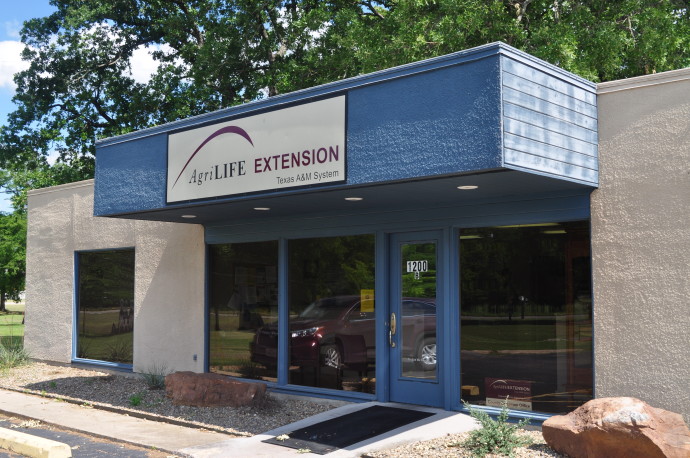
1200B Houston Street
Sulphur Springs, Texas 75482
903-885-3443
Workforce Training at PJC SS
 WORKFORCE TRAINING
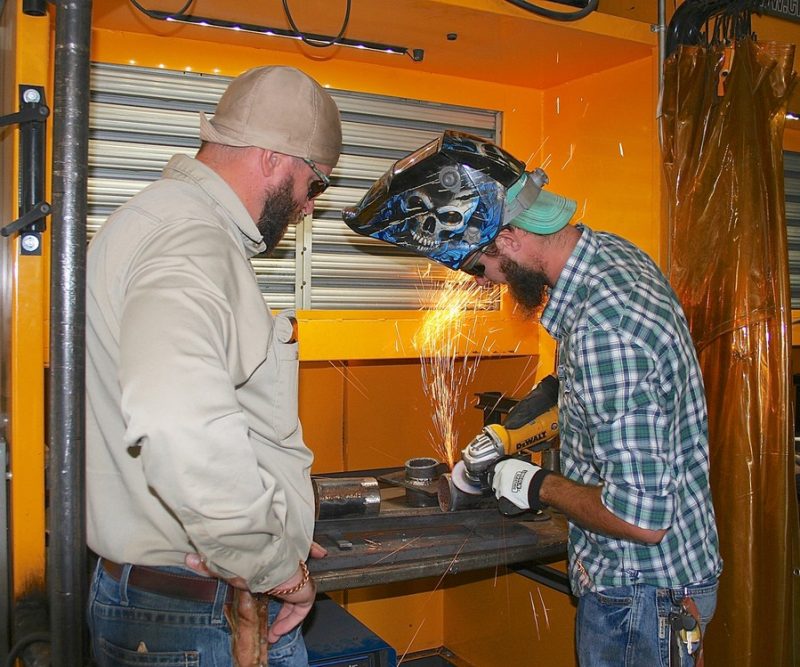
Justin Davis, right, works on a gas tungsten arc-welding project under the watchful eye of instructor John Plemons. Davis is in the advanced welding class at the PJC-Sulphur Springs Center, where both daytime and evening welding classes are being taught this fall. For more information and enrollment opportunities, call 903-885-1232.
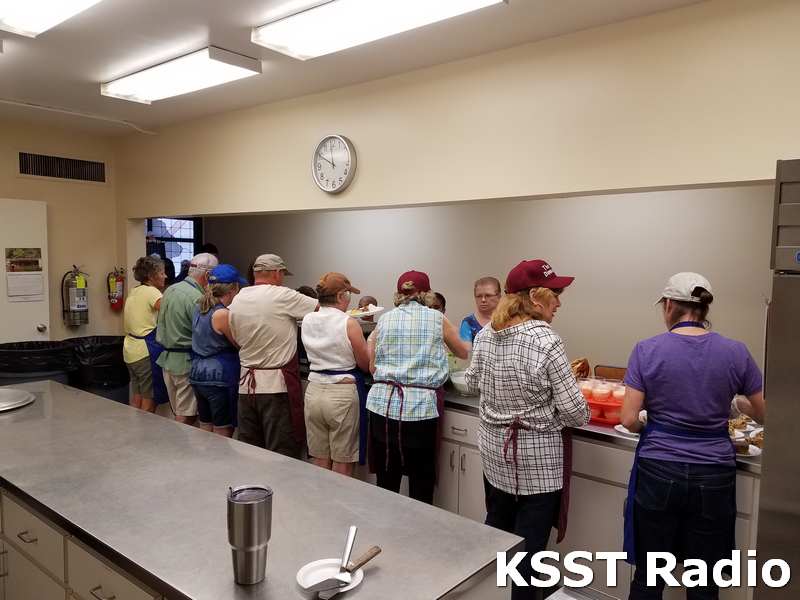
Dinner Bell Menu For October 11, 2017

Dinner Bell Menu for
October 11, 2017
The Lions Club
this week’s Community Partner.
Shepherd’s Pie
Bacon Infused Green Beans
Garden Salad
Buttered French Bread
Do Nothing Cake
Pineapple Cottage Cheese Sugar Free Dessert
John Chester Dutch Oven Cookoff Results at Indian Summer Day 2017
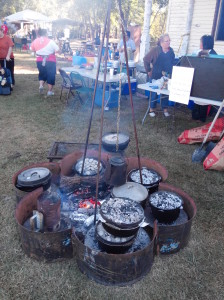
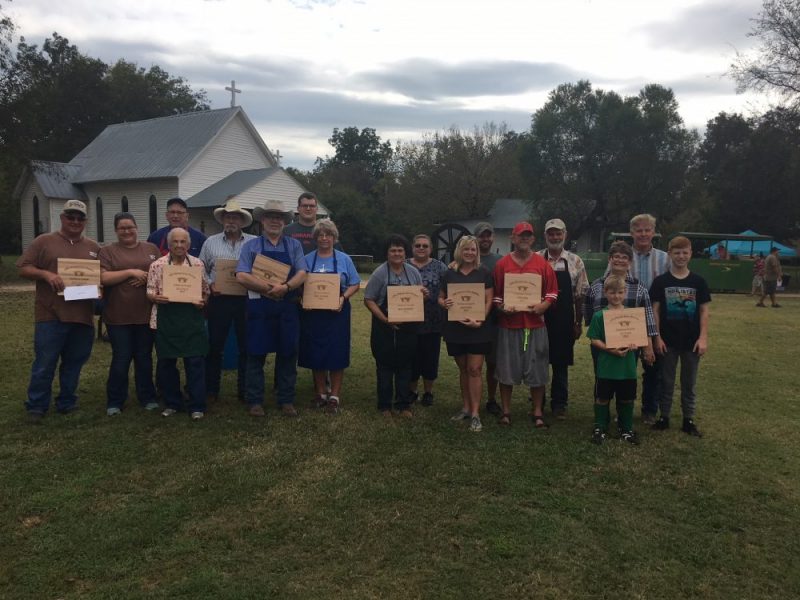 The 2017 John Chester Dutch Oven Cook-off at Heritage Park on Saturday October 7 was attended by ten cooking teams, all in the adult division. Seven cooks were from Hopkins County and three were from outside the county. The teams fed over 250 persons who came to enjoy the food at Indian Summer Day. Cook0ff Director this year was Chris Wilson, son of contest founder Rick Wilson.
OVERALL WINNERS WERE:
- Donnie and Katie Martin
- Fred and Wanda Crist
- Geary Almon and Dan Powell
PLACE WINNERS WERE:
MEAT…Rick Wilson and Marie Chester
VEGETABLE…Tim and Kathey Berger
BREAD…Donnie Peters and Kristin Brown
DESSERT…Margie Ford and Teresa Reser
BEST IN OVEN…Richard Watkins and Diane McGregor
Drug Take-Back Scheduled by Hopkins County Sheriff’s Posse
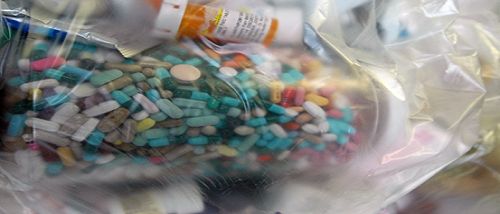
According to Karen Weatherman with the Sulphur Springs Seniors’ Center on Saturday,October 14th, the Hopkins County Sheriff’s Posse will be hosting a Drug Take-Back on the Brookshire’s parking lot from 10 a.m. to 2 p.m. This take-back provides People a safe way to dispose of out of date prescription and over the counter medicines as well as left over meds of family members that may have died. Pet medicines will also be accepted.
This take-back enables taking medicine out of the home environment. The meds will be disposed of properly under the direction of the Hopkins County Sheriff’s Office.
No needles or inhalers will be accepted.
Lady Cats Volleyball 3, Marshall 0
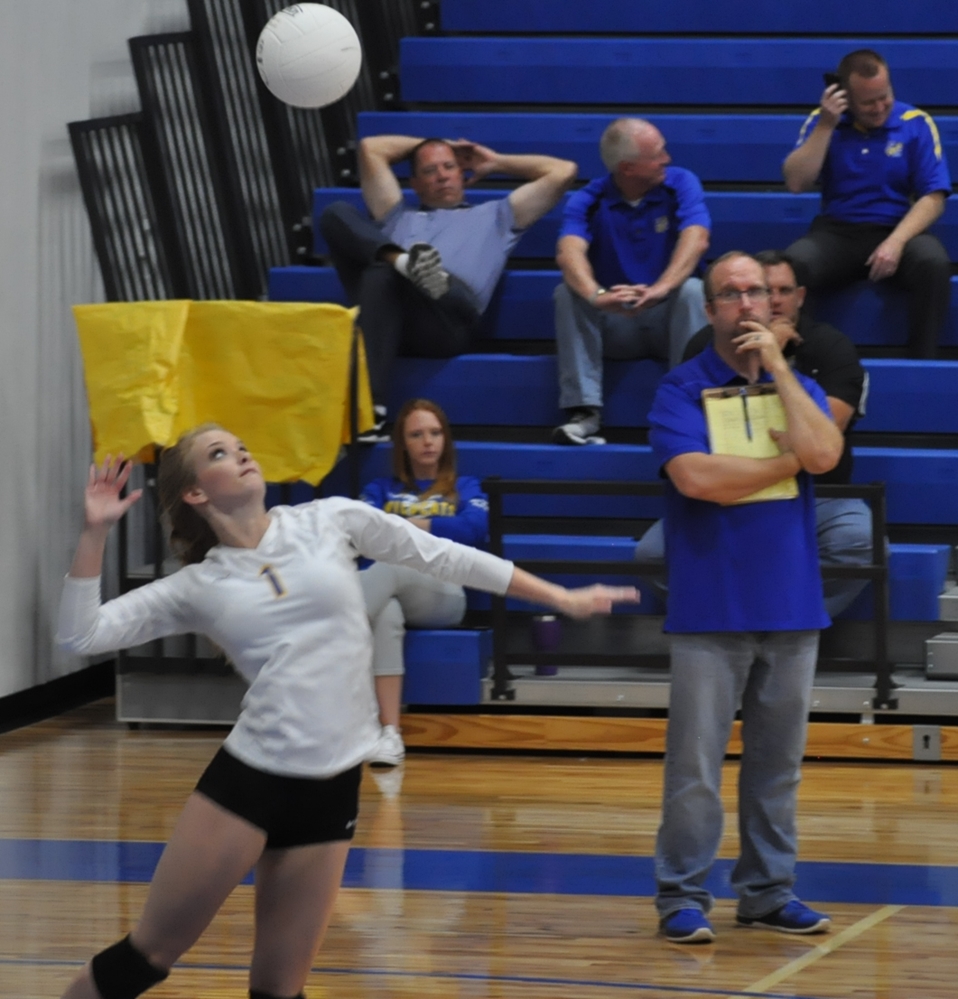
The Lady Cats’ volleyball team continued on their hot roll in district play with a sixth straight win as they swept Marshall, 3-0 in Marshall Friday. It was certainly not easy and Marshall played well at home. Still the Lady Cats prevailed in the first two close sets, 25-22 and 25-20 before putting the Lady Mavs away with a 25-10 win in set three. The Lady Cats improved to 6-2 in district play and 23-12 for the season. Autumn Tanton had another huge game with a team high 11 kills. Erika VanBenthem and Mieke VanBenthem both had 8 kills. Kaylee Jefferson had 5 kills and Madi Vickery had 2 kills. Setter Anden Hammack had 30 assists. The jump serving Lady Cats had 15 big service aces.
Libero Maggie McGlamery had a team high 6, Hammack had 5, Tanton had 2, and Imani Taylor and Sadie Stroud had 1 apiece. McGlamery had a team high 8 digs. Stroud had 7, Erika VanBenthem 6 and Hammack 4. The Lady Cats now have two matches in a row at home. They host Greenville Tuesday night and play district leading Texas High Friday in Wildcats Gym.
Marshall 50, Wildcats Football 20

After the Wildcats’ football team played well in the first half and took a lead into the halftime locker room, the Marshall Mavericks roared back with a huge second half of big plays while the wheels came off for the Wildcats in a 50-20 Mavericks win in Marshall Friday night. The Wildcats led 14-10 after two quarters. After Marshall went ahead 3-0 in the first quarter, the Wildcats scored two unanswered touchdowns to go up, 14-3 with 8:31 left in the second quarter. Back Colton Allen put the Wildcats up 7-3 with a 49-yard TD run.
After a fumble recovery by outside linebacker Cason Churchman, Back Searn Rodgers scored on a 12 yard run. Less than a minute later, the Mavs struck back on a 68-yard TD pass from quarterback J.J. Green to receiver Se’Lah Smith. That started a run of 34 unanswered points for the Mavs. While the Wildcats were going nowhere in the third quarter, the Mavs scored on a game changing Green scramble all over the field and TD pass to Tahj Washington, on a Green 72 yard TD run and after a fumble recovery on a Green 8 yard TD pass to Washington. After three quarters, Marshall was now up, 31-14. Marshall was aided by two mishaps by the Wildcats in punt formation. Marshall opened scoring in the fourth quarter as Reshard Jackson blocked a Jermond Bryant-Amos punt that was picked up in the end zone by Marje Smith for a TD. Marshall now led 37-14.
Then the only positive moments for the Wildcats in the second half occurred. Inside linebacker Jaxon Reneau intercepted a Marshall pass. Back up quarterback D’Corian Young ran 8 yards for a touchdown and the Wildcats got back to within 37-20. After Green ran for a 55 yard TD to make it 43-20, Marshall scored one last time on another punt mishap by the Wildcats. A snap went over the head of Wildcats punter Angel Tavera. In his attempt to make something happen, Tavera lofted a pass into the hands of the Mavs Detrevion Macon who ran into the end zone and Marshall led 50-20. That’s the way it ended. The Wildcats are now 0-2 in district play. Their season record is now 2-4 after a fourth straight loss. The Mavs improved to 2-0 and they are now 2-4 for the season. The Wildcats will return home next week to play Texas High, who had a bye Friday night..