SSHS Marching Band Prepares for New Season

At band practice Tuesday night, the Wildcats Marching Band marched through and then played their opening number for this year’s show. The Band’s Squad Off competition, marking the end of summer band, takes place Thursday evening. KSST News talked with Band Director Charles McCauley Tuesday night.
Period Costumes Highlight Courthouse Celebration

When the idea came up to celebrate the 120th birthday of the Hopkins County Courthouse this Friday and Saturday, about twenty people, mostly county employees decided to wear clothes from 120 years ago. Costumes were ordered so you’ll see Commissioner Danny Evans as Bat Masterson, Will Ramsey as Doc Holliday, Auditor Shannah Walker as Miss Kitty, Judge Robert Newsom as Doc Adams and more.
County Seeking Funds From State and FEMA
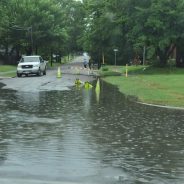
Hopkins County Commissioners may be a little closer to receiving federal disaster funds after a Tuesday meeting with a representative of the Federal Emergency Management Agency or FEMA. We get the latest on potential disaster funds from County Judge Robert Newsom. Newsom says two specific plans are being pursued by the county.
One is a state of Texas plan that would provide $350,000 total for the county. That money from the Department of Agriculture, which Newsom called “likely to get”, could be available in September. A grant writer is assisting with that project. Newsom said money arriving in September would be immediately utilized by the four precincts.
The second money source is FEMA. Three meetings will be necessary to secure funds. The first meeting, which has been held, provided information to the federal assistance program. Commissioner Precinct 1 is leading the effort to secure these funds. The funds would be used for roads, bridges, any buildings that have been damaged in the county. FEMA money will not arrive soon, according to Newsom. He said the money would probably not arrive until winter and then the money must be used in the following six months. Newsom said the money will arrive at a time that is not complimentary to road repair.
Winter and spring weather in 2015 created much damage to local roads, according to Newsom.
Hay production and Hay Show

Hay production and Hay Show
The Professional Ag Workers has organized the 2015 Hopkins County Hay Show. Samples will be welcomed September 1 to September 18th at the Hopkins County Extension Office located at 1200B Houston Street, in Sulphur Springs. All samples will be tested for protein and energy free to the producers, courtesy of the Northeast Texas Farmers COOP in Sulphur Springs. Top places will be awarded $100, $75 and $50 for first, second and third places. A feed sack full of hay will be a sample. For hay to be able to compete, the crop must be grown in Hopkins County. Top ten entries will participate at the hay show auction breakfast October 1, 2015 at 6:30 AM at the Professional Ag Workers Building located at 957 Connally Street in Sulphur Springs.

Pests of Hay
Recently I got an information request related to beetles in hay. This particular hay was feed to horses. The main concern that comes to my mind are blister beetles. Blister beetles vary by species in shape, size (3/8 to 1 inch long) and color (solid gray to black or with paler wing margins, metallic, yellowish striped or spotted). Most are long, cylindrical narrow-bodied beetles that have heads that are wider than the first thoracic segment (pronotum). The wing (elytra) covers are usually soft and pliable. Although over 100 species occur in Texas, common blister beetles include:, the black blister beetle; Epicauta pennsylvanica (De Geer), E. occidentalis (east and central Texas) and E. temexa (south Texas) are mostly orangish-yellow with three black stripes on each of the wing covers (elytra). A west Texas species, Cysteodemus armatus LeConte, has wing covers that are broadly oval and convex, colored black with bluish or purplish highlights. The life cicle is of complete metamorphosis; hypermetamorphosis. Winter is spent in later larval stages and pupation occurs in the spring. The pupal stage lasts about 2 weeks and adults appear in early summer. Female beetles lay clusters of eggs in the soil. The first stage (instar) larva hatching from the egg (triungulin) is a tiny, active, long-legged larva that seeks the appropriate host. Once there, the larva develops through a number of stages, each with progressively reduced appendages and increasingly grub-like in appearance. The first number of larval stages develop within about month, but the second to the last (pseudopupa) can remain for about 230 days before molting into the last (sixth) larval stage in the spring. Generally, one generation occurs per year although some develop in 35 to 50 days while in others, development takes 3 years. Black blister beetles have a mouthparts adapted for chewing. Blister beetle species feed on flowers and foliage of a wide variety of crops including alfalfa, ornamental plants, potatoes, soybeans, garden vegetables and other plants. Immature stages feed on grasshopper eggs, live in solitary bee hives or are predaceous, depending on species. Adults can be found on flowers or infested crops. Care should be taken to not handle them. Never handle blister beetles preserved in alcohol because the cantharadin dissolves in alcohol and will cause blisters on the skin. Adults usually occur in loose groups or swarms that feed on leaves of certain plants, especially legumes. Their bodies contain a toxin (cantharadin) that can cause blisters to form on the skin. Animals, particularly horses, ingesting beetle contaminated feed become extremely ill and may die. Handling blister beetles can cause blisters on the skin as a reaction to cantharadin. Larval stages feed on grasshopper eggs or are predaceous and are thus considered to be beneficial, although a few species feed in nests of solitary bees. According to the University of Kentucky- Extension, blister beetles contain cantharidin, a toxic defensive chemical that protects them from predators. Accidentally crushing a beetle against the skin can result in a painful blister, the source of the insect’s common name. In sufficient quantity, the cantharidin in the bodies of living or dead blister beetles can be toxic, and in some cases lethal, to horses, sheep, and cattle. The lethal dose is estimated to be between 0.5 and 1.0 mg of cantharidin per kilogram (2.2 lbs) of body weight. Cantharidin is very stable and remains toxic in dead beetles for a long time. Animals may be poisoned by eating crushed beetles in cured hay. The severity of the reaction, ranging from temporary poisoning, to reduced digestive ability, to death, depends upon the amount of cantharidin ingested and the size and health of the animal. Poisoning symptoms usually appear within hours and include irritation and inflammation of the digestive and urinary tract, colic, and straining during frequent urination. This irritation may also result in secondary infection and bleeding. In addition, calcium levels in horses may be drastically lowered and heart muscle tissue can be damaged. Since animals can die within 72 hours, it is imperative to contact a veterinarian as soon as blister beetle poisoning is suspected. For more information on this or any other agricultural topic please call the Hopkins County Extension Office at 903-885-3443 or email me at [email protected].
Extension programs serve people of all ages regardless of socioeconomic level, race, color, sex, religion, disability or national origin. The Texas A&M University System, U.S. Department of Agriculture, and the County Commissioners Courts of Texas Cooperating

Mario Villarino DVM, Ph.D.
Hopkins County Extension Agent for Ag and NR
1200B Houston Street
Sulphur Springs, Texas 75482
903-885-3443
End of the Line
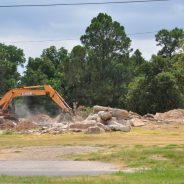

Work crews clean up the remaining debris at the old Houston School location on College St. Demolition work started back in April of this year, and with rain delays and just the sheer size of the project, crews are just now down to the final stages of removal. Once the remaining concrete slab has been removed, the remaining dirt will be smoothed out to allow grass to grow and fill in the space where so many children spent their formative years in grade school. At last check, the official owner of the property, SSISD, does not have any firm plans on what to do with the land. KSST News profiled the history of the property in an earlier story that can be found here: End of Houston School Although sad for many that attended school here, the building had exceeded it’s useful life and after a roof collapse in part of the building occupied by local chapter of Boys and Girls Club, it was just unsafe and too expensive to repair.

Work Continues on Local Properties


One of the best locations inside the city limits continues with their remodeling as other new building are going up in and around Sulphur Springs. Work looks like it has slowed on the old KFC building on the Interstate, but after KSST News spoke with one of the owner’s, Michael Churchman, we find out that there is still much more work to come. The owners are planning to continue to dress up the exterior of the building by having EIFS (Exterior Insulation Finishing System) installed. EIFS is sort of a synthetic Stucco system. Certainly the new owners have increased the viability of this building. There are still no definite tenants in place once the building is finished, but many different types of businesses are interested. Michael Churchman (903)348-8939 is fielding most of the calls from interested parties who may want to purchase or lease the building.
North East Texas Choral Society Begins New Season

Auditions for the North East Texas Choral Society will be heard Saturday, August 22 from 10 a.m. until noon in the Music Suite of First United Methodist Church, 301 Church Street. First rehearsal is Monday, August 24 at 7 p.m. Dues are $40. Scholarships are available.
The choral society will begin work on Celtic Christmas to be presented in three performances the second weekend in December in the FUMC sanctuary.



Shovel Used in Aggravated Assault; Disabled Person Injured
 A 58-year old Pickton man, Alfred Ray Scott, faces charges of aggravated assault with a deadly weapon and injury to a disabled person after an arrest Tuesday night. The man was said to be uncooperative during a magistrate’s hearing Wednesday morning when he continually interupted Justice of the Peace B. J. Teer. Teer had Scott returned to his cell and Scott is expected to see a justice of the peace again Thursday morning.
Hopkins County Sheriff’s deputies responded to a call of a disturbance in progress at a residence on County Road 2417 Tuesday night at 8:15 p.m. Deputies were told a man with a shovel was attempting to strike another man. A woman, said to be disabled due to mental illness, attempted to break up the fight and she was reportedly hit with the shovel. Another woman was able to separate the two men by the time deputies arrived.