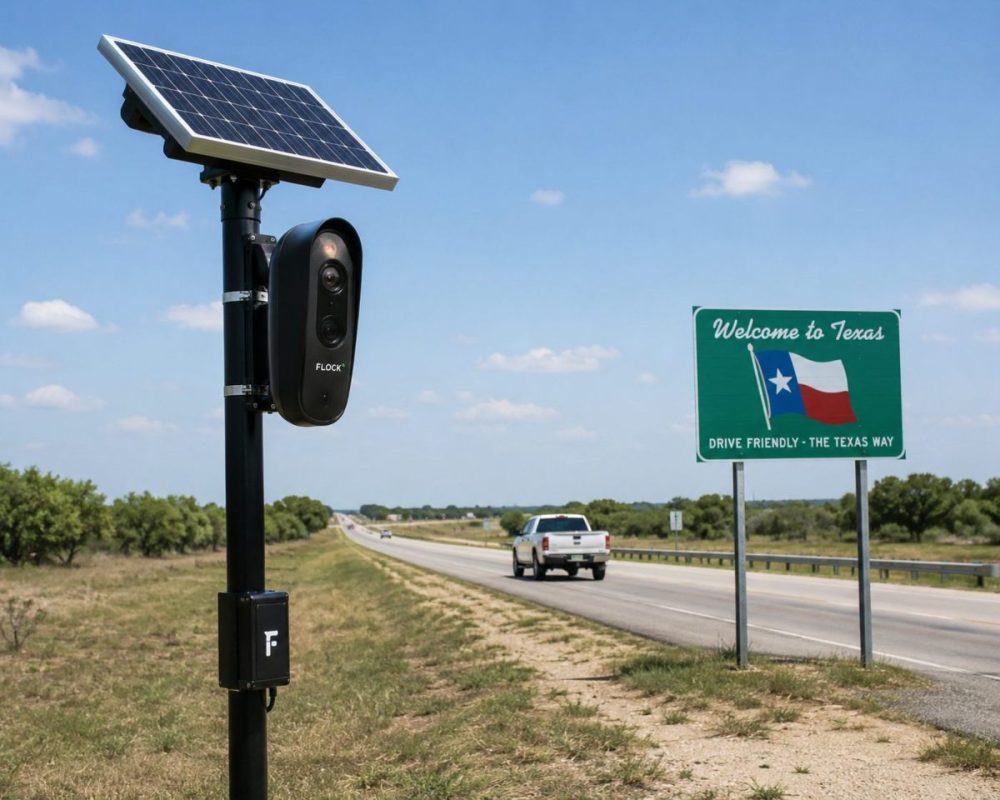
FLOCK Camera Abuse Increasing Nationwide
May 14, 2026 – Texas officials are facing growing scrutiny over the use—and alleged abuse—of Flock Safety surveillance cameras, as civil liberties advocates warn the rapidly expanding technology has outpaced oversight and privacy protections.
Flock cameras, which are automated license plate readers installed by police departments, homeowner associations, and private businesses, have spread across Texas in recent years. Supporters say the systems help recover stolen vehicles, locate missing persons, and investigate violent crimes. Cities including Midland, Dallas, and communities near Houston have expanded their networks, arguing the cameras improve public safety.
But critics say the technology is increasingly being used far beyond its original purpose.
Nationally, and often involving law enforcement officers, ALPR systems have been used for personal, non-work-related tracking, including stalking ex-partners.
A major controversy erupted after reports revealed a Texas sheriff’s deputy searched data from tens of thousands of cameras nationwide while investigating a woman believed to have obtained an abortion. According to records reviewed by privacy groups, the search reportedly included language targeting a “female” connected to the procedure, sparking national outrage and renewed concerns about surveillance powers in states with strict abortion laws.
The incident intensified criticism from organizations such as the Electronic Frontier Foundation and the American Civil Liberties Union, which argue that license plate readers can easily become tools for mass surveillance. Privacy advocates warn that the systems allow police agencies to track drivers across state lines with limited transparency or judicial oversight.
Separate investigations in Texas have also raised questions about whether Flock Safety itself complied with state law. Earlier this year, state officials concluded the company operated some surveillance systems without the proper license, resulting in fines and increased regulatory scrutiny.
Meanwhile, reporting from Houston indicated some officers used the camera system like a “search engine,” at times without clearly documenting investigative reasons for queries. Critics argue that weak auditing rules make misuse difficult to detect unless uncovered by internal reviews or journalists.
The debate reflects a broader national fight over surveillance technology. While law enforcement agencies defend the cameras as valuable tools for solving crimes, opponents say Texas has become a case study in how rapidly expanding AI-driven surveillance can outpace accountability and raise serious civil liberties concerns.