More Texas Lawmakers Urge Pause on Massive Transmission Project Amid Growing Questions
May 14, 2026 – A growing number of Texas lawmakers are calling for a pause on one of the largest proposed energy infrastructure projects in state history, raising concerns about cost, transparency, and whether the effort is even addressing the state’s most urgent energy needs.
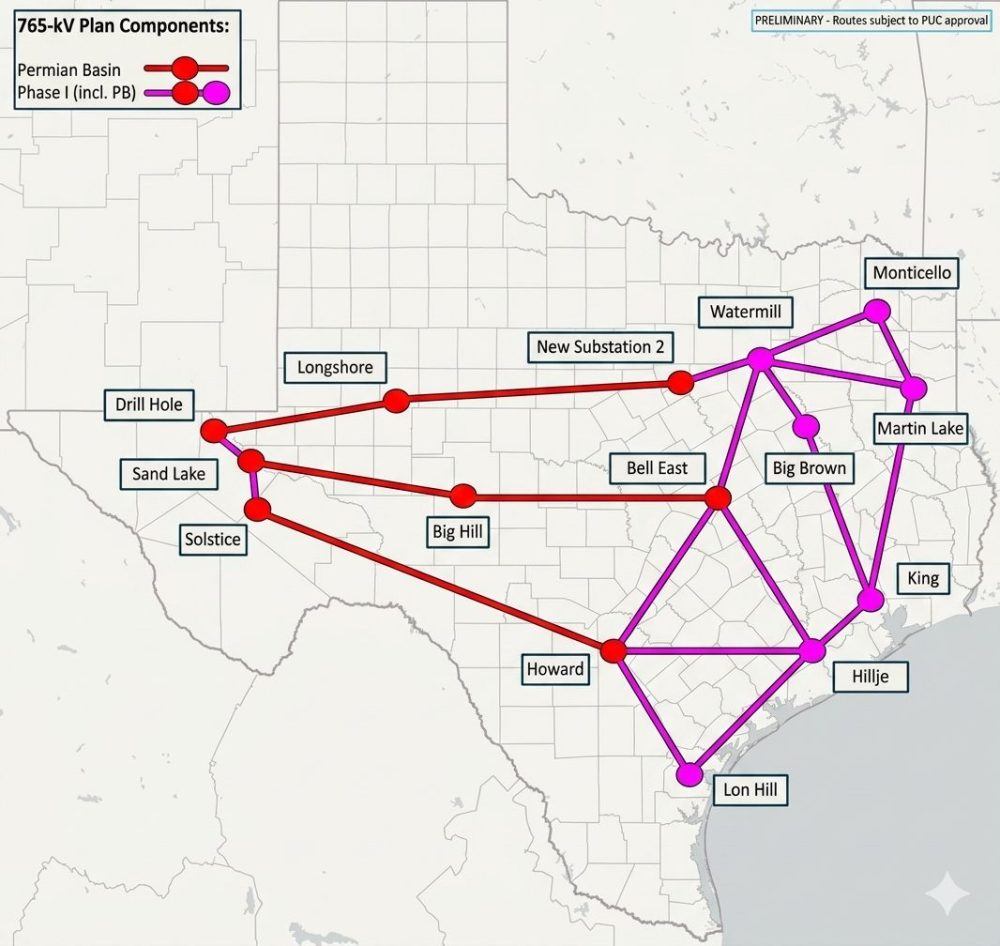
In a newly signed letter, 25 state legislators are requesting a formal meeting with the Public Utility Commission of Texas to discuss the proposed construction of three extra-high-voltage 765-kilovolt transmission lines. The lines would stretch from East Texas to the Permian Basin, a region known for its vast oil and gas production and rapidly increasing electricity demand.
Originally introduced as the “Permian Basin Reliability Plan,” the project has expanded significantly since its legislative approval. Lawmakers now estimate the total cost could reach between $90 billion and $100 billion, making it one of the most expensive grid expansion efforts ever proposed in the state. Critics argue that such a price tag would ultimately fall on consumers, potentially increasing the average homeowner’s electricity bill by about $200 annually.
At the heart of the debate is a fundamental question: what is this infrastructure actually for?
Supporters say the transmission lines are needed to move large amounts of electricity across Texas and improve grid reliability, particularly as demand surges in energy-producing regions. However, skeptics argue that building more transmission alone does not solve reliability issues if there isn’t enough dependable power generation feeding into the grid.
Some lawmakers and energy analysts contend that investing in new power plants—such as natural gas, coal, or nuclear facilities—would provide more consistent and dispatchable energy, especially during extreme weather events. They suggest that without parallel investments in generation, the transmission lines may primarily serve large industrial loads rather than everyday consumers.
That has led to increasing speculation that part of the demand could be tied to energy-intensive operations like data centers or industrial-scale computing facilities, which require enormous and constant electricity supply. While no official plan has confirmed this as the primary driver, the scale and routing of the project have fueled those questions.
The controversy has also taken on a geopolitical dimension. Records from the Public Utility Commission show that one proposed route would cross land owned by Sun Guangxin, a Chinese billionaire with reported ties to the Chinese Communist Party. His company has reportedly requested that the transmission line be rerouted to avoid property near a residential structure on the land.
Sun has acquired roughly 7 percent of the land in Val Verde County since 2015, prompting concern among state officials. In response to similar issues, Texas lawmakers passed legislation in 2025 restricting land purchases by individuals and entities linked to countries deemed hostile to U.S. interests.
For critics, the routing issue underscores broader concerns about oversight and planning. They argue that a project of this magnitude should involve greater public input and clearer justification, especially given its potential long-term impact on land use, energy policy, and consumer costs.
As pressure mounts, the requested meeting with regulators could become a pivotal moment in determining whether the project proceeds as planned—or faces significant revision or delay.