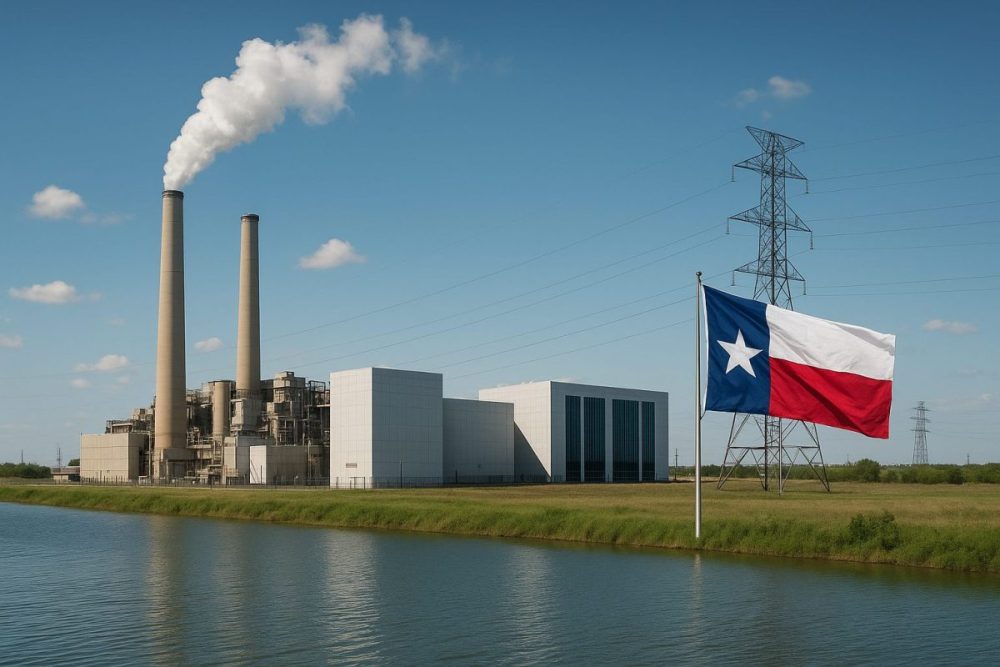
ERCOT Now Warning Texas About Planned Data Centers’ Power Demands
April 17, 2026 – Texas’ main power grid operator is warning regulators that electricity demand could surge dramatically over the next decade, fueled by rapid growth in data centers, cryptocurrency mining operations, and large-scale industrial projects.
At a hearing scheduled this week, the Electric Reliability Council of Texas (ERCOT) is expected to present projections showing that peak electricity demand—currently at a record 85,508 megawatts—could more than triple by 2032. The forecast reflects an unprecedented wave of new, energy-intensive developments seeking to connect to the grid, particularly in fast-growing regions of the state.
But ERCOT officials are also emphasizing a key caveat: the projections carry significant uncertainty. Many of the proposed projects driving the forecasts are still in early stages, and some may be delayed, scaled back, or never completed. Factors such as financing challenges, changing market conditions, and evolving technology could all affect how much of the anticipated load ultimately materializes.
The warning places the Public Utility Commission of Texas (PUC) in a difficult position. Regulators must decide how aggressively to plan for future demand, balancing the risk of overbuilding costly infrastructure against the possibility of falling short and jeopardizing grid reliability.
The issue comes amid heightened scrutiny of Texas’ power system following the devastating February 2021 winter storm, which caused widespread outages and prompted major reforms aimed at improving grid resilience. Since then, state leaders have prioritized ensuring that supply keeps pace with the state’s rapid population and economic growth.
Data centers, in particular, have emerged as a major driver of new demand. The facilities, which support cloud computing and artificial intelligence applications, require vast amounts of electricity to operate and cool servers. Similarly, cryptocurrency mining operations—drawn to Texas by relatively low energy costs and a deregulated market—can consume large amounts of power, often with fluctuating usage patterns.
ERCOT’s message to regulators is clear: while the scale of potential growth is enormous, planning based solely on high-end projections could lead to unnecessary costs for consumers. At the same time, underestimating demand could strain the grid and increase the risk of shortages during extreme weather.
As the PUC considers its next steps, the challenge will be crafting policies that are flexible enough to adapt to changing conditions while ensuring that Texas remains prepared for a future that could bring both explosive growth and significant uncertainty.