Clothing Donations and Consequences: The Global Trade Few Donors See
April 17, 2026 – Millions of Americans drop off used clothing each year at thrift stores, charity bins, and donation drives, often assuming their items will go directly to people in need. But the reality is far more complex—and increasingly controversial in parts of the developing world.
Approximately 45% to over 80% of donated clothing is shipped overseas, as charities can only sell a small fraction—often only 10–20%—in local thrift shops. Much of this exported clothing is sold to markets in the Global South, though a significant portion becomes waste, creating environmental crises, such as in Ghana.
Organizations such as Goodwill Industries and The Salvation Army receive far more clothing than they can sell domestically. Only a fraction ends up on local thrift store racks. The majority is sold in bulk to textile recyclers and exporters, entering a global secondhand market that ships used garments—known in the trade as “mitumba”—to countries across Africa, Latin America, and Asia.
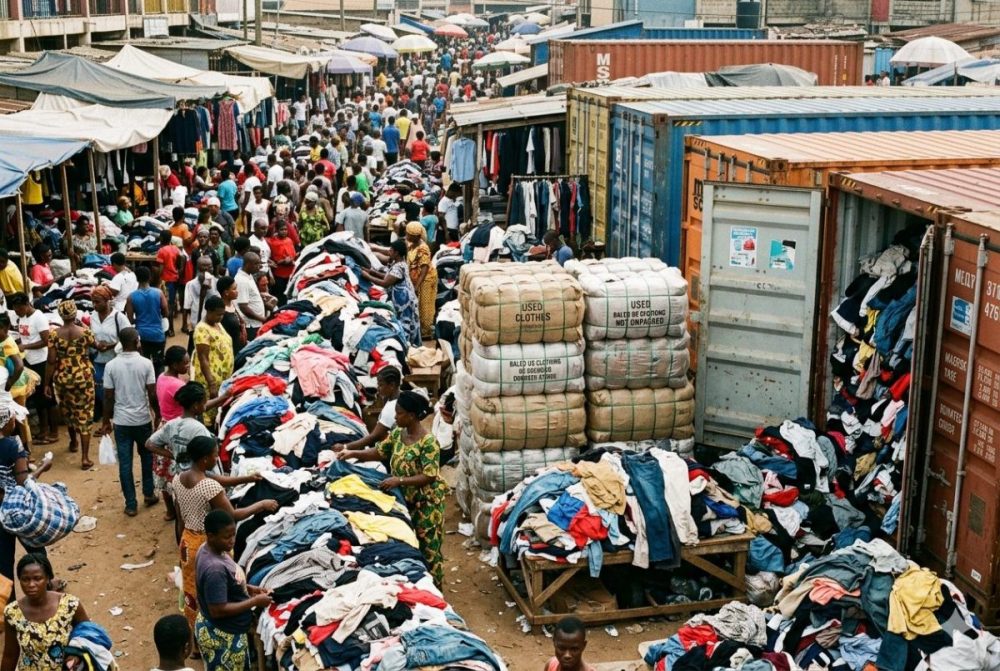
Mitumba is a Swahili term for “bundles,” referring to the massive trade of imported second-hand clothing in East Africa, particularly Kenya. These clothes, often donated or sold in Western nations, are shipped in compressed bales.
In countries like Ghana and Kenya, these imports are a major part of the clothing economy. Vendors buy tightly packed bales of secondhand clothes and resell individual items in open-air markets at affordable prices. For many consumers, used clothing provides access to brands and styles that would otherwise be out of reach.
But the influx has also raised concerns about its impact on local industries. Critics argue that a flood of cheap, imported clothing undercuts domestic textile production, making it difficult for local manufacturers to compete. In the 20th century, several African nations had thriving garment sectors, but many have struggled to maintain them in the face of global competition and secondhand imports.
In Ghana, high volumes of imported second-hand clothing from Western nations are known as ‘obroni wawu’, which translates from the Twi language to “dead white man’s clothes”. The term originated because locals initially believed that such a vast abundance of donated clothing could only come from deceased individuals.
There are also environmental consequences. Not all donated clothing is wearable. In fact, exporters acknowledge that a significant share of garments—sometimes described as “waste” even before shipment—ends up in landfills or informal dumping sites abroad. In Accra, mountains of discarded textiles have become a visible symbol of the problem, clogging waterways and contributing to pollution along the coast.
Supporters of the secondhand trade say it creates jobs and provides affordable clothing in low-income regions. Market sellers, transport workers, and sorters all depend on the industry for their livelihoods. Some economists also note that the decline of local textile industries cannot be attributed solely to used clothing imports, pointing to factors such as trade policies, infrastructure challenges, and the rise of ultra-cheap fast fashion.
The debate has reached policymakers. In recent years, regional blocs like the East African Community have considered restrictions on secondhand clothing imports to protect local manufacturing. However, such efforts have faced pushback over concerns about consumer prices and international trade relations.
For donors, the takeaway is less straightforward than it may seem. While giving away clothes can extend their life and reduce waste at home, it also feeds into a global system with uneven benefits and consequences.
As the volume of textile waste continues to grow worldwide, experts say the challenge will be finding solutions that balance affordability, sustainability, and the economic futures of countries on the receiving end.