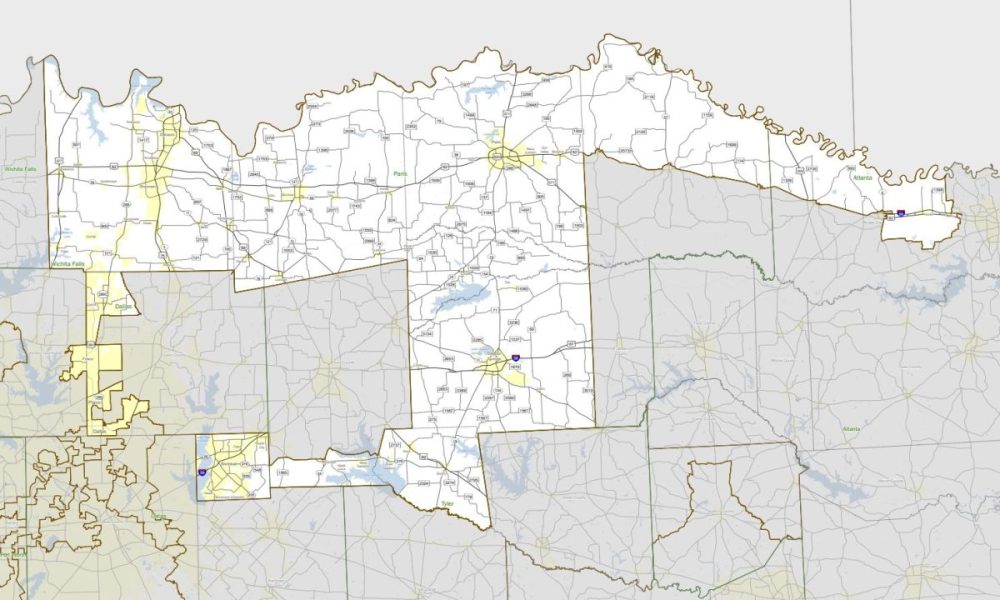
The “Big Beautiful Map” Stands Despite Challenges
Attorney General Ken Paxton announced a major legal victory after the U.S. Supreme Court ruled in favor of Texas’s congressional redistricting plan, clearing the way for its use in the 2026 midterm elections. The decision reverses a lower court ruling that had blocked the map, often referred to by state officials as the “Big Beautiful Map.”
The “Big Beautiful Map” is a Texas Republican-led congressional redistricting plan signed into law by Governor Greg Abbott in August 2025, designed to increase GOP representation by creating five new Republican-leaning seats for the 2026 midterms.
The legal dispute began when a federal district court issued an injunction preventing Texas from using its newly drawn congressional districts, citing concerns raised by advocacy groups over potential voting rights violations. The plaintiffs argued that the map unfairly disadvantaged certain voter groups and did not comply with federal protections.
In response, Paxton’s office quickly appealed the decision, seeking emergency relief from the nation’s highest court. The Supreme Court granted a stay of the lower court’s injunction, allowing Texas to proceed temporarily with the map while the legal challenge continued. In its latest action, the Court went further by issuing a summary reversal, effectively overturning the district court’s decision entirely.
The ruling ensures that the congressional map, signed into law in August by state officials, will remain in place for the upcoming 2026 elections. This outcome is significant because redistricting determines how political power is distributed across the state and can influence the balance of representation in Congress.
In a statement following the decision, Paxton criticized the legal challenge, describing it as an attempt by political opponents to undermine a lawful process. He emphasized that the Court’s ruling affirms the constitutionality of the map and reinforces the state’s authority to manage its own redistricting efforts.
Redistricting battles have become increasingly common nationwide, particularly following the release of new census data. States are required to redraw congressional boundaries every ten years to reflect population changes, but the process often leads to legal disputes over fairness and representation.
Supporters of Texas’s map argue that it complies with all legal requirements and reflects population shifts within the state. Critics, however, maintain that the map may still face scrutiny in future legal challenges, especially as debates over voting rights continue at both state and federal levels.
With the Supreme Court’s decision now in place, Texas election officials are expected to move forward with preparations for the 2026 midterms using the approved map. The ruling marks a decisive moment in an ongoing national conversation about redistricting, judicial oversight, and the balance between state authority and federal protections in election law.