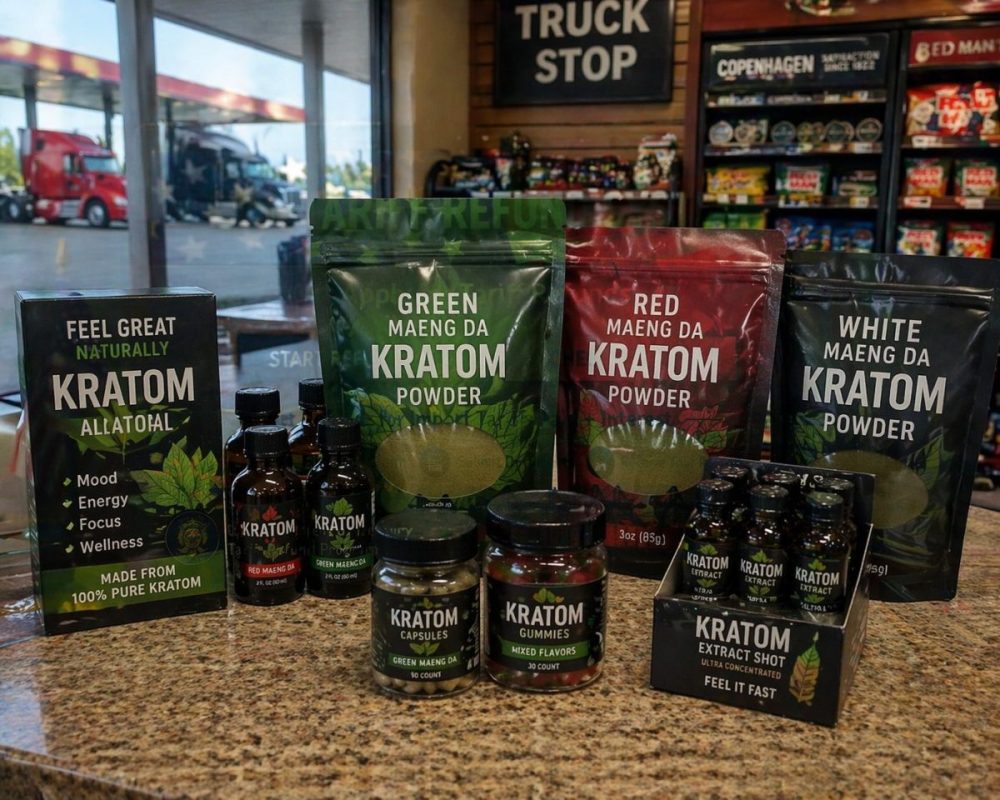
Paxton Takes on California Kratom
April 21, 2026 – Texas Attorney General Ken Paxton has filed a lawsuit against two California-based kratom retailers, accusing them of selling highly concentrated and potentially dangerous products to Texas consumers in violation of state law.
The companies named in the lawsuit—Pure Leaf Kratom, LLC and Outcast Distribution, LLC—are alleged to have marketed and shipped products containing extremely high levels of 7-hydroxymitragynine, commonly known as 7-OH. According to the attorney general’s office, some of the products tested contained between 86% and 96% 7-OH, far exceeding the 2% legal limit established under Texas law.
Who Uses Kratom?
- Individuals Seeking Pain Relief: Many use it to manage chronic pain, such as back pain, fibromyalgia, or arthritis.
- Those Managing Mental Health: Users often report using it for anxiety, depression, or to manage stress.
- Individuals Self-Treating Addiction: A significant number of users take kratom to alleviate withdrawal symptoms from opioids or to transition off, or reduce their use of, prescription opioids or heroin.
- Individuals Seeking Energy: Like coffee, some use it to increase productivity, improve focus, or for energy to work long hours.
- Demographic Profile: In the U.S., users are often middle-aged, Caucasian, and college-educated, though its use is also rising among teenagers and young adults.
- Traditional Users: In Southeast Asia, it has been traditionally used for centuries by manual laborers to combat fatigue and manage pain.
7-OH is a powerful alkaloid derived from kratom and is considered significantly more potent than morphine, raising concerns among regulators about its safety when consumed in high concentrations. The lawsuit claims that the companies not only exceeded legal potency limits but also distributed products containing synthetic additives, which are explicitly banned in Texas.
The legal action stems from protections put in place under the Texas Kratom Consumer Health and Safety Protection Act, passed in 2023 to regulate kratom products and safeguard consumers. The law imposes strict limits on alkaloid concentration and prohibits synthetic alterations.
Investigators also allege that the companies misled consumers by claiming on their websites that they do not ship products exceeding the legal 7-OH threshold to Texas. Laboratory testing, however, contradicted those claims.
“I will not allow California-based companies to illegally ship their potentially deadly substances into Texas,” Paxton said in a statement, emphasizing his office’s broader effort to crack down on unsafe kratom distribution.
This lawsuit is part of a wider initiative by the attorney general’s office to target unlawful kratom sales. In a previous case, Paxton secured a temporary injunction against a North Texas retailer, halting the sale of similar products.
The case underscores growing scrutiny of kratom products and the challenges regulators face in enforcing safety standards across state lines.