Ten Commandments Have a December 1 Deadline for Some Texas School Districts

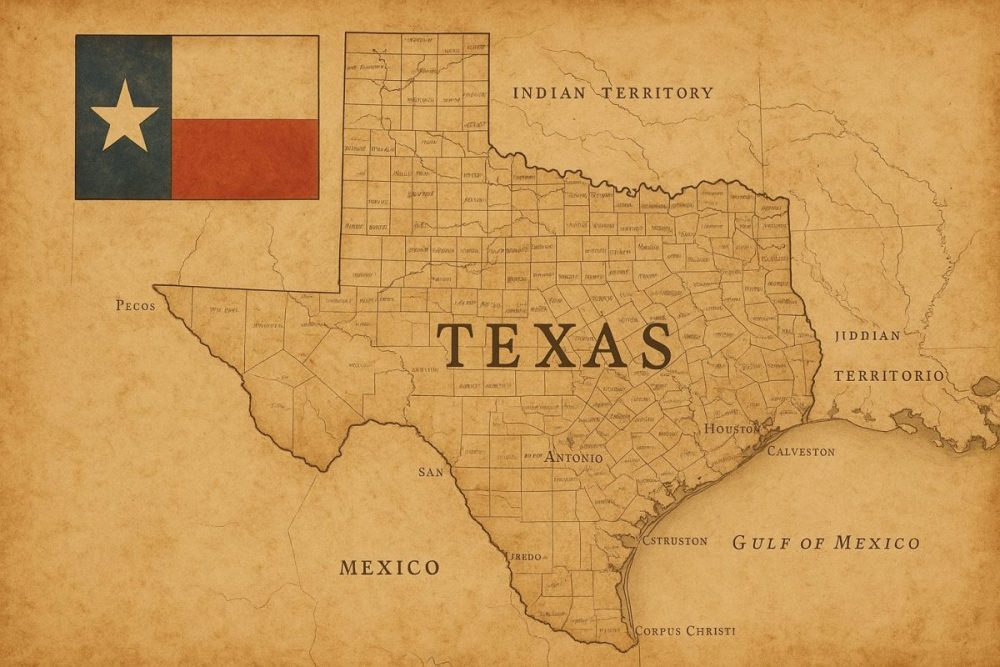
November 24, 2025 – A federal judge has issued a preliminary injunction ordering certain public school districts in Texas to remove displays of the Ten Commandments from classrooms by December 1, 2025 — and banning the placement of any new ones. The ruling, handed down by Orlando L. Garcia, came in the case Cribbs Ringer v. Comal Independent School District, which was filed in September by 15 multifaith and nonreligious families whose children attend schools in districts covered by the order.
The injunction specifically applies to the districts named in the lawsuit, which include Alamo Heights, North East, Austin, Cypress Fairbanks, Lackland, Lake Travis, Fort Bend, Houston, Dripping Springs, Plano, and Northside.
Garcia’s decision cites the U.S. Constitution’s Establishment Clause, concluding that the mandated classroom displays under the state’s law — Senate Bill 10 — likely violate students’ and families’ rights by effectively endorsing religion in public-school settings. The judge wrote that it would be “impractical, if not impossible” to shield plaintiffs from unwelcome religious displays without stopping enforcement of the law in the affected districts.
The injunction applies to fourteen districts, including some of the state’s largest and fastest-growing school systems. Districts must confirm compliance by early December. While the ruling directly binds only those districts named in the lawsuit, civil-liberties groups — including ACLU of Texas, Americans United for Separation of Church and State, and Freedom From Religion Foundation — are urging all Texas school districts to refrain from enacting the law, arguing that the constitutional protection extends statewide.
Parents and advocates praised the ruling. One plaintiff said she was relieved that her children — a religious minority in their school — would no longer face constant exposure to state-endorsed religious messaging. Legal experts suggest this decision could shape how other states handle similar laws and may be influential if the issue reaches higher courts.
Paris Junior College Celebrates a Vibrant Homecoming Weekend Filled with Tradition, Awards, and Community Spirit

November 23, 2025 – Paris Junior College wrapped up an unforgettable Homecoming Week, welcoming students, alumni, faculty, staff, and community members to a series of spirited events that highlighted the Dragon Family’s pride, creativity, and connection.
Festivities began with lively campus cookouts in Sulphur Springs, Greenville, and Paris, and a full lineup of student activities that built excitement leading into the weekend.
Alumni Awards Ceremony Honors Exceptional Dragons
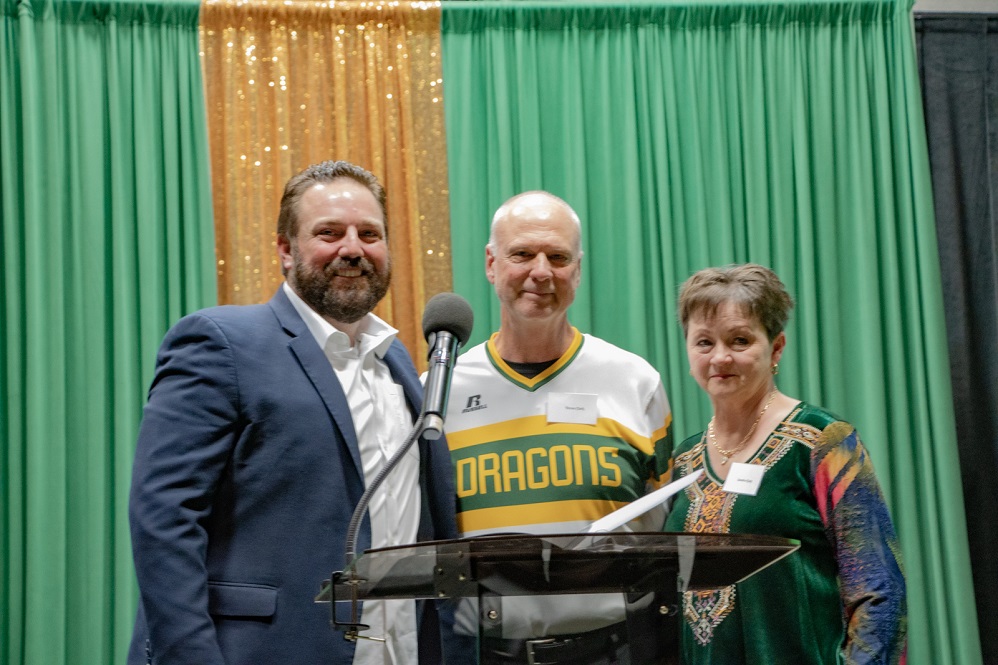
A signature highlight of Homecoming Weekend was the Alumni Awards Ceremony, held Friday evening at the Love Civic Center. The event brought together alumni and friends to celebrate individuals who exemplify excellence, leadership, and service beyond their time at Paris Junior College.
This year’s honorees included:
- Distinguished Alumni: Patrick Dobbs and Sharon Eubanks
- Hall of Honor: Phillip Morgan
- Hall of Fame: Deron Clark
- Young Alumni: Ashley Endsley
Each awardee was recognized for their outstanding achievements and continued representation of PJC’s values in their professions and communities. Their stories inspired all in attendance and demonstrated the lasting influence of a Paris Junior College education.
Homecoming Golf Tournament Brings Alumni and Community Together
The2nd annual PJC Athletics Golf Tournament, held Friday morning at Paris Golf & Country Club, drew alumni, community partners, and supporters for a fun and competitive day on the green. Teams enjoyed perfect fall weather, camaraderie, and spirited competition.
Participation from local businesses and sponsors made a meaningful impact, with proceeds supporting student athlete success and initiatives.
Campus Royalty & Parade Excellence
A beloved tradition—the crowning of the Homecoming Court—brought excitement to Saturday’s festivities. Wesley Johnston and Brooklyn King were named the 2025 Paris Junior College Homecoming King and Queen, earning warm applause from fellow students and guests.
The Homecoming Parade lit up downtown Paris with colorful floats, creative themes, and enthusiastic participants. This year’s parade winners were:
- 1st Place: Nursing Department
- 2nd Place: Sonography Program
- 3rd Place: Jewelry Department
Each entry demonstrated impressive teamwork, creativity, and school spirit.
A Week to Remember
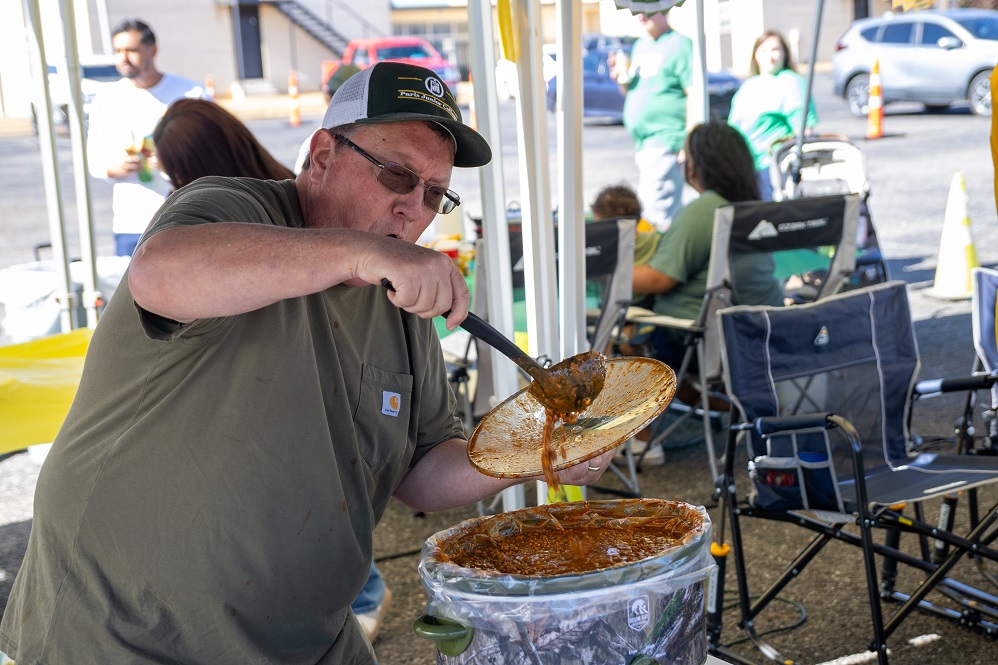
Homecoming Weekend concluded with spirited wins from both the Men’s and Women’s Basketball teams, community tailgating, and an energetic post-game outdoor concert featuring local food trucks. The week’s events brought together the entire Dragon community in celebration of tradition, pride, and the bright future of Paris Junior College.
###


Paris Junior College — located in Paris, Texas, about 100 miles northeast of Dallas — has been a part of the Lamar County community since 1924.
Paris Junior College offers Associate in Arts, Associate in Science and Associate in Applied Science degrees, as well as Certificates of Proficiency in technical/workforce fields. The college has expanded its academic curriculum through the years to encourage associate degree and university transfer candidates. Since establishing its first vocational program — jewelry and watchmaking in 1942 — the college has been aggressive in adding technical/workforce programs that will benefit students entering the workforce.
The campus of 54 tree-shaded acres includes 20 major buildings and residence halls and provides students a unique and pleasant environment for learning.
Paris Junior College also operates centers in Sulphur Springs, Texas, and in Greenville, Texas.
Vision
To be the educational provider of choice for the region.
Mission
Paris Junior College is a comprehensive community college serving the region’s educational and training needs while strengthening the economic, social and cultural life of our diverse community.
TxDOT Approves Nearly $285 Million for Pedestrian and Bicycle Projects

November 23, 2025 – Projects include sidewalks, bike lanes and safety improvements
PARIS – The Texas Transportation Commission has approved more than $284.8 million for bicycle and pedestrian infrastructure that will help improve safety, mobility, access and quality of life for people across the state.
These federal Transportation Alternative funds will go toward 73 projects statewide that will build sidewalks, shared use paths, dedicated bicycle lanes and pedestrian bridges. They will also be used for the development of active transportation plans that will help communities plan for non-motorized connected networks.
“This significant investment will make it safer and more enjoyable for people to walk and bike in their communities while improving access across the state,” Texas Transportation Commissioner Robert “Robie” Vaughn said. “By expanding transportation options, we can build more connected communities and a more connected Texas, while enhancing the quality of life for everyone.”
PARIS DISTRICT
TA Coordinator: Scott Shannon
Project Sponsor: City of Farmersville
Project Name: Northeast Texas Trail Improvements – Hunt County Section
Phases of work included in award: Design & Construction
Federal Funding Amount: $5,130,400
Project Description: The project will widen the existing 8-foot-wide trail to a 10-foot-wide shared use path by installing approximately 7.39 miles of 10-foot-wide base and decomposed granite from FM 2194 in Merit, Texas to the southwestern city limits of Celeste, Texas. The project will also include additional width clearing, access gates, signage, driveway crossings, culverts, drainage improvements, and bridge rehabilitation. The project will complete the construction of this portion of the 130-mile Northeast Texas Trail (NETT) as a shared use path from Merit to Celeste.
Project Sponsor: NETT
Project Name: NETT SW Paris Gap
Phases of work included in award: Design and Construction
Federal Funding Amount: $15,917,000
Project Description: The project will construct 5 miles of10-foot-wide shared use path and 1 mile of bicycle lanes along the Northeast Texas Trail (NETT) from County Road 22500 to the existing NETT intersection on Collegiate Dr. in Paris, Texas. The project will consist of mostly concrete SUP with a smaller section of loose aggregate wearing surface. There will also be clearing striping and safety bollards for street crossings. The project will complete connectivity of the 130-mile-long Northeast Texas Trail.
Project Sponsor: Red River County
Project Name: NETT Bridge Replacement East of Annona
Phases of work included in award: Design and Construction
Federal Funding Amount: $3,741,000
Project Description: The project will remove a dilapidated bridge and construct an approximately 310-foot pedestrian bridge at the intersection of the Northeast Texas Trail (NETT) and Kickapoo Creek.
More information on all the projects can be found at txdot.gov.
Working to keep vulnerable users safe
While collisions involving pedestrians and cyclists only make up a small percentage of traffic crashes in Texas, they account for 1 in 5 traffic fatalities. All of these projects will provide safer conditions for people who walk or use bicycles or wheelchairs. More specifically, 27 of these projects will improve pedestrian safety in areas identified as potential risks in the Texas Pedestrian Safety Action Plan. Twenty-nine of these projects are intended to provide safer routes for children walking and biking to schools.
Funding for these projects comes from the federal Transportation Alternatives program. All award selections come after a competitive call for projects from cities and counties across the state.
For more information, please contact [email protected] or call (903) 737-9213.
###

Paris District Road Report for November 24, 2025
Paris — Here’s a look at work planned in Fannin, Grayson, Hopkins, Franklin, Delta, Lamar, Red River, Hunt and Rains Counties for the week starting November 24, 2025. These schedules are subject to change due to weather conditions, equipment failure or other unforeseen issues. Motorists are advised to remain alert and pay special attention to all signs, barricades, and traffic controls, and reduce their speed as they approach and travel through work zones. They should also avoid distractions such as cell phones, eating, drinking, or car audio or navigation systems.
Safety Message: Flash Floods
Flash flooding is the leading cause of weather-related deaths in Texas. If you encounter a flooded road, “Turn Around, Don’t Drown.”
- Never walk, swim, or drive through still or moving flood waters. The water may be hiding dangers such as debris, tree branches, power lines, or damage to the road. As little as six inches of fast-moving water can cause motorists to lose control of their vehicle, even a pickup truck or SUV.
- Stay informed about weather conditions when you are driving.
- Be especially careful driving at night when it can be harder to see flood dangers.
- If your vehicle stalls in deep water, leave it and move to higher ground if you can do so safely.
Here’s the law
- Never drive around barriers blocking low water crossings or flooded roadways. Penalties include a fine of up to $2,000 and/or up to 180 days in jail.
- Tampering with roadway warning signs or barriers is punishable by a fine of up to $1,000, up to two years in jail, or both.
Sherman Area (Fannin, Grayson Counties)
Contacts: Sherman Area Office (903) 892-6529; Grayson Co. Maintenance (903) 893-8831; Fannin Co. Maintenance (903) 583-7566.
Grayson County:
US 75, from the Collin County Line to FM 902. This project will widen the US 75 mainlanes from the Collin County Line to FM 902 to six lanes. The project will also reconstruct the bridge at County Line Road and construct new u-turn bridges in Van Alstyne near Simmons Loop and in Howe south of Hall Cemetery Road. This project will convert the frontage roads from two-way operation to one-way operation. Two lanes on the US 75 main lanes will remain open in each direction during the daytime hours with occasional lane closures during the nighttime period. Watch for lane closures on the frontage roads during construction. A reduced speed limit of 65 mph on the US 75 mainlanes has been set for this construction project.
The frontage roads in Van Alstyne were converted to one-way traffic on Wednesday, June 11th. This one-way conversion happened on both the east and west sides of US 75 from FM 121 to Blythe/Farmington Road. Lane closures will be in place in order to complete pavement repairs and to overlay the roadway with a new surface. After the pavement work is complete, both lanes of the frontage roads will be opened to traffic. There will be a section of frontage road near Northridge Road and Simmons Loop that will be reduced to one lane in order to construct the new u-turn bridge over US 75.
The frontage roads in Van Alstyne on both the east and west sides of US 75 from County Line Road (CR 375/Panther Parkway) to FM 121 are one-way roads. The pavement work is completed, and both lanes of the frontage roads are open to traffic. There will be occasional lane closures to install work zone striping & other remaining works. The section of frontage road on the east side of US 75 between Kelly Lane and County Line Road will remain as two-way traffic in order to allow traffic on Kelly Lane to travel to County Line Road.
US 75 frontage roads in Howe were converted to one-way traffic on October 23. This one-way conversion happened on both the east and west sides of US 75 from Blythe Rd to Hanning St. Lane closures will be in place during the conversion in order to complete pavement repairs and to overlay the roadway with a new surface. After the pavement work is completed, both lanes of the frontage roads will be opened to traffic.
US 75, from SH 91 (Texoma Parkway) to US 82. This project will rebuild the US 75 mainlanes from SH 91 to US 82 as well as reconstruct the entrance and exit ramps on US 75. The project will also reconstruct bridges at Taylor Street, Lamberth Street and the US 75 main lanes over US 82 and reconstruct the frontage road intersection at SH 91. A reduced speed limit of 60 mph on the US 75 mainlanes has been set for this construction project. Two lanes on the US 75 main lanes will remain open in each direction during the daytime hours with occasional further lane closures during the nighttime period. Watch for lane closures on the frontage roads during construction.
The US 75 frontage road U-turn at the US 82 frontage road intersection travelling southbound to northbound is closed to traffic to allow crews to continue work on a portion of the new US 75 main lane bridge over US 82. During this closure, traffic is asked to go through the US 75 and US 82 frontage road intersection by making a series of left turns.
US 75 northbound exit ramp to Lamberth Rd. (Exit 63) will be closed from August 20 to December 24, 2025, from 8:00 PM to 5:00 AM. This is a long-term closure, and drivers should use the adjacent exits.
Eastbound/Westbound Taylor St. will remain closed until April 2026.
US 75 southbound & northbound mainlanes from N. Travis to Loy Lake Rd will have nightly lane closure from November 10 to November 31 from 8:00 PM to 5:00 AM. These closures will be short duration closures for mobile operations.
US 75 northbound frontage road from Lamberth to north of westbound frontage road will have nightly lane closure from November 10 to November 31 from 8:00 PM to 5:00 AM. These closures will be short duration closures for mobile operations.
US 75 northbound & southbound frontage road from Lamberth to north of westbound frontage road will have daily lane closure from November 10 to November 31 from 9:00 AM to 5:00 PM. These closures will be short duration closures for mobile operations.
Starting on November 14th through November 25th, excluding Sundays, the eastbound and westbound traffic on FM 691 will experience alternating lane closures. These closures are necessary for the installation of temporary traffic signals at the intersection of FM 691 and the frontage roads. One-lane will be maintained in each direction during this time.
The contractor will reduce the northbound frontage road from FM 691 north about 800-ft to 1-lane starting today through November 25th from 9:00 am to 5:00 pm. The lane reduction is to install temporary detour in preparation for the closure and reconstruction of the frontage road.
US 75, from US 82 to North Loy Lake Road. This project will rebuild and widen the US 75 mainlanes from four lanes to six lanes as well as reconstruct the entrance and exit ramps on US 75. The project will also reconstruct bridges at FM 691, Iron Ore Creek and Spur 503, and add U-turn bridges at Loy Lake Road in Sherman and Spur 503 in Denison. A reduced speed limit of 65 mph on the US 75 mainlanes has been set for this construction project. Watch for shoulder closures and lane shifts on the mainlanes of US 75 as well as frontage road lane closures within the project. Watch for nighttime lane closures on the northbound and southbound US 75 mainlanes, as crews work to construct the new pavement section.
Westbound Spur 503 is closed to traffic near US 75 as the connecting northbound and southbound frontage roads are being built at the new Spur 503 bridge. During this closure traffic on westbound Spur 503 will be required to detour onto the frontage road at the temporary exit ramp west of Theresa Drive and continue along the frontage road to the Loy Lake Road intersection where traffic can make the U-turn to continue south on the US 75 frontage road to the entrance ramp before the FM 691 intersection, or traffic can continue along the northbound frontage road through the Loy Lake Road intersection and take the next entrance ramp to northbound US 75.
The U-turn lanes for the US 75 frontage roads at FM 691 are closed to traffic to allow crews to work on constructing the middle portion of the new US 75 bridge over FM 691. During this closure traffic wishing to make a U-turn at the intersection is asked to turn left onto FM 691 and make another left at the next signal light.
The exit ramp from northbound US 75 to North Loy Lake Road in Denison is closed permanently. Travelers who wish to access North Loy Lake Road from northbound US 75 will detour up to Crawford Street, make a U-turn at the Crawford Street intersection, and head south on the frontage road to reach North Loy Lake Road.
US 75, from FM 1417 to SH 91 (Texoma Parkway). A reduced speed limit of 60 mph on the US 75 mainlanes has been set on the mainlanes for this construction project. Watch for shoulder closures and occasional lane closures on the northbound and southbound US 75 main lanes between SH 91 and FM 1417 as crews work on completing the remaining work on this project. Watch for occasional lane closures on the frontage roads between FM 1417 and SH 91.
US 75 Overlay, from near FM 84 to the Oklahoma State line. Watch for lane closures on northbound and southbound US 75 as crews will be working each night from Sunday night through Friday morning during the overnight period. Lane closures will be present at night for crews to overlay the roadway with hotmix. Lane closures will begin at 7:30 pm each night and should be reopened to traffic by 6 a.m.
US 75 full depth concrete repair, from the Collin County line to the Oklahoma State line. Watch for lane closures on northbound and southbound US 75 as crews will be working each night from Sunday night through Friday morning during the overnight period. Lane closures will be present at night for crews to replace failed concrete sections. Lane closures will begin at 7:30 p.m. each night and should be reopened to traffic by 6 a.m. This work will extend from the Collin-Grayson County line to the Oklahoma State line.
SH 5, in Van Alstyne from Williams Way to Blassingame Avenue. Watch for daytime lane closures on SH 5 as crews work to install a shared use bicycle and pedestrian trail. The trail will follow along SH 5 from the existing trail at Williams Way to Blassingame Avenue, then along Tolson Avenue, then along Main Street where it will connect with Van Alstyne Parkway. Motorists should expect delays during the daytime work hours as flaggers direct traffic through the work zone.
FM 121, from Main Street in Van Alstyne to SH 160. Watch for occasional daytime lane closures as crews work to finalize the rehabilitation and widening of the roadway to an overall width of 26 feet. Motorists should expect delays as flaggers may be directing traffic through the work zone.
US 82, from the SH 91 to the Fannin County Line. Watch for daytime lane closures on the US 82 eastbound and westbound main lanes as crews work to perform pavement repairs and then a pavement overlay on the surface. Motorists should expect delays during the daytime work hours.
US 75 debris pickup, from Collin County line to Oklahoma State line. Watch for mobile lane closures as workers pick up debris from the roadway every Sunday, Tuesday, and Thursday during the nighttime.
US 377 in Tioga, from South of FM 922 to North of Mc Knight Rd. and from Hinton St. to Shawnee Dr. This project will widen US 377 on each side of the roadway to allow for the addition of a center left-turn lane. This project will also install traffic signals at the intersection of US 377 & FM 121 and at the intersection of US 377 & FM 922. Watch for shoulder closures and occasional daytime lane closures on the northbound and southbound US 377 main lanes as well as on FM 922. Motorists should expect delays during the daytime work hours as flaggers direct traffic through the work zone.
Two new traffic signals in Tioga were activated last week. The new traffic signals were activated at the US 377 & FM 922 intersection and at the US 377 & FM 121 intersection. The traffic signals were fully activated to signal mode on Wednesday, November 19. Message boards are in place on US 377, FM 922 and FM 121 to alert the public about the change. Message boards will remain in place for a week after the change to full activation to help with advanced notification.
Southmayd Rd at Elba Creek, The bridge at Elba Creek was closed beginning June 25. The Contractor demolished the bridge and started replacing it. During the closure, traffic is asked to use Frog Pond Rd & Spalding Rd or Klas Rd & Hazelwood Rd.
FM 697, from east of FM 2729 to US 69, This project will widen FM 697 on each side of the roadway to make the shoulders wider. The project will also safety treat fixed objects and add one course surface treatment on the full width of the roadway. Motorists should expect delays as flaggers direct traffic through the work zone.
Sister Grove Rd., Contractor closed the bridge on Sister Grove Rd at West Prong Sister Grove Creek to replace the existing bridge. The Contractor completed the bridge replacement work and opened it to traffic on October 31. The Contractor will continue working on the remaining minor items with occasional daily lane closures. Drivers are requested to slow down, watch for construction workers and obey construction signs as they travel through the work zone.
Prescott Rd, Southmayd. Contractor will be performing bridge replacement work on the Prescott Road bridge located between Johnny Watson Road and Jelley Road in Grayson County. The bridge on Prescott Road will be closed in both directions until the bridge replacement work is completed. The bridge will remain closed until March 2026. The Contractor plans to close the bridge and begin work at the end of November, weather permitting. Road closure signs will be installed on the roads leading to the project to inform drivers. Drivers can use Johnny Watson Road, Jelley Road and Southmayd Road as an alternate route.
SH 289 North of FM 120. Watch for daytime lane closure as maintenance crews perform edge work on the roadway. Motorists should expect delays as flaggers and pilot cars direct traffic through the work zone.
SH 56 west of Southmayd. Watch for daytime lane closures as maintenance crews perform level up/seal coat preparation work on the roadway. Motorists should expect delays as flaggers and pilot cars direct traffic through the work zone.
Fannin County:
Bonham State Park, Park Road 24. Park Road 24 in the Bonham State Park will have daytime lane closures while crews rehabilitate the main road, camping spots and parking lots within the park. Detour routes will be present during construction to allow for the flow of traffic.
FM 68, at the North Sulphur River bridge. FM 68 at the North Sulphur River bridge replacement is completed and the bridge is open to traffic. However, construction crews will continue working on the remaining bridge structure and roadway final works. During this final stage, traffic is asked to watch for workers and equipment and drive slowly when going through the work zone.
FM 2645, from FM 898 to FM 1753. Watch for daytime lane closures as crews work to rehabilitate and widen the roadway to an overall width of 26 feet. Motorists should expect occasional delays as the contractor performs the final minor activities in the work zone.
FM 274, from SH 78 to FM 1753. Watch for daytime lane closures as crews work to rehabilitate and widen the roadway to an overall width of 26 feet. Motorists should expect delays as signals and pilot cars direct traffic through the work zone.
SH 121 overpass at US 69. The SH 121 overpass at US 69 opened to all traffic on 6/23/2025. Construction crews will continue working on minor items at this location. Motorists should expect delays as there will be daily lane closures through the construction zone.
SH 78 from FM 273 to Oklahoma State line: Watch for daytime lane closures as crews work to rehabilitate the roadway. Motorists should expect delays as signals and pilot cars direct traffic through the work zone.
CR 1202 at Tributary of Brushy Creek. The onsite detour on CR 1202 at Tributary of Brushy Creek has been removed. The new bridge is competed and open to traffic. Traffic is asked to approach the bridge slowly and drive at an appropriate speed through the work zone while crews continue working on finishing the remaining bridge work.
CR 2865 at Sanders Creek Tributary. CR 2865 at Sanders Creek Tributary was closed to traffic on Monday, April 21 to allow for replacement of the bridge. The bridge at Sanders Creek Tributary is completed and opened to traffic. The bridge on CR 2825 at Sanders Creek was closed on June 21 & the Contractor demolished the bridge. The bridge is now completed and opened to traffic.
Sulphur Springs Area (Hopkins, Franklin Counties):
Contacts: Sulphur Springs Area Office (903) 885-9514; Franklin Co. Maintenance (903) 537-4976; Hopkins Co. Maintenance (903) 885-4031.
Hopkins County: No updates this week.
Franklin County: No updates this week.
Paris Area (Delta, Lamar, Red River Counties)
Contacts: Paris Area Office (903) 784-1357; Delta Co. Maintenance (903) 395-2139; Lamar Co. Maintenance (903) 785-4468; Red River Co. Maintenance (903) 427-3561.
Lamar County:
US 82 / Lamar Avenue, from 42nd street in Paris to Division Street in Blossom. Watch for temporary lane and shoulder closures while crews perform pavement repairs and resurfacing.
BU 271 B, from 18th Street SE to 34th Street SE. Watch for temporary lane and shoulder closures while crews install sidewalk on the north and south sides of the roadway.
US 271, at the intersection of FM 2648 and at the intersection of FM 3298. Watch for temporary lane and shoulder closures as crews install roadway illumination within the right of way.
SH 19/24, Lamar & Delta Counties: from LP 286 intersection to SH 19. Watch for temporary lane closures and lane shifts while crews resurface the roadway, perform bridge rail upgrades, and bridge maintenance.
US 271, Lamar & Red River Counties: from FM 196 North to SH 37. Watch for temporary shoulder closures and trucks entering and exiting the highway as crews remove tree and brush from within right of way.
US 82, Lamar & Red River Counties: from State Loop 286 in Paris to Bowie County Line in Red River County. Watch for temporary lane and shoulder closures while crews improve drainage structures.
1st ST SW & South Main St., Lamar County: from Hearne St. in Paris to Kaufman ST. in Paris. Watch for temporary lane and shoulder closures while crews install a bike lane and perform pavement and curb repairs.
FM 195, at Six Mile Creek. Watch for temporary shoulder closures and trucks entering and exiting the highway as crews perform bridge maintenance.
Delta County:
SH 24, at Doctor’s Creek. Watch for temporary shoulder closures and trucks entering and exiting the highway as crews perform bridge maintenance on the northbound structure.
SH 154, from SH 19 to BU 24. Watch for temporary lane and shoulder closures while crews improve drainage structures.
Red River County:
FM 2120, from FM 2573 to SH 37. Watch for temporary lane and shoulder closures while crews rehabilitate the existing pavement and improve drainage structures.
Northeast Texas Trail, Clarksville, Texas. Watch for trucks and equipment entering and exiting streets and highways while crews construct the off-system trail.
Northeast Texas Trail, from BU 82J to Annona East City Limits. Watch for trucks and equipment entering and exiting streets and highways while crews construct the off-system trail.
Northeast Texas Trail, from Annona East City Limits to Bowie County Line. Watch for trucks and equipment entering and exiting streets and highways while crews construct the off-system trail.
BU 82 J, from FM 2825 to High Street (Clarksville). Watch for temporary lane and shoulder closures while crews install sidewalk on the south sides of the roadway.
Greenville Area (Hunt, Rains Counties)
Contacts: Greenville Area Office (903) 455-2363; Hunt Co. Maintenance (903) 455-2303; Rains Co. Maintenance (903) 473-2682.
SH 34, From Traders Road to FM 1570. This project will construct a turning lane, consisting of culvert extensions, roadway widening, overlay, and striping. Work on this project is currently suspended due to utility conflicts. TxDOT is working with utility owners to relocate utilities. Please be aware of workers and watch for work zones when traveling in this area.
FM 2642, from FM 35 to SH 66. The contractor has set work zone signs and barricades. The contractor is performing flex base work on the south end of the project, and asphalt paving on the north end of the project. Contractor is also performing maintenance on driveways. Please slow down and be aware of workers and watch for work zones when traveling in this area.
FM 512, from SH 34 to FM 118. Barricades and traffic signs are in place. Contractor is currently working base material. Contractor will be fog sealing this week. One-way flagger operations are currently set up through the work zone. Expect minor delays. Please be aware of workers and watch for work zones when traveling in this area.
SH 276, from FM 751 to CR 3609. The 2.6-mile rehabilitation project will add a center turn lane. The contractor has placed barricades and work zone traffic signs. Contractor is performing excavation and embankment work. Expect delays in the workzone. Please be aware of workers and watch for work zones when traveling in this area.
FM 36, from US 380 to SH 66. The 6.11-mile project will rehabilitate roadway surface and add safety end treatments. Contractor is laying driveway pipes and installing culverts. Flagger controlled traffic control is in place during construction operations. Expect slight delays and follow pilot vehicle. Please be aware of workers and watch for work zones when traveling in this area.
I-30 Interchange Improvements, from Monte Stratton to FM 1903. Barricades and advance warning signs are in place. Drill shafts are installed at FM 1903. Please be aware of workers and watch for work zones when traveling in this area.
I-30 Improvements, from CR2511 to FM 36. Temp wall work is ongoing. Contractor will be performing cement treatment and hot mix paving for detours around FM 36 and FM 1570 area frontage roads. Please be aware of workers and watch for work zones when traveling in this area.
District Wide Lighting / Safety Improvement. Contractor is setting light poles and electrical services on SH 24 and FM 1528, and SH 24 at BU 24. Please be aware of workers and watch for work zones when traveling in this area.
Hunt and Rains Counties:
Hunt County and Rains maintenance crews will be performing pothole and sign repair work, and mailboxes throughout Hunt and Rains County.
Hunt County maintenance crew will be performing spot base repair on FM 2358. Edge work will be performed on FM 1565, from IH-30 to SH 66. Flaggers will be present at both locations. Crew will be performing bridge maintenance work in various locations. Maintenance contractors will be performing guardrail repair at various locations.
Rains County maintenance section will be performing roadway prep work on FM 1565. Right of Way vegetation management will be taking place in various locations. Please be aware of workers and watch for work zones when traveling in this area.
###
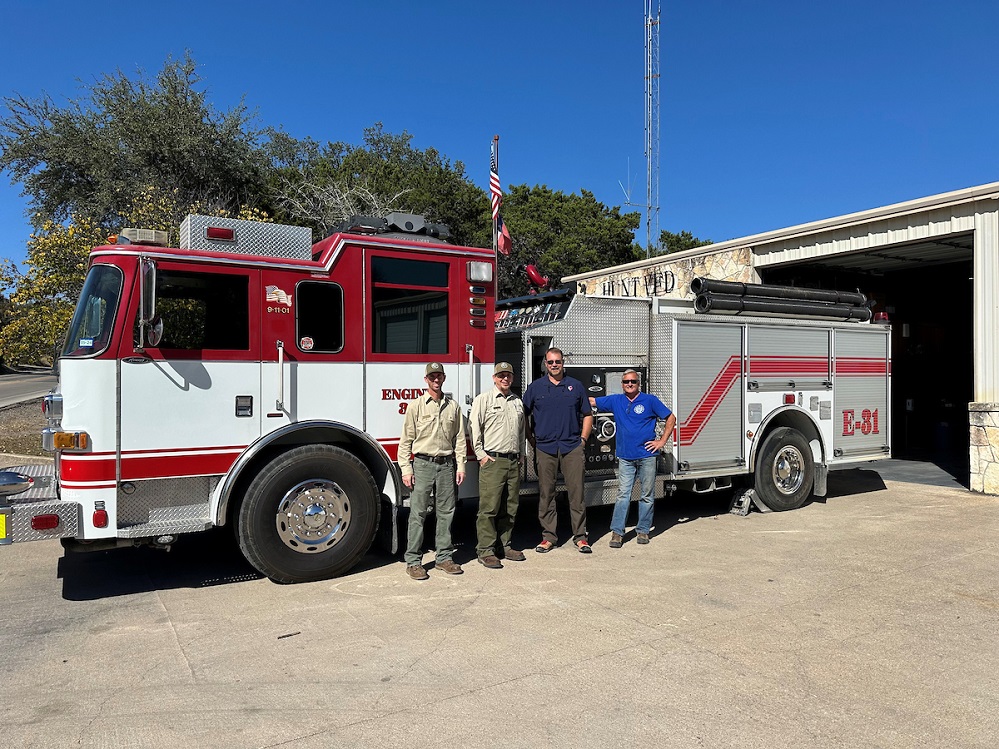
Texas Fire Departments Receive Donated Equipment, Rebuilding After Hill Country Flood
November 23, 2025 – COLLEGE STATION, Texas – After devastating flooding that struck Central Texas this summer, three Texas volunteer fire departments received donations of essential emergency response equipment through Texas A&M Forest Service’s Helping Hands Program.
This program facilitated the donation of equipment to help expand and restore the emergency response capabilities of Hunt, Mountain Home and Ingram volunteer fire departments, which experienced loss of equipment while responding to the flood.
A fire engine was donated to Hunt Volunteer Fire Department by Jefferson County Emergency Services District Three. Hunt Volunteer Fire Department was an initial responder to the flooding and served as a central hub for volunteers and equipment throughout the response. During the flood, they lost two trucks.
A fire engine, 17 air packs and two rapid intervention team packs were donated to Mountain Home Volunteer Fire Department by Fulshear Volunteer Fire Department. A water rescue boat was donated to the department by a private donor in New Mexico. The donated fire engine replaces a fire engine that was lost during the flood. The rescue boat is an addition to the department and will increase the capacity of its swift water rescue team.
Mountain Home Volunteer Fire Department was an initial responding agency to the flood, assisting in search and rescue operations.
Personal protective equipment was donated to Ingram Volunteer Fire Department by Salado Volunteer Fire Department. The donated personal protective gear replaces their gear lost in the flood. Ingram Volunteer Fire Department was also an initial responding department to the flood, assisting in search and rescue operations.
The donated equipment was presented to the volunteer fire departments Nov. 12.
The Helping Hands program helps connect volunteer fire departments in need of equipment with equipment donated by other fire departments.
This program is one of the agency’s several volunteer fire department assistant programs, which serve to strengthen local response capabilities and keep Texans safe.
“Our mission is to give fire departments every possible advantage so they can protect lives and property,” said Jason Keiningham, Texas A&M Forest Service Capacity Building Department Head. “These departments are the backbone of their communities; they show up for people on what is often the worst day of their lives. By providing equipment and support we are helping to ensure they have the tools they need to do their job safely.”
Visit the Texas A&M Forest Service website [GL2]for more information about programs for volunteer fire departments.programs for volunteer fire departments.
###

NPR Receives Wins $36M in Operating Funds
November 21, 2025 – A newly approved court settlement will restore $36 million in federal funding to NPR, ensuring continued operation of the Public Radio Satellite System, the backbone infrastructure that delivers programming to stations nationwide. The agreement resolves a high-profile dispute between NPR and the Corporation for Public Broadcasting, which had moved to shift the funding to a different entity. NPR challenged that decision in court, arguing it jeopardized the reliability of public radio and was influenced by political pressure.
Under the settlement, the money will again be directed to NPR, which has operated the national satellite network for decades. In exchange, NPR agreed to waive satellite service fees for local stations for two years, easing the financial strain on small and mid-sized outlets that rely heavily on federal support. The restored funding will maintain the technical system that distributes national news, cultural programming, emergency communications, and public service content.
The impact will be felt across Texas, home to one of the nation’s largest networks of public radio stations. Outlets in cities like Austin, Houston, Dallas, San Antonio, and dozens of rural regions depend on the satellite system to receive national programming and transmit statewide news collaborations. Fee waivers and stable infrastructure funding are expected to help Texas stations preserve local journalism, avoid service cuts, and maintain uninterrupted broadcast coverage, particularly in rural stretches where public radio is often the only free, reliable news source.
Council on American-Islamic Relations Strikes Back at Abbott and Paxton

November 21, 2025 – Council on American-Islamic Relations (CAIR) has filed a federal lawsuit against Texas Governor Greg Abbott and Attorney General Ken Paxton, challenging Abbott’s recent proclamation that labeled the organization a “foreign terrorist organization” and a “transnational criminal organization.”
In its complaint, CAIR argues the designation violates its constitutional rights, including protections under the First and Fourteenth Amendments. The group claims Abbott acted without due process, using inflammatory rhetoric to falsely paint CAIR as a radical Islamist network with ties to terrorism. CAIR says the governor mischaracterized its mission and unfairly cherry-picked statements from individuals loosely associated with the organization.
Abbott’s proclamation also barred CAIR from acquiring property in Texas, triggering CAIR’s claim that the move infringes on its constitutionally protected property rights. The state law cited by Abbott gives the attorney general broad authority to shut down or penalize groups deemed a security threat, but CAIR calls the interpretation “baseless and defamatory.”

CAIR’s litigation director, Lena Masri, warned that Abbott’s unilateral move poses a threat to all civil rights organizations: if a governor can designate groups “terrorist” simply for holding dissenting views, she said, no activist group is safe. The group is seeking a court order to block enforcement of the proclamation, arguing that Texas lacks the legal basis to unilaterally make such a designation.
Commissioner Miller Praises the Comeback of Texas Honey
Renewed efforts to conserve pollinators rejuvenate key industry
AUSTIN – Today, Commissioner Sid Miller praised the remarkable comeback of the Texas honey industry, noting that coordinated efforts by pesticide regulators, the Texas Department of Agriculture, and partners across the agriculture community have helped create conditions for Texas bees to thrive. According to Texas A&M AgriLife, Texas beekeepers produced more than 4 million pounds of honey this season, worth nearly $9 million at market prices averaging $2.24 a pound — the strongest output the state has seen in years.

“There’s nothing sweeter than a Texas comeback, and this year’s honey harvest proves it,” said Commissioner Miller. “After a few tough, dry seasons that had Texas bees working overtime just to survive, this has turned out to be a banner year for Texas beekeepers. With generous spring rains, strong wildflower blooms that produced a long summer nectar flow, Texas honey is flowing like never before.”
Beekeepers still face real challenges: almost half of all colonies were lost last year to pests, disease, and the lingering effects of drought. The Varroa mite remains a serious threat, and so does the loss of native habitat and forage. That’s why the Texas Department of Agriculture continues to support pollinator health through our GO TEXAN program, partnerships with Texas A&M AgriLife, and local honey promotion efforts that connect consumers directly with Texas producers.
“Every spoonful of local honey tells a story of Texas families who’ve kept bees for generations,” Miller continued. “We will always support Texas honey producers, and help ensure that consumers know that buying local honey doesn’t just taste better, it keeps dollars in rural communities and helps protect the pollinators that make our crops and pastures thrive.” To learn more about opportunities to support the beekeeping industry, visit here.
Texas Attorney General Ken Paxton Takes on Makers of Plavix

November 21, 2025 – Texas Attorney General Ken Paxton has filed a lawsuit against pharmaceutical giants Sanofi and Bristol-Myers Squibb, accusing them of deceiving patients and doctors about the effectiveness of the widely prescribed blood-thinner Plavix. The suit alleges that the companies withheld critical information showing the drug did not work properly for large groups of patients, particularly Black, East Asian, and Pacific Islander individuals, despite marketing it as a reliable preventive treatment for heart attacks, strokes, and blood clots.
Plavix, also sold generically as clopidogrel bisulfate, is intended to prevent blood platelets from clumping together. According to the complaint, the manufacturers knew for years that genetic factors caused the medication to have diminished or no effect for many patients. Paxton argues that the companies continued promoting the drug as broadly effective while failing to warn consumers or prescribing physicians, resulting in patients receiving what he describes as an inadequate and potentially dangerous treatment.
The lawsuit claims Sanofi and Bristol-Myers Squibb made billions of dollars by hiding these deficiencies and placing profits over patient safety. Paxton contends their conduct violates the Texas Health Care Program Fraud Prevention Act as well as state consumer protection laws.
In announcing the suit, Paxton said the companies must be held accountable for endangering vulnerable patients and misleading the public. The state is seeking significant penalties and restitution.

Advent and Christmas at First United Methodist Church in Sulphur Springs Texas

November 20, 2025 – November 30th, 2025, marks the beginning of Advent and Christmas activities at First United Methodist Church of Sulphur Springs, Texas, with blessing of the Christmas tree at 9:00am and again at 11:00am. See the full calendar of events below.