Concerns Rise Over Hantavirus After Cruise Ship Cases Involving Americans
May 11, 2026 – Health officials are monitoring concerns about Hantavirus following reports that several Americans who recently traveled on a cruise ship developed symptoms linked to the rare but potentially serious illness.
Seventeen Americans from a MV Hondius cruise ship hantavirus outbreak were flown to Nebraska for monitoring at the University of Nebraska Medical Center/Nebraska Medicine national quarantine center as of May 11, 2026.
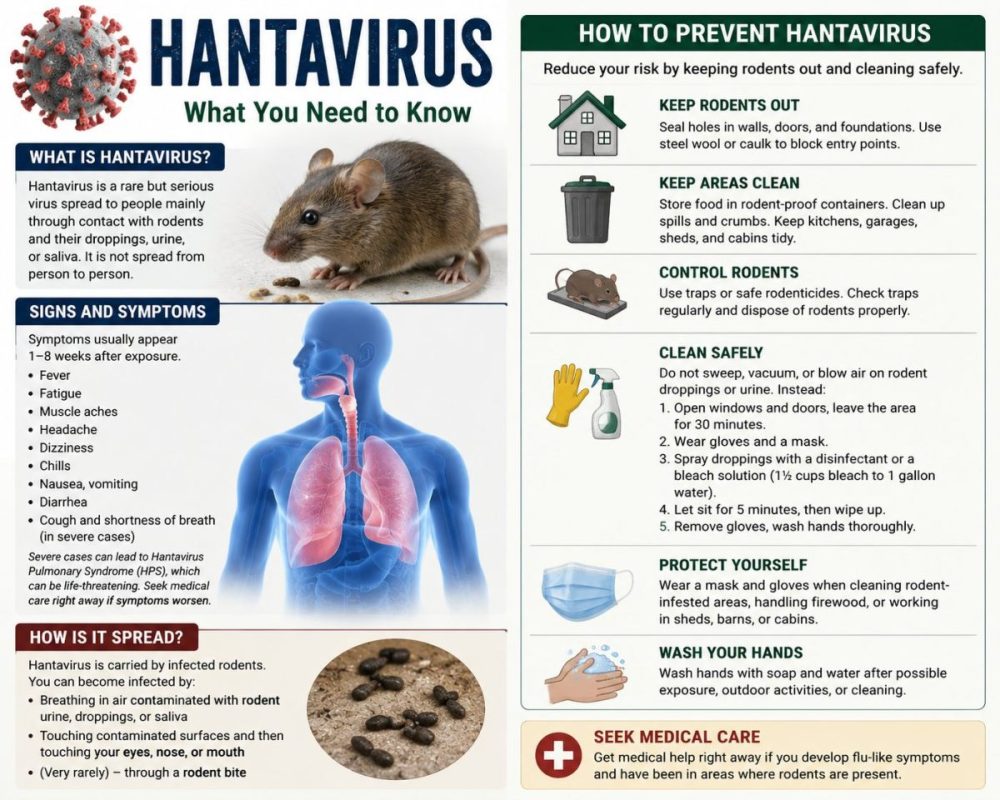
Hantavirus is not spread person-to-person in most cases in the United States. Instead, it is primarily transmitted through contact with infected rodents, especially when people inhale particles from dried rodent urine, droppings, or saliva. Investigators are working to determine whether exposure may have occurred during shore excursions, in port areas, or possibly through contaminated storage spaces on the vessel.
At least seven other Americans who left the ship early were located in Arizona, California, Georgia, New Jersey, Texas, and Virginia for monitoring by local health officials.
Symptoms of hantavirus infection can begin with fatigue, fever, and muscle aches, often progressing to more severe respiratory issues in some cases. The condition, sometimes called hantavirus pulmonary syndrome, can become life-threatening if not treated promptly. However, health experts stress that cases remain rare.
Cruise operators and public health agencies are coordinating efforts to trace potential exposure points and notify passengers. Enhanced cleaning protocols, inspections, and monitoring measures are being implemented to reduce any possible risk.
Officials emphasize that the situation does not indicate a widespread outbreak, but it serves as a reminder of how environmental exposure can lead to illness, even in controlled travel settings.
To prevent the spread or exposure to hantavirus, health authorities recommend avoiding contact with rodents and their nesting areas, particularly in rural or outdoor environments. Travelers should ensure food is stored securely, avoid sweeping or vacuuming areas with possible rodent droppings—since that can release contaminated particles into the air—and instead use disinfectant solutions for cleanup.
Good hygiene practices, including frequent handwashing and avoiding touching the face after handling potentially contaminated materials, are also critical.
For travelers, including those returning from cruises, experts advise seeking medical attention if flu-like symptoms develop within several weeks of potential exposure. Early recognition and care can significantly improve outcomes.