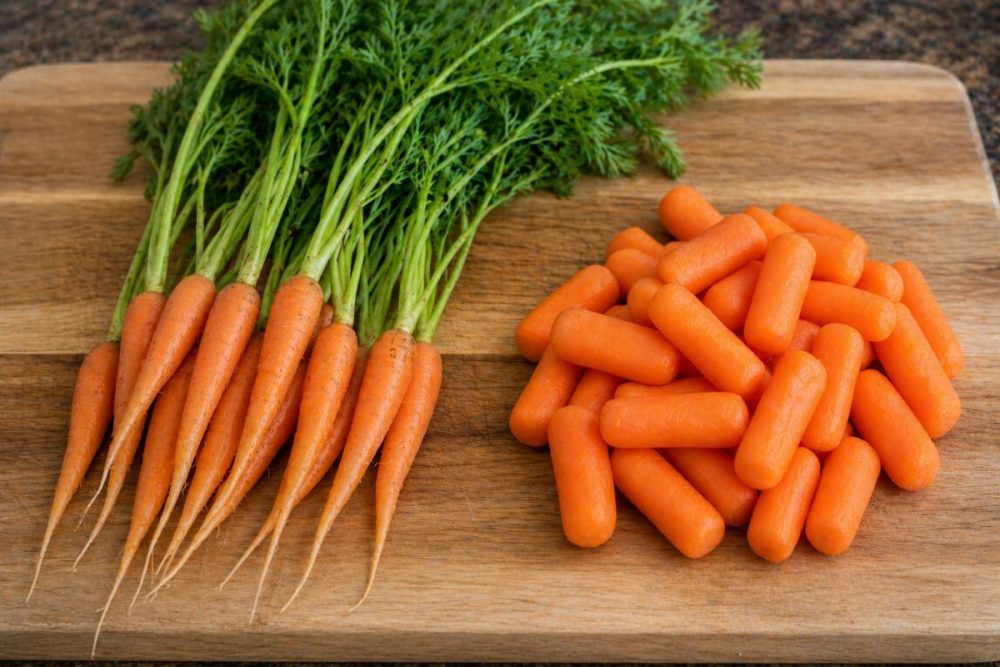
Baby Carrots and What Passes As Baby Carrots
April 29, 2026 – A growing number of consumers are asking a simple question in the produce aisle: what exactly is a “baby carrot”? The answer is less about farming and more about processing—and it reflects broader changes in how carrots are produced and distributed across the United States.
Despite the name, most baby carrots are not immature vegetables pulled early from the ground. Instead, they are cut and shaped from larger, fully grown carrots. The modern baby carrot was popularized in the 1980s as a way to reduce waste from misshapen produce. Today, companies trim, peel, and polish these carrots into uniform, bite-sized pieces that appeal to convenience-focused shoppers.
However, that processing comes with trade-offs. Once carrots are cut and peeled, they lose their natural outer skin, which acts as a protective barrier. To maintain freshness and prevent discoloration, producers often rinse the carrots in a diluted chlorine solution—a standard food safety practice also used on many pre-packaged vegetables. While considered safe by regulators, the practice has raised concerns among some consumers about chemical exposure and shelf-life manipulation.
The industry itself has also become highly concentrated. A small number of large producers—most notably Grimmway Farms—now grow and process a significant share of the nation’s carrots. This consolidation has efficiency benefits, including lower costs and consistent supply, but it also introduces risk. When contamination occurs, such as bacterial outbreaks, recalls can quickly become widespread because so much product originates from a limited number of facilities.
Another lesser-known practice shaping the carrot market is “white labeling.” In this system, the same carrots processed by one company may be packaged and sold under multiple brand names. To consumers, it can appear as though they are choosing between different producers, when in reality the product may come from a single source. This can complicate traceability during recalls and reduce transparency about where food is grown and processed.
Food safety experts emphasize that carrots—baby or whole—remain a nutritious and generally safe choice when properly handled. Still, the structure of the industry has prompted renewed interest in alternatives, including local sourcing and home gardening.
For some advocates, the solution is straightforward: grow your own. While not feasible for everyone, home gardening offers greater control over how food is cultivated and handled. Even small-scale efforts, such as backyard or container gardens, can provide fresh produce without the layers of processing and distribution that define much of today’s food system.
As consumers become more curious about how their food is made, the humble baby carrot is emerging as an unlikely symbol of modern agriculture’s benefits—and its complexities.