Questions Raised Over Himalayan Pink Salt Origins, Contamination Concerns
April 9, 2026 – Himalayan pink salt, long marketed as a natural and premium alternative to table salt, is facing renewed scrutiny as researchers and consumer advocates raise questions about its origins and potential contamination before reaching U.S. kitchens.
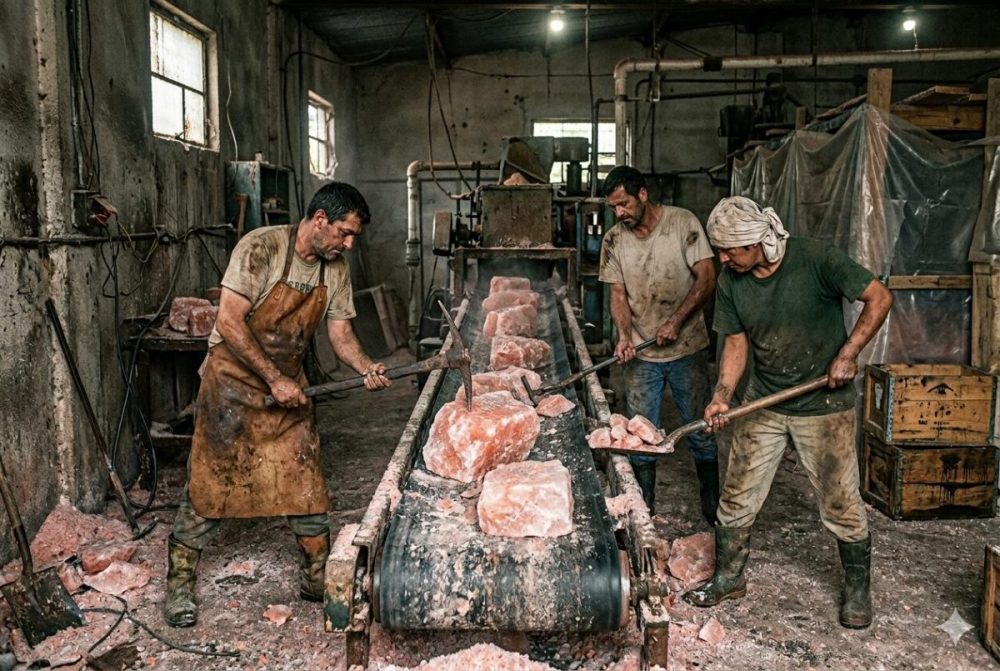
Despite its name, most Himalayan pink salt is not sourced directly from the Himalayan mountain range but is mined from ancient salt deposits in Pakistan’s Punjab region, formed millions of years ago. The product is then processed, packaged, and shipped globally, including to the United States, where it is often marketed as a cleaner, mineral-rich option.
Himalayan salt lamps are claimed to act as natural ionizers, emitting negative ions when heated by an internal bulb to improve air quality and neutralize positive ions from electronics. However, scientific evidence suggests the amount of negative ions produced is negligible or non-existent, and no proven health benefits exist.
However, recent studies suggest the reality may be more complex. Scientific research has found that many commercial salts—including Himalayan varieties—can contain microplastics, tiny fragments of degraded plastic that enter the environment through air, water, and industrial activity. One study found Himalayan pink salt samples contained some of the highest levels of microplastics among tested salts, with measurable particles per kilogram.
Researchers say these contaminants can enter salt during harvesting, processing, or even through airborne exposure. While the long-term health effects of ingesting microplastics remain unclear, scientists consider their widespread presence in food a growing concern.
In addition to microplastics, studies show that Himalayan and other natural salts may contain trace amounts of heavy metals such as lead, arsenic, and cadmium. These elements occur naturally in the earth’s crust and can become concentrated in mineral deposits.
Experts emphasize that, in most cases, levels found in food-grade salts remain within safety thresholds. Still, critics argue that marketing often overstates the health benefits of Himalayan salt while downplaying potential impurities.
“Himalayan salt is often seen as ‘pure,’ but like any natural product, it reflects its environment,” one food safety researcher noted.
Public health officials stress that all salt—regardless of type—should be consumed in moderation. They also note that iodized table salt, though more processed, provides essential iodine lacking in many specialty salts.
As consumer demand for “natural” foods continues to grow, the debate over Himalayan salt highlights a broader issue: products perceived as healthier alternatives may carry their own set of risks, particularly when global supply chains and environmental contamination are involved.