Don’t Worry Fellow Tractor Drivers, AI Has Not Taken Over… Yet
April 3, 2026 – SAN FRANCISCO — A once-promising agricultural technology startup has collapsed, laying off its entire workforce and abandoning its Bay Area headquarters after its flagship AI-powered tractor project failed to gain traction in the market.
The company, which had attracted significant venture capital funding during the height of the artificial intelligence boom, aimed to revolutionize farming with autonomous tractors capable of planting, monitoring, and harvesting crops with minimal human oversight. Instead, mounting technical issues, safety concerns, and rising costs ultimately brought operations to a halt.
Employees were notified earlier this week that the company would cease operations immediately. Offices in the Bay Area were reportedly vacated within days, with equipment removed and projects left unfinished. Industry observers say the abrupt shutdown reflects deeper challenges facing the ag-tech sector.
The failed tractor system had been marketed as a solution to labor shortages and efficiency demands in modern agriculture. However, early field tests revealed inconsistent navigation, difficulty adapting to uneven terrain, and occasional malfunctions that damaged crops—issues that proved costly for early adopters.
The collapse comes amid a broader recalibration in the AI industry. While billions of dollars have flowed into artificial intelligence ventures in recent years, not all applications have proven commercially viable. Agriculture, in particular, presents unique challenges due to unpredictable weather, soil variability, and the need for highly reliable machinery.
Farmers, especially in states like Texas and California, have shown cautious interest in automation but remain wary of unproven systems that could jeopardize already thin margins. Traditional equipment manufacturers have taken a slower approach, integrating AI features incrementally rather than relying on fully autonomous platforms.
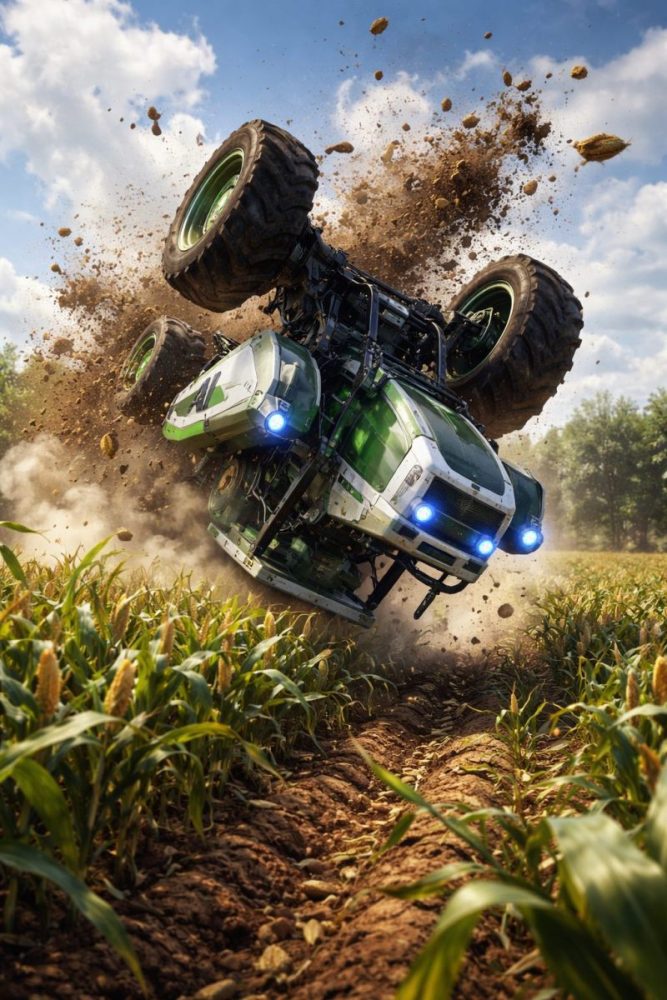
Analysts say the company’s downfall underscores a growing divide between hype and practical implementation in AI-driven industries. While the promise of autonomous farming remains, the path forward will likely depend on more durable, field-tested technologies rather than rapid, venture-backed disruption.
For now, the company’s sudden exit serves as a cautionary tale: even in the age of AI, not every innovation survives contact with the real world.