Is There Actual Pork in Pork and Beans? There Should Be.
December 3, 2025 – Under federal guidelines from Food and Drug Administration (FDA) and the United States Department of Agriculture (USDA), “Pork and Beans” (or “Beans with Pork / Beans with Meat”) is the common or usual name for a canned-bean product that includes mature white beans plus some pork or pork fat, in a tomato- or sauce-type medium.
Specifically:
- The official definition describes the product as “canned dried white beans … with pork or pork fat.”
- Under USDA grade standards, beans labeled as “Pork and Beans” must use beans such as navy beans or other white-bean varieties, and include pork or pork fat, along with tomato products or similar sauce.
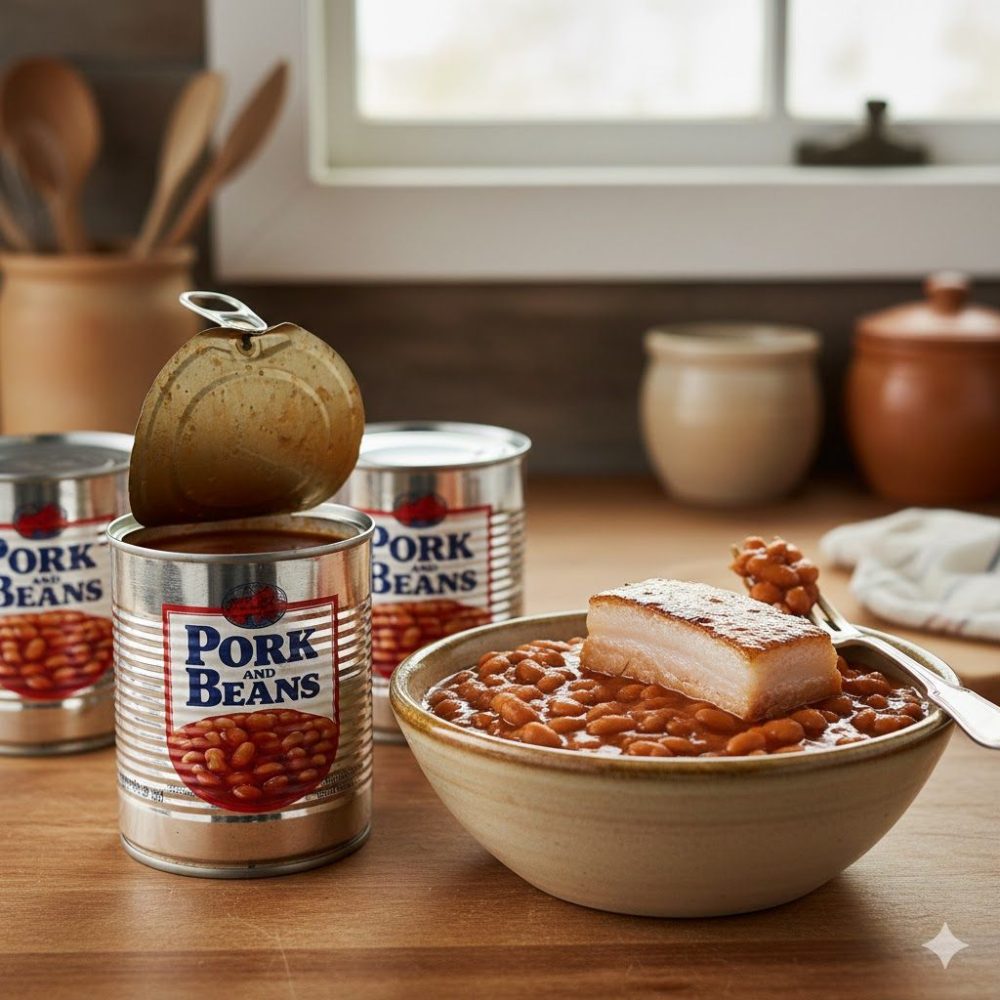
In practice, however, the regulations do not require a high percentage of pork. The guiding policy notes that “Pork and Beans … has been recognized … as an article … that contains very little pork.” Historically that meant even a bit of salt pork or rendered pork fat qualifies the product for the name.
The invention of commercial canned pork and beans by Frank Van Camp in the late 19th century transformed it into a convenient, affordable, and mass-produced staple, particularly popularized during the Civil War and booming industrial era.
As a result, a can of “pork and beans” may indeed include only a tiny amount of actual meat — sometimes minimal pieces of pork fat — while still complying with labeling rules. That explains why some consumers open cans and find mostly beans and sauce, with little visible pork.