Texas Agriculture Commissioner Highlights Pecan Industry During National Pecan Month
April 2, 2026 – AUSTIN, Texas — Texas Agriculture Commissioner Sid Miller is calling attention to one of the state’s most iconic crops as April marks National Pecan Month, recognizing the economic and cultural importance of pecans across the Lone Star State.
Miller praised Texas growers, processors, and farming families for their role in maintaining the state’s position as a leading producer. Texas ranks third nationally in pecan production, with between 170,000 and 200,000 acres of orchards generating an estimated $240 million to $300 million in direct value. The broader economic impact climbs to roughly $380 million when factoring in processing, retail, and export activity.
“The pecan tree is our state tree, and pecans are as Texan as it gets,” Miller said, emphasizing the crop’s deep connection to the state’s identity and rural economy.
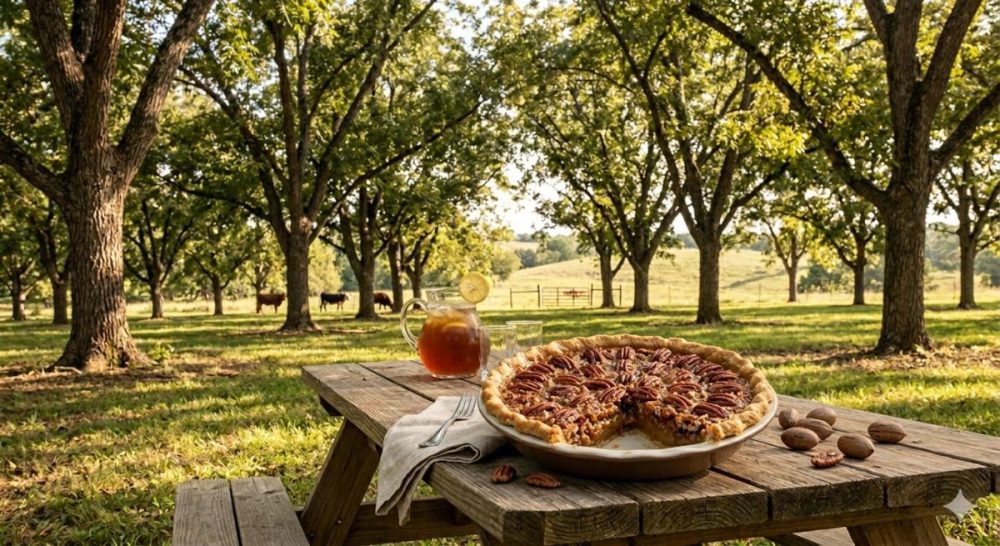
Pecans have long been woven into Texas history. Early cattle drivers Charles Goodnight and Oliver Loving are said to have planned historic drives under a pecan tree, while former Governor James Hogg famously requested a pecan tree be planted at his gravesite. Today, pecans remain a staple in Texas kitchens, featured in traditional dishes like pecan pie, pralines, and Texas sheet cake.
Beyond tradition, pecan production continues to play a vital role in sustaining rural communities. Orchards can remain productive for generations, providing long-term stability for family farms and agricultural businesses.
The Texas Department of Agriculture supports the industry through programs such as the Specialty Crop Block Grant Program, which funds research, innovation, and marketing efforts aimed at keeping Texas pecans competitive in domestic and global markets.
Miller encouraged Texans to support local producers by choosing Texas-grown pecans, noting that consumer demand directly impacts the livelihoods of growers statewide.
As National Pecan Month continues, state leaders say the focus remains on preserving both the heritage and future of one of Texas’ most enduring agricultural products.