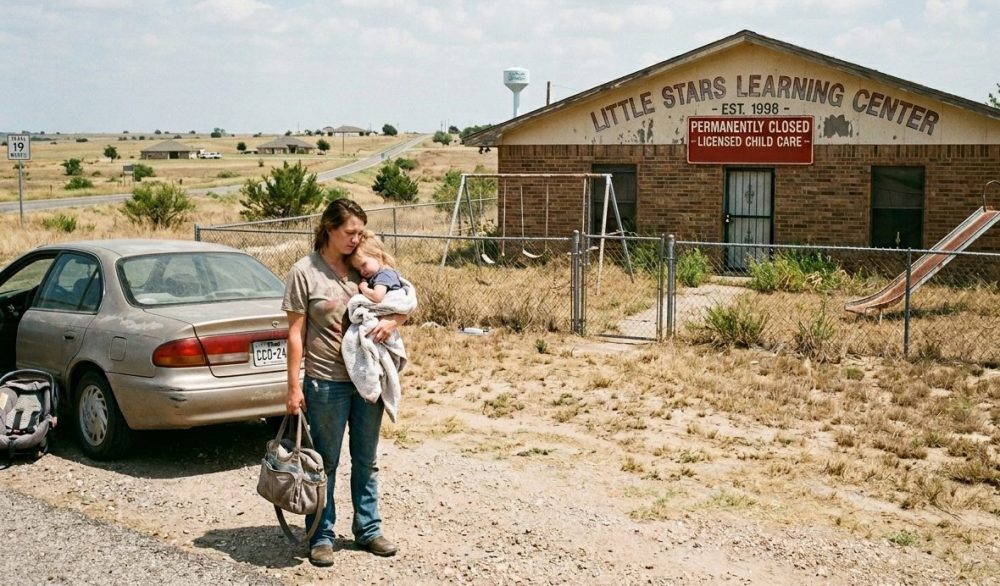
Child Care Deserts Persist Across Texas, Limiting Access for Families
April 10, 2026 – Large portions of Texas continue to face a shortage of child care options, with many communities classified as “child care deserts,” leaving working families struggling to find affordable, accessible care.
A child care desert is defined as an area where the number of young children with working parents is at least three times greater than the available licensed child care capacity.
Recent data shows the problem is widespread. About 40 percent of Texas ZIP codes qualify as child care deserts for low-income families, and hundreds of thousands of children lack access to licensed care options.
The shortage is especially acute among low-income households. More than 500,000 young children from working families live in areas where child care supply meets less than a third of demand, according to statewide analyses.
Advocates say the issue has worsened in recent years due to rising costs, workforce shortages, and the lingering effects of the COVID-19 pandemic, which forced many providers to close. In some cases, families spend between 15 and 50 percent of their income on child care—well above the recommended affordability threshold.
The lack of access has broader economic consequences. Without reliable child care, parents may reduce work hours or leave jobs entirely, affecting household income and the state’s workforce.
State agencies, including the Texas Workforce Commission, administer subsidy programs and track data to improve access, but demand continues to outpace supply. Lawmakers have also explored policy solutions such as increasing reimbursement rates for providers and expanding incentives to grow the child care workforce.
Experts say addressing child care deserts will require long-term investment in infrastructure, staffing, and affordability. Until then, many Texas families—particularly in rural and low-income areas—will continue to face limited options for one of the most essential services supporting working parents and early childhood development.