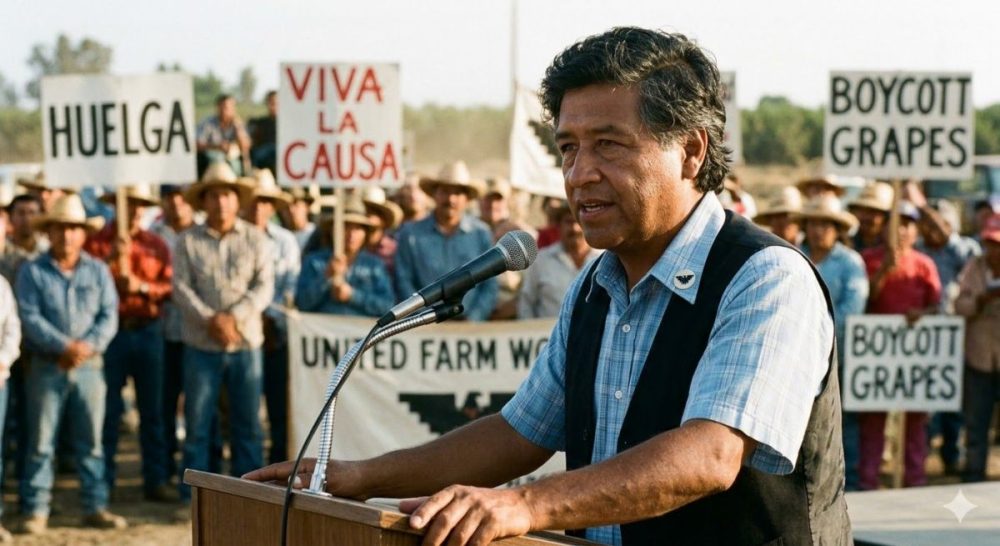
TEXAS MOVES TO REMOVE CESAR CHAVEZ REFERENCES FROM SCHOOLS AND STATE OBSERVANCES
March 24, 2026 – A growing effort across Texas is leading to the removal of Cesar Chavez references from schools, curriculum materials and official state observances, reflecting a broader political and cultural debate over how historical figures are recognized.
Recent actions by state leadership, including Governor Greg Abbott’s directive to halt recognition of Cesar Chavez Day, have accelerated the shift. Lawmakers are also expected to consider legislation that would formally remove the holiday from state law in the next legislative session.
Cesar Chavez was a nationally recognized labor organizer and civil rights activist who co-founded the United Farm Workers union. He became known for leading nonviolent protests, strikes and boycotts—most notably the Delano grape boycott—aimed at improving wages and working conditions for farmworkers.
For decades, Chavez has been honored in schools and public institutions as a symbol of labor rights and grassroots activism. Many Texas school districts have incorporated lessons about his work into history and social studies curricula, and some campuses have been named in his honor.
However, recent controversy surrounding allegations about Chavez’s personal conduct has prompted some state leaders and advocacy groups to question whether those recognitions should continue. Supporters of the removal effort argue that schools and state institutions should not celebrate individuals whose legacy is under dispute.
Opponents, meanwhile, say the push risks erasing an important chapter of American and Latino history. They argue Chavez’s contributions to labor rights and nonviolent activism remain historically significant, regardless of ongoing debates.
Education officials across Texas are now facing decisions about whether to revise lesson plans, rename campuses or adjust commemorative events tied to Chavez.
The issue reflects a broader national trend in reevaluating historical figures and their place in public life. As the debate continues, Texas schools and policymakers are navigating how to balance historical recognition with evolving public standards and scrutiny.