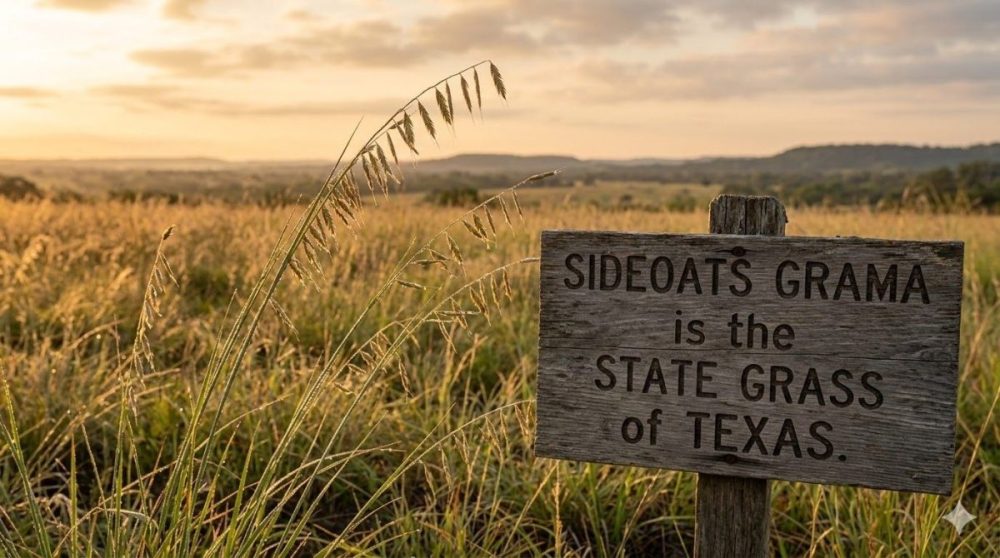
Sideoats and Bluebonnets
March 8, 2026 – As spring approaches, roadsides across Texas will soon begin filling with colorful wildflowers, part of a natural display that has become a signature of the state’s landscape. Officials say the Lone Star State is home to more than 5,000 species of wildflowers, many of which thrive along highways thanks to careful roadside management.
Sideoats Grama is the State Grass of Texas. It is a warm season grass growing from July to September.
The Texas Department of Transportation plays a key role in protecting these blooms through mowing policies designed to allow flowers time to grow and reseed. Each year, the agency manages about 800,000 acres of highway right of way, balancing roadway maintenance with conservation of native plants.
Among the most recognized wildflowers is the bluebonnet, which serves as the state flower. However, several species fall under the bluebonnet designation, and the flowers can also appear in white and pink varieties. Because bees pollinate the plants, mixed colors growing near each other may not produce the same color blooms the following season.
Many Texas wildflowers belong to the sunflower family, which makes up more than 20 percent of wildflower species in the state. Indian paintbrush is another well-known plant, producing bright blooms that can range from orange and yellow to purple.
Goldenrod, often mistakenly blamed for seasonal allergies, is frequently confused with ragweed. Unlike ragweed, goldenrod relies on bees for pollination rather than wind, making it far less likely to trigger hay fever.
Texas also features a wide range of native grasses and plants. Yucca plants, common in West Texas, have long been used to make items like soap and baskets. Meanwhile, plants such as horsemint attract bees, butterflies and hummingbirds, while grasses like buffalograss help control erosion.
Together, these native plants create the vibrant wildflower displays Texans look forward to each spring.