Oyster Harvest Areas Open in Matagorda Bay
March 5, 2026 – The Texas Parks and Wildlife Department will reopen a portion of Matagorda Bay to oyster harvesting next week after recent testing showed the area now meets state requirements for sustainable harvest.
According to TPWD, oyster harvest area TX-14 in Matagorda Bay will reopen to both commercial and recreational harvesting beginning at 12:01 a.m. Monday, March 9. The reopening follows recent sampling conducted by department biologists to evaluate oyster populations in the bay system.
Officials said the area met the biological benchmarks required to resume harvesting. Those standards include measurements showing a sufficient number of legal-sized oysters—defined as oysters at least three inches in length—within the reef population. State regulations require that oyster beds meet specific abundance thresholds before they can be reopened to protect the long-term health of the fishery.
Oyster harvest areas along the Texas coast are periodically closed and reopened as part of a management strategy designed to prevent overharvesting and allow oyster reefs time to recover. TPWD officials say these closures are based on ongoing monitoring and scientific sampling conducted throughout the year.
Biologists will continue monitoring Matagorda Bay and other oyster-producing regions along the coast. Harvest areas may be opened or closed depending on population data and environmental conditions that affect oyster growth and sustainability.
The reopening of TX-14 is expected to provide an opportunity for both commercial fishermen and recreational harvesters to access a productive section of the bay. Oyster harvesting is an important part of the coastal economy and supports seafood markets and restaurants throughout the state.
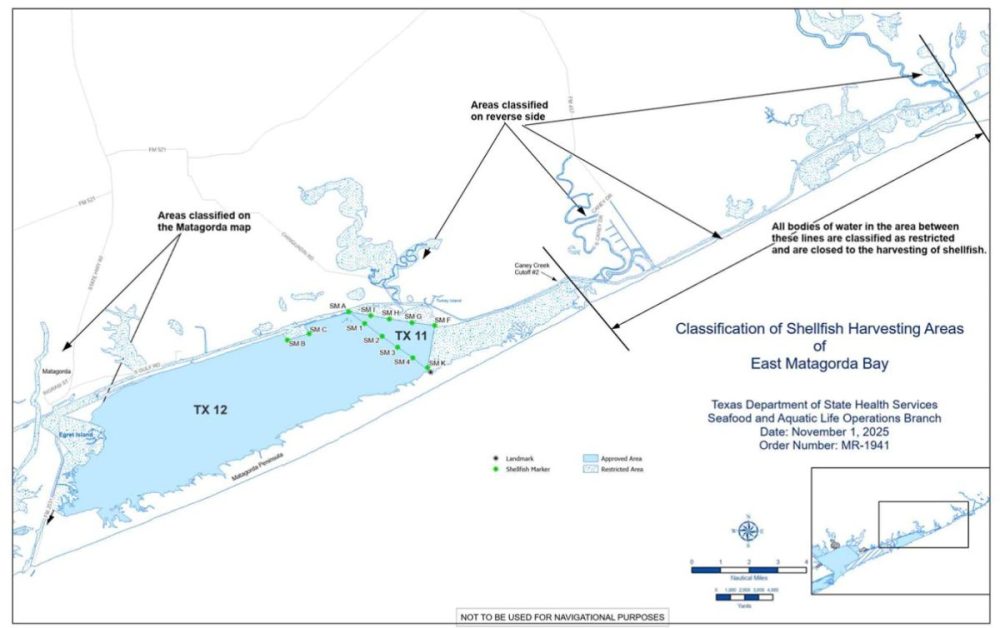
TPWD encourages harvesters to stay informed about current regulations and harvest area statuses before heading onto the water. A map showing oyster harvesting areas and the most up-to-date information on open or closed reefs is available through the Texas Department of State Health Services website.
Officials say the continued monitoring program helps ensure Texas oyster reefs remain productive for future seasons.