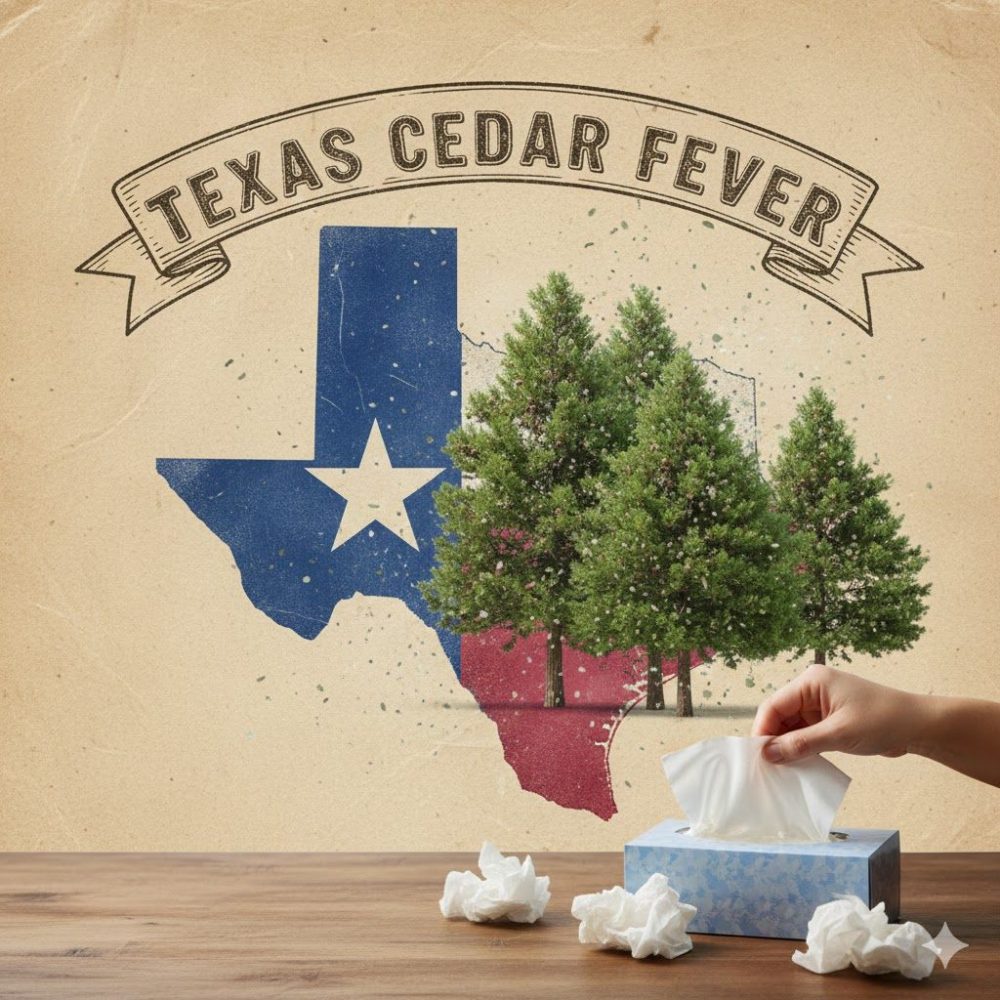
‘Cedar Fever’ Time Once Gain
January 8, 2026 – North Texans battling runny noses, itchy eyes, and relentless sneezing may have a familiar culprit to blame this time of year: mountain cedar.
Often mistaken for a lingering cold or the aftermath of holiday gatherings, mountain cedar allergies typically peak during the winter months, especially from December through February. The tree, also known as Ashe juniper, releases large amounts of pollen that can travel hundreds of miles on windy days, blanketing much of North Texas.
Allergy specialists say recent dry conditions and periodic strong winds have helped spread cedar pollen more efficiently, worsening symptoms for many residents. Common complaints include congestion, coughing, headaches, sinus pressure, fatigue, and sore throats — symptoms that can feel especially severe for people with asthma or chronic sinus issues.
Unlike spring pollen allergies, mountain cedar often strikes suddenly and intensely. Many sufferers report waking up feeling fine, only to experience rapid symptom onset after spending time outdoors. Even brief exposure can trigger reactions, as cedar pollen grains are small and easily inhaled.
Doctors recommend limiting outdoor activities on high pollen days, keeping windows closed, and using air purifiers indoors. Showering and changing clothes after being outside can also help reduce pollen exposure. Over-the-counter antihistamines, nasal sprays, and saline rinses are commonly used to manage symptoms, though those with severe reactions are encouraged to consult a physician.
While “cedar fever” may feel like an illness, experts stress it is not contagious. Relief typically comes with sustained rainfall or the end of the pollen season. Until then, many North Texans will continue reaching for tissues and allergy medications as winter allergies take their annual toll.