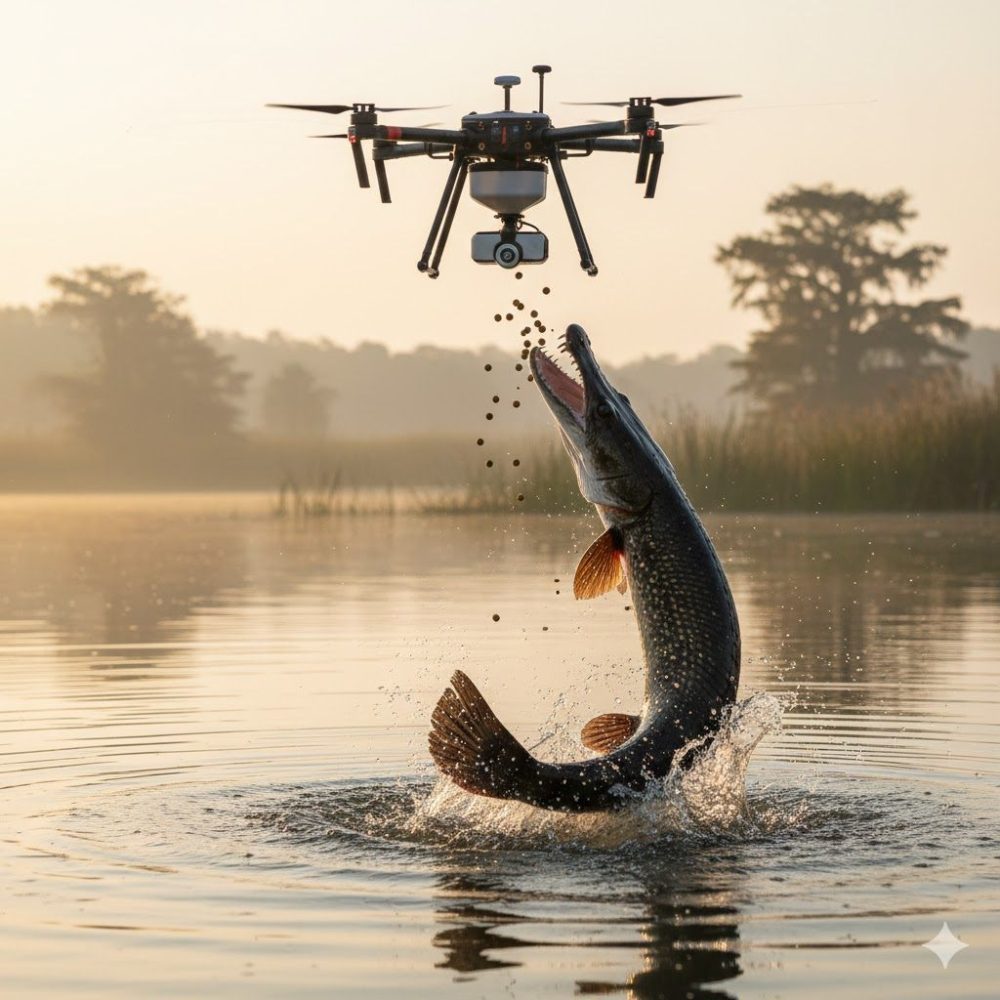
Texas Parks and Wildlife: Drone-Deployed Fish Bait Now Explicitly Prohibited
December 9, 2025 – Texas anglers hoping to gain a high-tech edge on the water will have to leave their drones at home. Texas Parks and Wildlife Department (TPWD) announced this week that drones may not be used to deploy bait while fishing, citing longstanding federal laws that classify unmanned aerial devices as “aircraft.”
According to TPWD, the decision follows a review of federal hunting and fishing regulations and consultation with the U.S. Fish and Wildlife Service. Officials determined that drones fall under the definition of “aircraft” in the 1956 Federal Airborne Hunting Act—a law originally aimed at outlawing the use of airplanes and helicopters to hunt or harass wildlife.
Under Title 50 of the Code of Federal Regulations, it is illegal to use any aircraft to assist in the taking of wildlife, including fish. That means anglers cannot use drones to drop bait, scout fish, guide lines, or provide any aerial assistance in the fishing process.
The department stressed that the prohibition is federal, not state-generated, and therefore binding on all states. TPWD cannot issue permits or exceptions that would allow drone-assisted fishing for sport or recreation.
The clarification comes as consumer-grade drones have become increasingly popular among fishermen looking to reach deeper waters or place bait precisely where fish are feeding. TPWD said the practice raises fairness, safety, and ethical concerns and conflicts directly with federal wildlife-protection laws.
The department did not indicate whether enforcement efforts will increase but reminded anglers that violations of federal wildlife laws can carry steep penalties, including fines and potential criminal charges.
TPWD encouraged fishermen to stay informed about gear restrictions and to rely on traditional methods. “Texas supports innovation in outdoor recreation,” the department said, “but it must be done within the bounds of federal and state law to protect wildlife and ensure fair-chase principles.”
The agency said additional guidance will be posted on its website as needed.