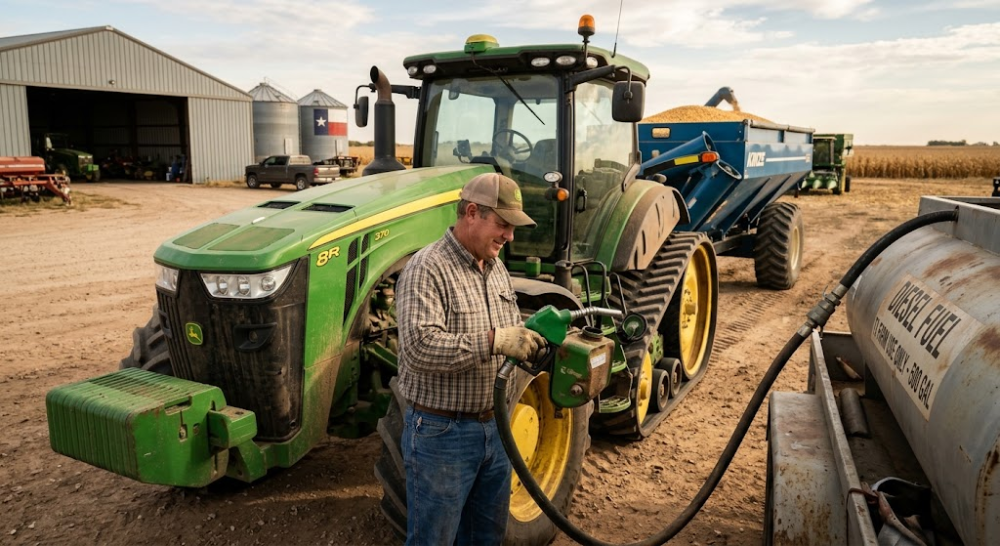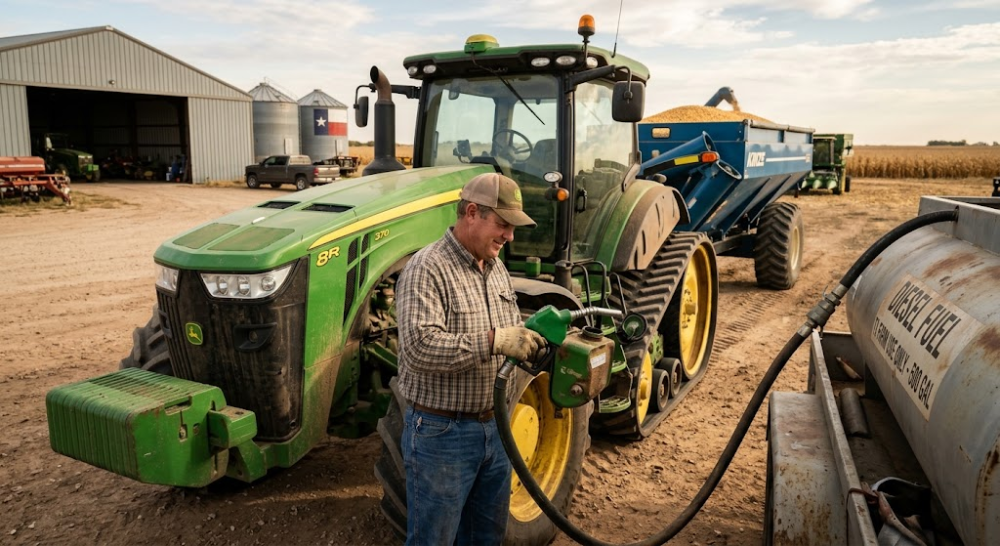
October 22, 2026 – AUSTIN, Texas — Texas farmers and ranchers working around the clock to finish their fall harvests could soon see a historic influx of federal support. Following the Trump administration’s announcement of the $8 billion Harvest Fuel Relief Program, total U.S. government payments to agricultural producers are projected to surge to an unprecedented $55.4 billion in 2026, according to recent analysis highlighted by Farm Policy News at the University of Illinois.
The new federal initiative aims to inject vital liquidity into farm operations facing severe margin squeezes. Across the Lone Star State—where extensive row-crop operations, livestock transport, and deep-well irrigation systems create a heavy dependency on fuel—producers have grappled with soaring diesel expenses and high fertilizer costs driven by ongoing international energy market disruptions.
A Historic Peak in Federal Aid
If fully distributed before December 31, the $8 billion injection will push federal farm support well past its previous high-water mark of $45.6 billion set in 2020 during pandemic-era interventions, as noted by AgroLatam. Economists project these emergency funds will account for nearly one-third of the USDA’s overall net farm income forecast for the year.
According to details outlined by Reuters and Hoosier Ag Today, the one-time assistance will be administered locally through the Farm Service Agency (FSA) using a standardized formula to compensate producers for modeled operational losses during the 2026 crop year. While specific individual allocations and timeline milestones are still rolling out, payments are anticipated to hit accounts in late November or December.
Mixed Reactions Across Rural Texas
While the promise of immediate cash flow has been welcomed by many producers battling tight margins, the announcement has also reignited a broader debate across the agricultural community.
Some regional farm advocates and organizations caution that recurring emergency relief packages act more as temporary patches than permanent solutions to structural economic pressures, pointing instead to long-term input cost stability and trade dynamics as core concerns.
As harvest operations continue from the Texas Panhandle down to the Gulf Coast, local agricultural leaders will be closely monitoring how swiftly the FSA can process the relief funds and what impact the historic $55.4 billion total will have on the resilience of Texas family farms heading into the 2027 planting season.